by: Rubee Stillwagon

With seniors preparing for college and last year’s graduates starting their first year in college, there are things they need to be aware of. Sexual assault cases on college campuses rise each year as back-to-school starts. This issue often goes unreported, but it is important to take a better look at this serious problem.
The period from August to late November is popularly named the “Red Zone” by groups across college campuses. This is because sexual assault cases are higher in these months than any other, causing back-to-school to be more dangerous for students, especially when they are unaware of this problem.
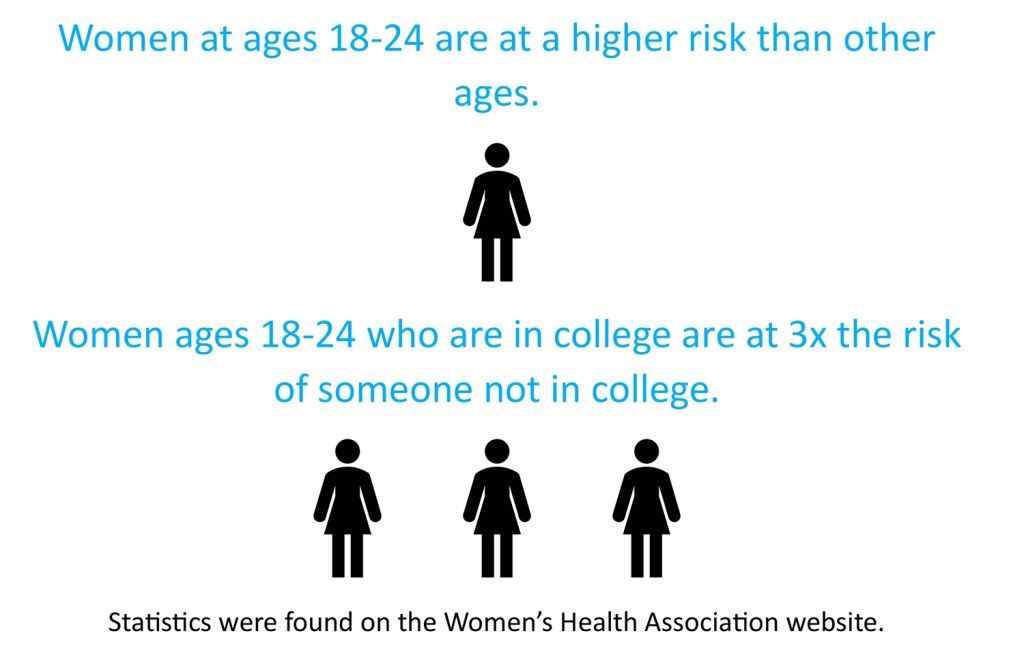
Statistics showing college sexual assault rates. Graphic created by: Rubee Stillwagon
“I’m honestly scared,” senior Sarah Rising said. “It’s definitely not something I want to go through or have anyone else go through.”
It is extremely important that students know of this rising problem so they can take the proper safety measures to protect themselves. Studies done by the Women’s Health Association show that roughly 50% of sexual assault cases happen in students’ first and second semesters in college. At this time, students are still getting into the routine of things and may be more vulnerable due to back-to-school stress.
“Keep an eye on friends, always plan ahead and always have a buddy, especially if alcohol is involved,” Sejah Franklin, a freshman at the University of Pittsburgh, said.
According to the National Sexual Violence Resource Center, alcohol and drugs often play a big role in sexual assaults on campuses. 15% of young women experience incapacitated rape during their first year of college, meaning they were legally not able to give consent. It is important to stay with a trusted person and keep an eye on your surroundings.
“I know a lot of women who go to report it, but it is just brushed off,” senior Alexa George said.
In most cases, students report their assault to their school before taking it to law enforcement. In 2016, the U.S. Department of Education’s Office of Civil Rights (OCR) investigated over 100 universities for mishandling sexual assault cases, showing that most times unreported and mishandled cases start at the school level.
Franklin, Rising and George all said that talking about it more is an important thing.
Students often don’t report the assaults because they believe nothing will be done. Talking about it and making people more aware of it may help people know it’s okay to ask for help. If an assault happens on campus or the perpetrator attends the school, students can also report it to the school authorities. The school is required to help students continue their education safely. Sex discrimination is also prohibited by Title IX of the Education Amendments of 1972.
“Sexual assault can happen to anyone at any time,” Rising said.
The most important thing to do if assault happens is to make sure students know they are not alone and that it’s not their fault. Victims often suffer from various long-term and short-term health problems such as sexually transmitted infections, depression, anxiety, eating disorders, post-traumatic stress disorder and more. This is why it is important that people raise awareness and make sure that students know they have people to support and believe in them. In the case of this unfortunate event, the National Sexual Assault Hotline is open 24/7 at 800-656-HOPE.
“There’s such a stigma around it and there’s also a lot of shame put on people,” Rising said.

Sexual assault awareness ribbon.
 The Lions' Den