By Samarah Guy
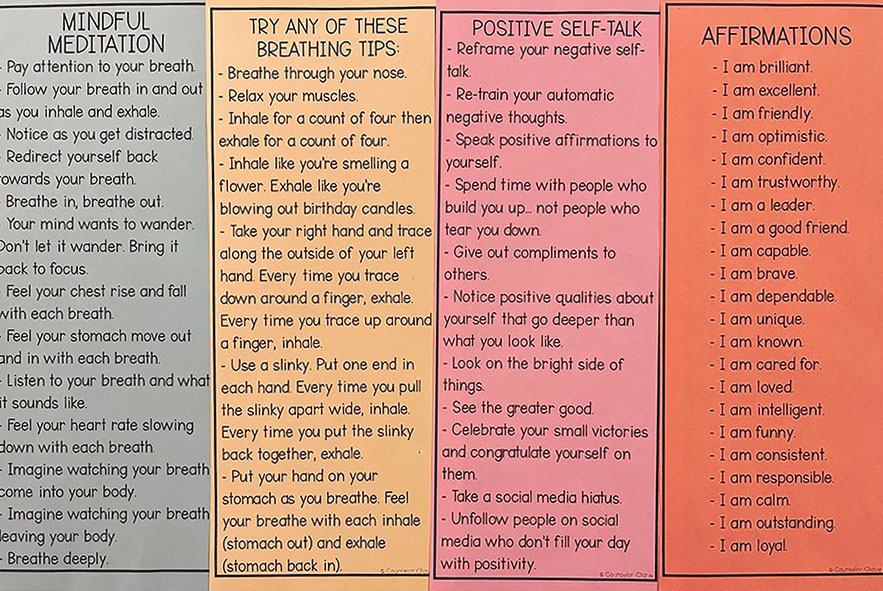
Resources can be found in the guidance office for further help with various teen problems such as bullying, low self-esteem and social anxiety.
Bullying
Bullying is something that may never be stopped, but understanding what it is and why people do it is important.
People bully for many different reasons, some of which being to feel a sense of power, to become popular, home issues, wanting attention or out of boredom. Some may even bully as a form of revenge for being bullied in the past.
Dealing with bullying can be very difficult, but putting an end to it is more important. Avoiding engagement with the bully, staying positive, distracting one’s mind, talking it out with the bully or seeking higher authority are some of the most helpful ways to handle the problem.
“It’s mostly verbal, I think, at this point,” French teacher Ms. Laura Hoffer said.
Bullying can be physical, verbal, online or prejudicial. Physical bullying happens in person, and it involves someone assaulting another person. Verbal bullying is when one may use words to hurt someone’s feelings. Bullying that occurs online is called cyberbullying. Prejudicial bullying is when someone bullies another person because of their age, gender, religion, disability or sexual orientation.
“I think it’s hard to get the bully’s words out of your head, especially at an adolescent age, so talking to someone is going to help a lot,” Ms. Hoffer added.
When trying not to be a bully, one should think before doing it, remove oneself from the bullies around, change one’s perspective, stop being a bystander or talk to a professional.
Low Self-esteem
Low self-esteem is when one has a very negative opinion of themselves.
There are many causes to low self-esteem, but the main causes are social media, peer pressure, bullying, parental influence or social interactions.
“Surround yourself with positive people who will boost you,” Guidance Counselor Mr. John Manley said.
After having low self-esteem, most people tend to gain anxiety, eating disorders, emotional distress or panic disorders.
“Try not to focus your energy on the things that you can’t do, but focus your energy on the things that you can do,” Mr. Manley added.
To help with one’s self-esteem one must encourage trying new things, encourage physical activity, find positive thoughts about oneself and simply just be positive. Talking to a friend, family member or professional is another way that can help.
Social Anxiety
Social anxiety is when one fears being social or has a lot of anxiety when in social environments.
Social anxiety can look different for many people. Normally one will have few friends, avoid talking to people, especially strangers, avoid going out, feel embarrassed after being social, be self-conscious, be anxious about being around people, lack engaging with others or simply just be shy.
“Just keep in mind that no one’s judging you and stay positive,” health teacher Mrs. Alyssa Lukatch said.
To help someone suffering with the disorder one can offer breathing exercises, encourage therapy, congratulate the little accomplishments, be supportive or just listen when it’s needed. To ease one’s social anxiety, deep breathing, facing fears, fighting negativity or talking to someone are the most common ways to help.
“You also want to be positive in who you are, and know that most people have social anxiety too,” Mrs. Lukatch added.
 The Lions' Den