By Kerrick Shaw
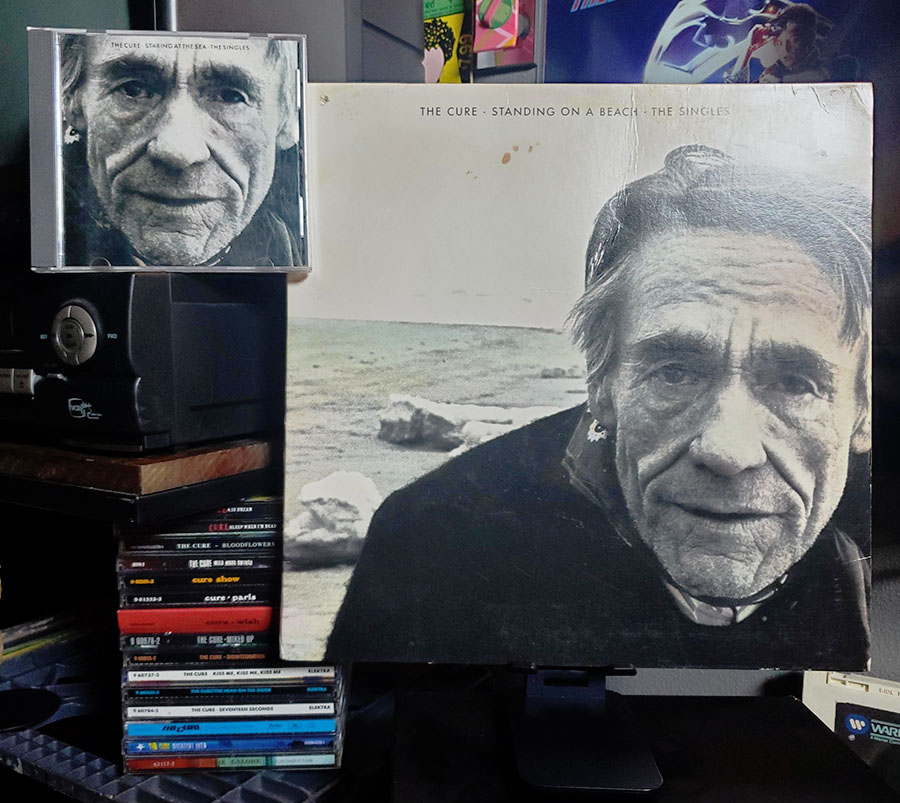
Photo by: Kerrick Shaw
Formed in 1978, The Cure, originally called Easy Cure, is a British rock band known for their varying styles in music and the frontman’s unique look.
Through several lineup changes, the band has remained active, having released 13 studio albums and soon releasing their 14th. Robert Smith (vocalist, guitarist and primary songwriter) has remained the only constant member of The Cure, having originally formed it with Lol Tolhurst (drummer and keyboardist) and Michael Dempsey (bass guitarist).
The 80s proved critical for the band’s success, primarily in the U.S., finding their way into rock radio channels, as well as onto the Billboard Top 100 in 1985 with songs “In Between Days” and “Close to Me,” both from their sixth album, “The Head on the Door” (1985).
Their second album, “Seventeen Seconds” (1980), established their melancholic sound, especially apparent in “A Forest,” the seventh track. The darker style, different from the ‘70s punk feel of “Three Imaginary Boys” (1979), continued to be explored with many of their albums to come.
Along with bands like Bauhaus, Joy Division and Siouxsie and The Banshees, The Cure helped to define gothic rock with their haunting instrumentals and sophisticated lyrics. “Disintegration” (1989), their best-selling album, is considered the greatest goth album of all time.
Shifting between Gothic and New Wave, albums like “Kiss Me, Kiss Me, Kiss Me” (1987) and “Wish” (1992) have more upbeat tones with love-filled themes. The difference between a song such as “Lullaby,” with its long breaks of eerie guitar and synth sounds, compared to the strong and playful horns of “Why Can’t I Be You?” may make the two sound like completely different bands to those who are not familiar with them. Both albums lean more towards the Pop side of ‘80s and ‘90s music.
When picking CDs for a long car ride or a record to play as loud as possible, “Staring at the Sea” is a go-to. Made up of all their singles released up until 1986, this compilation perfectly encapsulates their changes in sound, filled with hits such as “Boys Don’t Cry” and “The Lovecats.”
In my opinion, The Cure has released some of the most emotion-inducing music; having equal portions of their darker goth rock music and their cheerful, keyboard led pop-like music, this collection is perfect for jumping around and flipping your hair to, as well as for sitting in a corner and moping.
I see it as the best place to start for those interested in listening to The Cure as it appeals to different tastes as well as essential for fans of their popular songs to find lesser-known hits like “The Caterpillar.”
 The Lions' Den