by: Ari Case

Every school year brings new changes, and this year is no different.
During the class meetings held the first day of school, High School Principal Mr. Adam Jones and Dean of Students Mr. Jeff Kronenwetter reminded students of old and changing rules in the school. These included the returning cell phone rule, a change in second run bussing and the attendance policy.
The cell phone rule, initiated last year, dictates that each student is required to place their phone into numbered and assigned pockets before class. All students are prohibited from using phones during classes and exceptions must be approved prior to implementation.
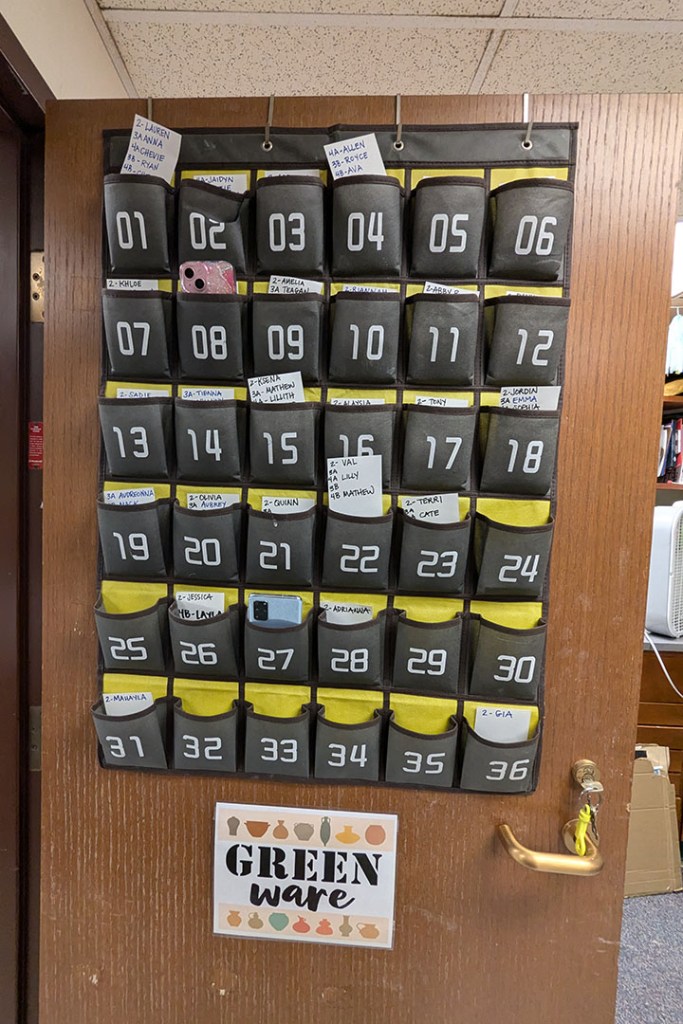
A typical phone holder hangs on a door.
Photo by: Ari Case
“We did it [to] get kids more engaged in their learning,” Mr. Jones said.
Teachers have varying opinions on it, but most appreciate the value in removing classroom distraction.
“The teacher part of me loves it, [because] it is a distraction for students that have them out in class,” Mr. Kronenwetter said.
Student views on the rule are hard to quantify, but many agree with the idea—just not the execution. Some students aren’t normally on their phones but prefer to have them in backpacks or pockets.
“It’s not that I like being on my phone, but I like it being near me,” junior Nico Bortz said. “So at least I know if I need it in any case of emergency, it’s there.”
The rule has not changed since last year, but its application is stricter. Previously, many teachers did not mind if students kept their phones away in their bags or used them to listen to music during independent work time. This year, however, students felt some teachers had been rude or overbearing about their cell phones even if they did not want to be.
Bortz shared that the rule can distract them from learning more than their phone at times. One class they accidentally put their phone in the wrong numbered pocket, which prompted the teacher to disrupt class and have them move the phone.
Students, like senior Leia Felmley, feel the rules are causing “unnecessary mayhem” and extra stress.
This added stress, for students like Bortz, takes away from their learning.
“I come to school and I want to learn,” they said. “I don’t want to have to worry about making sure my phone’s put away so I don’t get a detention.”
Some have raised concerns about the potential negative impact on student learning when there is reliance on only school-provided technology. Historically, school devices and Wi-Fi networks are unreliable and cause consistent issues for many students and teachers.
“A lot of our classes depend on technology,” Felmley said. “A lot of us went through Covid, and [technology] was our only source of education.”
According to Jones, teachers are expected to have a backup plan for all lessons that can be completed without technology.
Reportedly, the blame would fall on teachers if students were caught with their phones during classes. This has increased classroom tension, and Felmley disagrees with the choice to broadly pressure teachers when only some behaviors are truly disruptive or problematic.
Education has changed drastically in large part due to the pandemic, coupled with technological advancements—many teachers have had to shift how they teach in recent years.
“The teacher’s job is to educate their students,” Felmley said. “They should not be punished for it [because] it’s making them feel like they aren’t doing a good job of teaching when they’re trying their best just to learn how to redo everything again.”
The high school also changed the procedure for second run bussing this year.
Previously, students who rode second run buses waited in the auditorium lobby or outside after school. This year, they are assigned seating areas in the auditorium based on which bus they ride and dismissed accordingly.
It was explained that the reason for changing the bussing procedure was initially unrelated to students. In previous years, the buses were often clumped and out of order, sometimes blocking the road. Along with some conflicts between students, the main goal was to organize things for the sake of safety and efficiency.
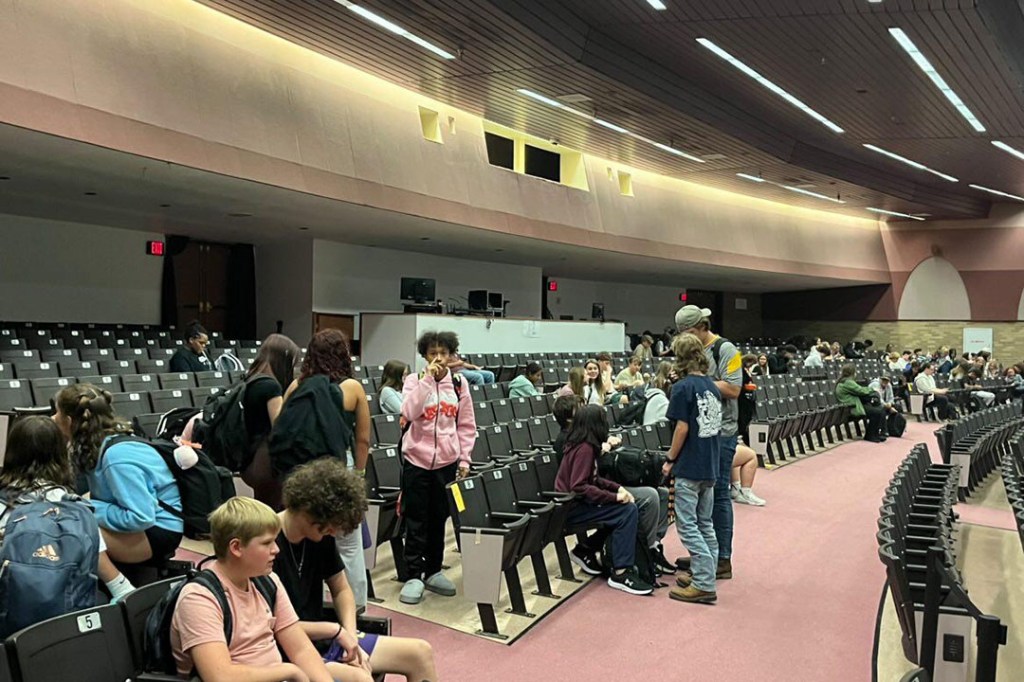
Students wait in the auditorium for their buses.
Photo by: Quinn Isenberg
Jones explained that “it just streamlines the process” of getting students home safely. He also said that it is important they are able to find students in case of emergency.
Second run bus riders have decidedly less positive views about the change.
“I absolutely hate it because [it] is wickedly hot in the auditorium, even though we have an air conditioning unit in there, and it seems like they aren’t applying something that they put lots of money towards,” Felmley explained.
She believes the air conditioning has been on some days, but it has not seemed like it most days.
Bortz expressed frustration at losing the freedom of standing outside.
“It feels like they’re treating us like elementary schoolers,” they said. “I don’t like being treated like that when I’m 16 years old in high school. It’s kind of annoying and demeaning.”
Both Bortz and Felmley resent being separated from friends and social groups.
“It feels like you’re being isolated, away from those people you normally would bond with,” Felmley said.
The bus procedure is new this year, but the attendance policy remains the same on paper as it has been for years.
In recent years, several unexpected challenges disrupted the attendance policy at GS. Now, Kronenwetter hopes to get attendance more consistent.
“We’re trying to help establish good habits,” he explained.
He expressed that during and after the COVID-19 pandemic, he was just glad to see students attending school at all.
The district policy is that any absences after 12 missed days count towards sanctions. A student on the sanctions list must make up two hours for every day missed over the limit and may not participate in school-related activities like sports or dances.
The school legally excuses any absence with a note, but notes from parents still mean an absence counts toward sanctions. Any absence excused by a third party, like a doctor, does not count toward the sanctions limit. Neither do pre-approved absences for vacations, college visits, job shadows and senior projects.
Bortz expressed concerns for specific medical and family situations, and the appearance of transcripts for college. Kronenwetter explained that he isn’t concerned about potential issues, because they can be handled on a case-by-case basis—and the rules aren’t the important part to him.
“I know the academics come first,” he said.
The policy has not significantly changed this year, so any grievances are largely the same as last year. General frustration at the scheduling of school is the most common, with such an early start in the morning.
“There’s so many reasons for being tardy to school that should be excusable, but to the school are not,” Bortz said, mentioning car and health problems.
Both Bortz and Felmley expressed concerns about COVID-19, considering the recent surge in cases. Current Center for Disease Control and Prevention (CDC) guidelines do not have a set quarantine, though they were previously five days at least. Now, quarantining until fever-free and limiting contact while wearing a mask for several days are recommended.
According to Jones, the district has no current policy on COVID-19, and “it’s treated as any illness.” If you do not have a doctor’s note, days missed because of it will count towards the sanctions limit.
Amid student frustration and added stress from new rules and policies, most students just want to be treated like their opinions and experiences matter.
“I know that as a young adult, I hope that our voices will be heard,” Felmley said.
 The Lions' Den