by: Adison Poole
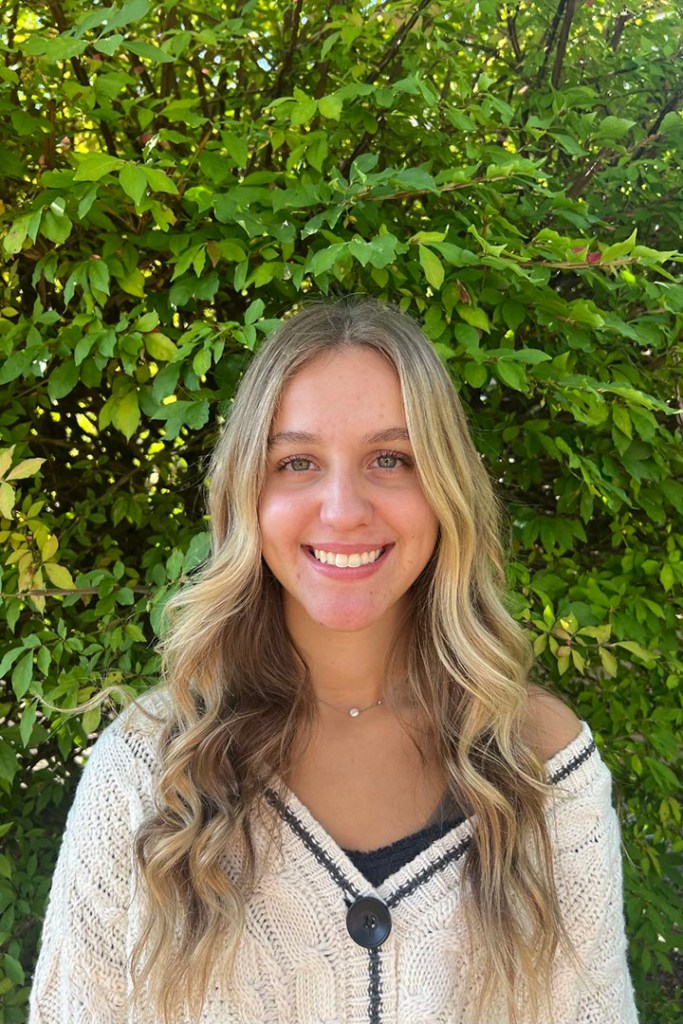
GS is looking to revamp student schedules to encourage a more personal learning environment.
This year Principal Mr. Adam Jones and Superintendent Dr. Ken Bissell have pushed for more freedom in student schedules. Personal Learning Time or PLT is a free block seniors can choose to take.
If a student chooses to take PLT then the free block will fit into their schedule wherever there may be a gap. This year many seniors with gaps in their schedules filled the open space with PLT not even knowing what it really was.
“I wasn’t really sure what it was initially, but I really like it now,” senior Everett Redinger said.
The block can be used to the student’s liking and may be utilized in whatever way is most beneficial to the student. If that means leaving school, then the student will have that option or they can choose to stay and work in the library.
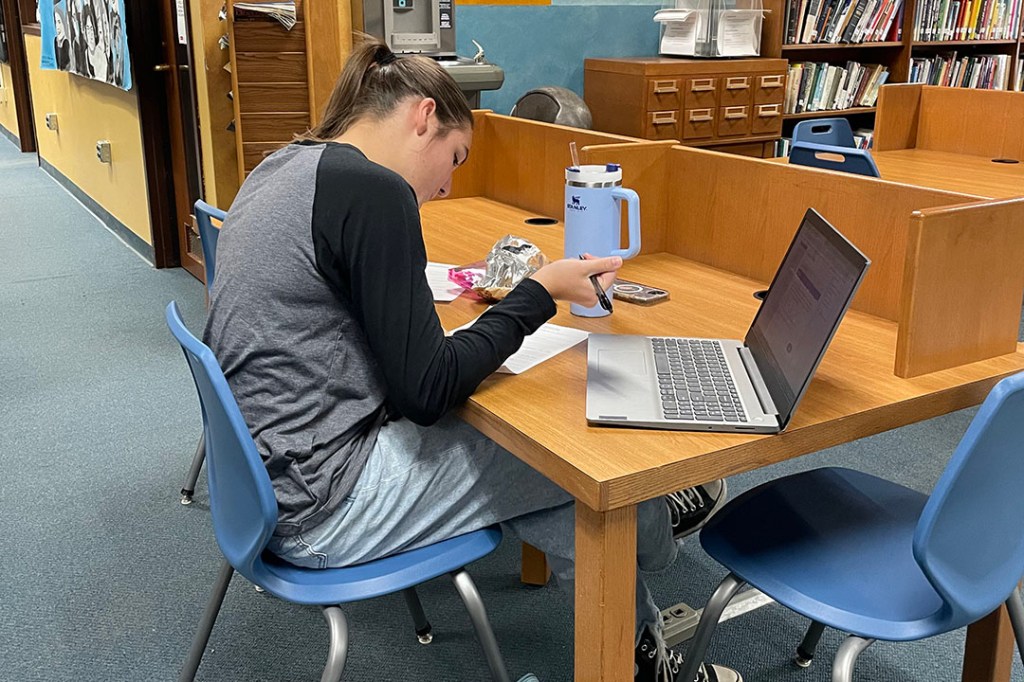
Senior Riley Campbell sits in the Library to do homework during her PLT.
Photo by: Adison Poole
“As a senior, my conversation with Dr. Bissell was you’re a senior, you’re mature enough to leave,” Mr. Jones explained. “Why would I put you in a study hall when you don’t have to be?”
PLT is an attempt to offer up more freedom to students throughout the school. The idea is that this will create an organized system while also allowing kids to make their own decisions.
“It’s a flexible period showing you’re mature enough to do what you need to do; you do with it what you please,” Jones said.
PLT can fall into a senior’s schedule wherever they may have a free block. Depending on when their PLT is, the student may have to leave and sign back in before the next class starts.
“I’ve been staying in the building,” senior Kylie Kolenc said. “I feel like I won’t get anything done and it will just end up being wasted time.”
While students have been encouraged to use the time wisely, it’s ultimately up to the kid to decide what’s best for them. The level of maturity was considered when deciding what grade levels would have PLT available for them to take.
With the graduation requirements changing next year from 28 credits to 25.5 Jones was eager to test out this new schedule as a possibility for students to take for years to come.
“I would recommend it to upcoming seniors,” Kolenc explained. “Not just as a blow off thing, but more along the lines of using that as time to do things you might not have time to do after school.”
According to Jones, freedom is a “privilege” that can be taken away if used incorrectly or for inappropriate reasons. To be eligible for PLT, students must be passing classes and attending class regularly.
“As it goes on, I think there will be a lot of kids working on their senior project, especially the second semester scramblers,” Jones laughed. “The conversation will be ‘oh don’t come crying to me if you have an hour and a half to work on it.’”
While the choice is up to the student, there won’t be any excuses for late work from kids with PLT time.
“I’m using it to work on college stuff and my senior project, as well as learning new instrument skills,” Kolenc said.
Kolenc isn’t the only senior putting in work during PLT, Redinger also emphasized that he is using his time to focus on his senior project as well.
“I like to stay sometimes and use it to talk to my advisor about my senior project,” Redinger said.
Being the first year with such lenient requirements compared to past years, this year serves as a test run for future scheduling. Students will be required to be on school grounds for less hours and credit requirements change in under a year.
Due to this, students and staff can expect a change in upcoming years and will see PLT as well as other forms of individualized learning being implemented throughout the school.
“We’re one foot in with the PLT for next year, but we’re still under the schedule of last year,” Jones said. “We’re just trying to get to next year where everything is weeded out. It’s like the appetizer and I hope everyone understands.”
 The Lions' Den