Concerns Surrounding the Department of Education 

By: Kerrick Shaw

A controversial push to eliminate the U.S. Department of Education is gaining momentum in Congress, raising concerns about the future of federal oversight in schools.  

If the Department of Education (DOE) is dissolved, school districts could face significant disruptions in funding and resources. Programs that rely on federal support, such as Title I for low-income schools or special education services under the Individuals with Disabilities Education Act, could stall or disappear, forcing districts to find alternatives. 

On March 20, President Donald Trump signed an executive order to begin shutting down several functions of the DOE. 


Greensburg locals participating in the Hands Off protest on April 5.

Photo Courtesy: Barb Ciampini


“It feels very rushed, without deeper thought into the implications of dismantling or reducing,” GS Superintendent Dr. Ken Bissell said. “Our district relies on federal funding for our Title I, II, III and IV grants, which help us with things such as special education needs and equity issues for students from marginalized populations. If there were no federal funds, that’s a lot of teaching positions that go away.” 

The federal government’s role in schooling is to “uphold civil rights” for children, Dr. Bissell explained. He stated that he believes the shut-down will not happen, but acknowledged the hypothetical question of how those funds would be made up.  

“Teachers are the direct support for students; education is a human-to-human endeavor of building relationships and trust, to then learn from each other,” Bissell said. “If we lose funding, it will definitely result in us not having enough funds to support the teachers and staff.”  

 According to the district’s Director of Curriculum and Federal Programs, Dr. Lenni Nedley, school districts handle variations in their funding yearly, stating that schools will adapt as necessary if federal funding is dissolved.  

“Each school year, districts are faced with federal and state funding fluctuations; they’ll make adjustments to their general budgets as needed in different areas,” Dr. Nedley said. “The district always places children at the forefront of their decision-making to ensure they’re receiving what they need to be successful.” 

The federal grants support four reading specialists, three school counselors, one science teacher and two classroom assistants, as stated by Nedley.  

“If funds are reduced, we’d be put in a situation where we’ll have to make very difficult decisions,” Bissell said. “Staffing is the number one indicator of student success; good teachers make successful students. If we’re forced to reduce the number of staff we have, that’s going to directly impact the kids.” 

On top of the human resources students are provided through teachers and staff, a majority of students in the GS school district take advantage of the food services available. 

“Our school district is just over 60% free and reduced lunch,” he said. “That is a lot of kids that these funds help provide resources to.” 

Having heard of the possible closure of the DOE, some students are considering what the absence of such programs could mean for their school experience. Senior Adien Carota expressed confusion over the reasoning behind the proposed closure. 

“It simply shouldn’t be closed, I don’t understand the motivation,” Carota said. 

Senior Kyle Keller believes “education will go down” following the change in funding. 

Principal Mr. Adam Jones echoed concerns about how the closure could impact schools across the country. He explained that a lack of federal guidelines will result in disparity among states. 

“Not having oversight to ensure students across the country are receiving the same protections and rights makes me worry about if it’ll further create ‘haves’ and ‘have-nots’,” Mr. Jones said. “Some states could take advantage of it, seeing it as them not having to follow federal mandates anymore. I don’t think every state values their educational system the same.” 

The DOE’s involvement in schools is generally focused on broad policy and compliance with federal regulations. In contrast, states directly shape the daily operations of schools, making key decisions that affect classroom instruction and testing. 

“For the country to run an effective educational system, you have to have an overall level to ensure that all of the states and kids are getting roughly the same standards, curricula and resources,” Jones said. 

Although much remains uncertain, GS’ faculty and administration will focus on maintaining stability for students, regardless of what decisions are made at the federal level. Their attention remains on adapting to whatever comes next. 

“Pennsylvania has always had a very strong educational system, so I don’t fear a major negative outcome for our district,” Jones said. “In ten years, if there’s no Department of Education, I don’t think there will be a noticeable difference in our school.” 

The Purpose of School Sanctions

By: Theresa Schuetz

GS enforced punishments this year for students who played hooky.  

Sanctions go into play when a student misses 13 or more days of school. The main premise of sanctions is to make it more of a priority for students to be present in school. When a student is put on sanctions, attending prom, walking at graduation or attending extracurriculars is not allowed. 


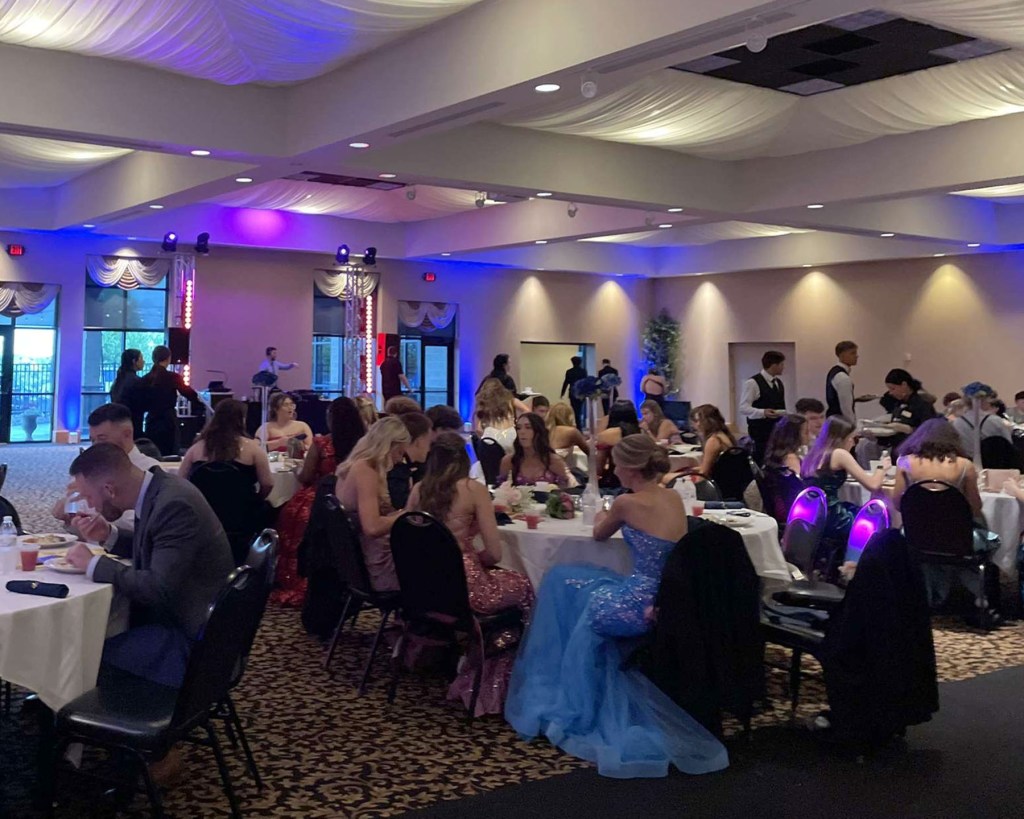
GS 2025 prom advertisement posted throughout the halls.

Photo by: Theresa Schuetz


“Fundamentally, they are a goal to get kids to make up the academics that they miss when they miss school, especially when they miss a lot of school,” Dean of Students Mr. Jeff Kronenwetter said. “And in order to go on sanctions in and of itself, you’re missing 12, 13, 14 days of school. And there’s going to be an academic consequence to that.” 

When a student is put on sanctions, they can be reduced by staying after school for two hours on Tuesdays and Thursdays.  

“The punishments could be fair for the people who genuinely skip school,” senior Josselyn Blawas said. “To knock off an absence you have to stay after school for two hours, and you have to do that twice to get one absence off. So, if you’re someone who just skips school, you could use that time to do work.” 

When students stay later for two of those days, it removes one absence from the record. When students stay at the school they are not allowed to be on their phones, and they must be working on schoolwork. However, this way of removing absences may be hard for students who have jobs outside of school. 

“Each student should be able to pick what day of the week they want to stay to make up for an absence,” senior Gregory Paravate said. “It’s unfair for students who work outside of school.”  

To be put on the list requires 12 unexcused absences. Excused absences that do not count towards sanctions include doctor’s appointments, funerals and college visits. When students are out because of illness, parents can write them an excuse, but it still gives one point towards sanctions. 

“If we don’t know where you were or even if a parent sends a note that explains, ‘this student was absent on this date because she was sick,’ it does count towards sanctions,” Mr. Kronenwetter said. 

Students are not required to make up unexcused absences through participating in detentions, but if they do it allows them to participate in extracurriculars, dances and the graduation ceremony. 

“We’re just trying to establish a routine like there is in the workforce when it comes to sanctions,” Kronenwetter said. 

Energy Drinks and Their Effect on Teens

By: Ever Schmidt  

Students are flying throughout the halls as summertime approaches, cracking energy drinks left and right.  

Whether it be Monster, Red Bull or even coffees, caffeine crowds store shelves and leaves them just as fast. Classrooms are littered with cans, but opinions on them vary.  


The Lions’ Den staff’s Energy Drinks on an average day.

Photo by: Ever Schmidt


“Energy drinks are the highlight of my morning,” junior Kaylee Foley said. “Monsters are my favorite, personally; I love that it can give me the energy I need in just one drink. It helps me work better and gives me extra energy to help me finish the day fully energized.”   

According to Nova Medical Centers, energy drinks have some positives. They help to “improve students’ mood and attitude, to eliminate feeling groggy. Being able to buy a drink that will give almost instant energy for only one to five dollars can be very convenient. 

With every positive, there are also negatives. Regardless of the good they bring to some they can also affect the way people act and feel in the opposite way.  

“The first time I had an energy drink, I had a bad experience and will probably never drink one again,” junior Adrianna Scalzo said. “It made me feel so sick that I’ve haven’t had one since then.”  

According to The National Library of Medicine, energy drinks can be a health risk. There have been nine cases of cardiac arrest in recent years, three of them being fatal. They have concerns that they can cause nervous system disorders and addiction.   

“I think they are terrible for you, they mess with your hormones and your heart,” Health and Physical Education teacher Mrs. Alyssa Lukatch said. “It’s a whole-body disrupter.”  

Energy drinks contain caffeine and sugars which can be associated with a decrease of insulin sensitivity, causing the body to have resistance to the hormone insulin. It also can give risks like anxiety, hallucinations, headaches, tooth decay and more, according to Cleveland Clinic Health Essentials. 

 “People drink them for energy just to crash harder a few hours later, when you really should be looking at why you don’t have any energy,” Mrs. Lukatch said.  

GS Mini-THON Raises Over $60,000

By: Adison Poole

GS dove headfirst into the fight to cure pediatric cancer.  

On Saturday March 15 GS students hosted the 10th annual Mini-THON. This year’s theme was centered around a beach theme, leaving the gym and halls decorated with jellyfish and blue lights. 

“The theme came from our slogan,” senior Katie Shea said. “Our slogan was, Waves of Hope and Tides of Change.”  

The goal of Mini-THON is to raise as much money possible. This money is then donated for research in the fight to cure pediatric cancer. This year GS Mini-THON members were able to raise a grand total of $63,505.47.  

“Our goal was originally set at $100,000, but we quickly realized that was going to be an uphill battle,” Shea said.  

While Mini-THON leaders always set a goal for the year, the overall goal is to raise as much money as possible. GS Mini-THON’s highest total ever was $71,502.68. 

“We weren’t able to beat the highest total, but we were proud to have the second highest ever,” Shea said.  

The night of Mini-THON is split up into two different parts. The first three hours, which take place from 7:00 p.m. to 10:00 p.m., are known as Community  Hours, meaning that families and community members were invited to participate and take part in activities that were offered by Mini-THON members.  


Senior Sabrina Kasic donates her hair during Community Hours.

Photo Courtesy: Courtney Paul Photography


The second half of the night directly followed and consisted of an overnight lock in at the school until 7:00 a.m. Sunday morning. Students who spent the night stood all night long and participated in different games and activities to show support for Mini-THON.  

“This was my first time attending Mini-THON,” senior Alice Wilkinson said. “If I would’ve known how much fun it was before, I would’ve gotten involved way sooner.” 

GS Mini-THON members also invited a speaker to the event who shared her story and set the tone for why GS believes Mini-THON is a good cause and continues to fight for it every year. 

“When we went to Hershey’s pediatric cancer hospital our liaison toured it with us and informed us that she was a Four Diamonds kid,” Shea explained. “From there we asked her if she would share her story at this year’s Mini-THON.”  


GS Mini-THON members with this year’s liaison.

Photo Courtesy: Courtney Paul Photography


After all visitors left, the rest of the night was filled with games and entertainment to keep people moving and on their feet.  

“My favorite activities from the night had to be volleyball and gaga ball,” freshman Ariana Guerrera said. “They were something I feel like everyone could enjoy.”  

The games were split up by team or color of the shirt students who attended were given. The games also known as Color Wars consisted of different team games that would earn the teams points throughout the night.  

The team with the most points was deemed the winner of Color Wars and got to be first in line for pizza for dinner after the games.  

“My team didn’t win, but we still had fun playing each of the games,” Wilkinson said.  

Students who successfully raised $400 or more on their donor drives were able to enter a V.I.P. lounge which was full of treats such as Chick-fil-A and chairs students could rest on.  

“There was a bunch of stuff to eat,” Shea said. “There was also beach themed chairs people could sit on and use the massage guns.”  

In between games, students kept themselves entertained with different activities found inside the gym.  

“I think I played like 50 games of spikeball,” Wilkinson said. “It was a good way to keep me on my feet when we weren’t doing a group activity.” 

After the doors opened around 7:00 p.m. the previous night many people were ready for the big reveal 12 hours later.  

Around 7:00 a.m. Sunday morning students gathered to hear the announcement and find out how much money was raised over the course of the year. Students were also eager to get a break from the hours of standing throughout the night.  

“It was my first time staying the night,” Guerrera said. “It was hard because you get tired, but the games and line dances keep you awake and having fun.”  

Several Mini-THON members and students became emotional seeing the hard work pay off and celebrating their contribution to the fight to cure pediatric cancer.  


The Mini-THON reveal for 2025.

Photo Courtesy: Courtney Paul Photography


“I was extremely proud to see our hard work pay off,” Shea said. “Seeing the final total felt made me feel good to be part of something so big.”  

This being the 10th annual Mini-THON at GS made the night extra special for members. Mini-THON advisor Mr. Matthew Boe spoke about the program and how honored he is to be a part of it.  

“I feel incredibly honored and pretty lucky at the same time,” Mr. Boe said. “For me, Mini-THON has grown into an extended family, and I’m fortunate to have the opportunity to work with such amazing people for an important cause over many years.”  

GS students gather once a year to show their support for the cause and will continue until a cure is found.  

“Pediatric cancer remains one of the leading causes of death and that’s not just an opinion, it’s a fact,” Boe said. “As a father of two young boys, I can’t imagine hearing the words, ‘your child has cancer.’ Mini-THON provides a platform for students to create real change by contributing to life-saving research and supporting complete strangers in their darkest times, when they need it most.”  

Sudiksha Konanki 

By: Reese Price 

A University of Pittsburgh student, Sudiksha Konanki, was declared dead on March 18, 2025. 

As of that date Konanki’s family had asked authorities that she be pronounced dead. Their requests were made to the Loudoun County Sheriff’s office, where she grew up, as well as to Dominican Republic authorities. 

“I do believe that she is not alive anymore,” junior Isabella Caruso said. “I think it’s sketchy that her parents were so quick to declare her deceased.” 

She traveled to Punta Cana with several friends for Spring Break. She was last seen on March 6 in the early hours of the morning by the RIU República Hotel beach where they were staying. Surveillance caught her walking with her group of friends towards the beach. After her friends left, her whereabouts were unclear. 

“I heard about Konanki when I was at my grandparents’ house,” junior Rhea Outly said. “They were in Punta Cana at the time when she went missing.” 

She was originally from Loudoun County, Virginia and was attending the University of Pittsburgh. She was pursuing a degree in biological sciences and chemistry in hopes of securing a job in the medical field. She and her friends left for the Dominican Republic on March 3, looking to spend their Spring Break together relaxing.  


A picture of the resort in Punta Cana where the Outlys stay.

Photo Courtesy: Rhea Outly


Joshua Riibe, a St. Cloud State University student, was with her and was the last known person to have seen her. He was named a person of interest but is not considered to be a suspect. Investigators stated that he cooperated with them throughout the process and believe that he is not responsible. 

“I don’t think that Riibe is responsible,” Outly said. “It was all just suspicious that she went missing the night that he met her.” 

He claims they went for a swim and were caught up in a large wave. According to various sources, he “threw up” on the beach due to the amounts of ocean water he consumed. He said he tried to call for her but eventually passed out after receiving no response. 

“I feel like he’s just saying anything and everything he can to get himself out of the interrogations,” Outly said. 

Authorities issued extensive searches including using drones, helicopters, dive teams and a yellow notice was also issued by the International Criminal Police Organization (INTERPOL). A yellow notice is used as a global police alert used to locate missing people. Riibe was also taken into custody and repeatedly questioned by investigators. 

“I think the guy she was with definitely could have been a part of it,” Caruso said. “He either killed her or he did not get her the proper help she needed if she was drowning or in danger.” 

Konanki’s disappearance has deeply impacted students and families in the Pittsburgh area. Many students around the area traveled for Spring Break and are now more aware of the potential dangers. The University of Pittsburgh’s community has offered full support in the search for her. 

“I wish I was hopeful for a happy ending to the situation, but [I] don’t think I’ve seen enough to allow me there,” History teacher Mr. Matthew Boe said. 

Schedule Change 

By: Theresa Schuetz

GS’ schedule has had multiple changes for the coming school year.  

Principals and guidance counselors believe this to be the best way for students to explore more classes to better fit post-graduation plans. 

At the beginning of next school year, GS will transition from the block schedule to a more common period schedule which is a big change for the school. The school day will no longer be divided into longer blocks, but rather shorter periods. This change will allow students to explore a wider variety of courses while still keeping the workload manageable.  

“The new schedule should provide more opportunities and flexibility for students to take courses geared towards their individual needs as learners,” Assistant Principal Mr. Frank Sundry said. 

The changes in the bell schedule also affect lunches. Lunches will begin at 10:35 and end at 12:05 which is extremely different in comparison to the original schedule of 11:00 to 1:15. 


A chart that resembles the schedule for the 2025-2026 school year.


However, it won’t just be all periods for each student; this change in scheduling allows for it to be more customizable, allowing students to choose if they want some blocks included. This flexibility ensures students are still able to take more in-depth classes at certain points of the school year. 

“The new version will be a ‘hybrid’,” Mr. Sundry said. “It will allow for students to customize their schedule to either seven periods or a combination of blocks and periods.” 

Along with the change in schedule of the day, there are new classes to choose from. These classes range from the History of Rock and Roll to AP Environmental Science and even e-sports. The newer classes even span different difficulties as well, from AP to college in high school and standard classes.  

“I’m excited for AP environmental science,” junior Nico Bortz said. “The epidemiology class also seemed interesting.”  

The schedule change is not expected to happen seamlessly. Administrators expect there to be a few bumps along the way, but hope for these modifications in the schedule to be a good thing for both students and teachers.  

“I think there are going to be hiccups, but that’s anytime you do something different so that could be intimidating, but I think we’ll figure it out,” Science teacher Mrs. Rachel Sassani said.  

Senior Projects 

By: Ever Schmidt  

As Seniors near the final deadline for their senior projects, students and staff are starting to view the projects. There are many graduating seniors, each with completely different and unique projects that fit them as a person. 

With the senior project, GS students need to have goals such as learning to be resourceful, being able to share their learning and discovering their strengths and weaknesses. It can also help open areas for interests related to a career. 

Senior projects are open to GS students’ creativity and what they are interested in, varying in complexity and size. 

Senior Brenna Kohl’s project was a Community Eco Market held at the baseball field outside of Hutchinson Elementary; there were over 50 volunteer vendors selling anything eco-friendly. 

“I had volunteer vendors that sold anything that was hand crafted, reused and refurbished items, homemade foods and desserts,” Kohl said. “It was pretty much anything that was eco-friendly or small business category.”  


Brenna Kohl’s eco-friendly supplies laid out on a table.

Photo Courtesy: Brenna Kohl


The event took place on September 15, from 11 a.m. to 3 p.m. Her project is nearly completed. She has done all her journal entries and just needs to finish the power point.  

Senior Parker Sphon is making course videos with each teacher in the building to help provide a better description of both elective and required courses during scheduling, rather than the single sentence provided in the scheduling book. 

“A common issue I’ve noticed throughout my time in high school is that the few sentences for course descriptions aren’t enough to tell you what the course is before signing up,” Sphon said. “I’ve had times where I signed up for a class and it was nothing like it was supposed to be, which is why I decided to do this for my senior project.”  

He explained that he was using his own experience for his senior projects to help other students at GS through their years of picking classes. He explained it can be frustrating picking a class and not knowing exactly what students are signing up for.  

Senior Emily Sproat welded a 2D lion’s head. She specifically did this because it is something to show her loyalty to GS and to all the staff that has helped her over the years.  

“It was challenging because I had a lot of complications figuring out what I wanted to do for my senior project,” Sproat said. “But it was important to me because it taught me how to overcome challenges. I have to face those to succeed.”  

Senior Elanor Swanson made her project about the food culture in Southwest Pennsylvania. She is going to school for anthropology, which is the study of what makes humans and how culture is made over time.  


A recipe for peanut butter cookies from Elanor Swanson’s project.

Photo Courtesy: Elanor Swanson


“I am writing a book on the food culture of Southwest Pennsylvania, I am also including some recipes that are staples in the area that have lived through to this day,” Swanson said. “I was originally inspired by doing Southwest Pennsylvania because my grandparents always talked about what kind of food they ate back in the day.” 

Chemistry teacher Mrs. Jackie Yuhas and English teacher Mrs. Marla Nelson oversee the senior projects. They ensure the binders are set up to give to juniors to start their senior projects and help the seniors finish theirs.  

“We work with administrators to check on final approvals and make sure everyone turns everything in,” Yuhas said. “We help seniors with their proposal or students who don’t have them that passed the deadline.”  

Once spring arrives, Yuhas works to schedule dates, collect all of the binders and starts over again, preparing for next year’s students.   

“Many students have found the career that they are in love with,” Yuhas said. “Students are also learning or are strengthening lifelong skills such as time management, communication, organization, self-motivation and self-confidence. The more the students put into the project, the more they get out of it.”   

Pittsburgh’s Upcoming Concert Venue 

By: Kerrick Shaw 

Pittsburgh’s concert scene hit a high note this month with the announcement of an upcoming venue headlining the papers. 

The Lower Hill District is set to welcome Citizens Live at the Wylie, a 4,000-capacity music venue, in late 2026. Located near PPG Paints Arena, the venue is a collaboration between Live Nation, Citizens Bank and the Pittsburgh Penguins set to honor the city’s musical heritage. 


An artist’s rendering of Citizens Live at the Wylie

Photo Courtesy: Live Nation


“The venue is part of an overall commitment to honor the history of the Hill District and lift up its current residents,” Mrs. Beth Turnbull, Deputy Director of Communications for Allegheny County’s Executive Office, said. “Funding from ticket sales will be going towards benefit housing and other programs in the Hill. The economic impact will really be huge.” 

Allegheny County’s involvement in the project is through the Downtown LETRA (Local Economic Revitalization Tax Assistance) Program that was enacted to support private investment and community collaboration. The program is designed to “prevent downtown’s economic downturn,” according to the County’s official website.

 It was announced at the groundbreaking ceremony, held on March 13, that a $2 surcharge from all tickets sold will be added to the Greater Hill District Neighborhood Reinvestment Fund. The project has created 350 unionized jobs, each with a base pay of $20 per hour. 

“It’s an exciting development, it’ll bring a vibrant new location to Pittsburgh’s Cultural scene,” Mrs. Turnbull said. “I’m excited for a venue I can get to easily from our office. I have tickets to Vampire Weekend, Lord Huron and Sabrina Carpenter in the coming months; I love concerts.” 

Carpenter is performing at PPG, a facility with a capacity over 15,000 more than at Citizens Live at the Wylie, in October. The upcoming venue’s size is comparable to that of Stage AE’s, which holds about 5,500 people in its outdoor amphitheater. 

The announcement of Citizens Live at the Wylie has generated excitement; Dean of Students Mr. Jeff Kronenwetter expressed his enthusiasm for a smaller events venue, saying he prefers venues like The Palace Theatre over Heinz Field.  

“Anytime that you can bring shows where people can gather for an evening is a great thing,” Mr. Kronenwetter said. “4,000 people sounds intimate; a smaller venue is just awesome. My wife and I just saw The Clarks at The Palace and that’s the kind of venue I like.” 

It will span 98,500 square feet, designed to host a wide range of events not limited to concerts, but also welcoming comedy shows, festivals and community gatherings.  

 Senior Paige Kline, who has seen numerous shows such as Fall Out Boy at PPG and Marilyn Manson at Star Lake, looks forward to seeing who will perform first in Pittsburgh’s newest venue. 

“I’m really interested to see what kind of artists they choose to bring there,” Kline said. “Having venues where you can say you’ve seen a rock show and a comedy act there is the kind of thing Pittsburgh needs more of.” 

Pittsburgh’s vibrant arts and culture scene is continuing to grow throughout the city with the recently announced Arts Landing outdoor civic space being just minutes away from Citizens Live at the Wylie.  

“I can imagine the improv they could get, it seems totally perfect for that,” Social Studies teacher Mr. Nicolas DeMary said. “It’s another place to have events, which I fully support. That’s what I love about Pittsburgh.” 

Starbucks Policy 

By: Adison Poole  

After almost five years of stickers on cups, Starbucks is attempting to reconnect with their customers through a newly implemented policy.  

 The CEO of Starbucks, Mr. Brian Niccol, came up with a plan known as “Back to Starbucks” to bring life back to the brand and live up to the expectations they were once known for. This policy created a rule where employees were told to leave a message on each cup throughout the day.  


A Starbucks cup after the new policy.

Photo by: Adison Poole


“I was excited about the policy,” senior Rachel Kuhn said. “I went several times to try and get a cool message.”  

The messages on the cups were to consist of cheery messages that would hopefully brighten the customers’ day or empower them.  

Many students from GS tried to receive a fun cup and visited Starbucks regularly in hopes of getting one with designs. However, many left disappointed after receiving a plain cup.  

“They’re supposed to write nice stuff like ‘have a great day,’ but I haven’t gotten anything on my cup,” Kuhn explained. 

All employees were encouraged to participate and act right away to get cups out to customers.  

“I went almost three days last week and didn’t get anything on mine,” Kuhn said. 

The policy was heavily advertised on sites such as Tik Tok with users’ pages being flooded with videos of silly messages or song lyrics on cups.  

“I’ve seen it everywhere on Tik Tok,” sophomore Hayden Caughey said. “It’s so annoying to keep going and not get anything.” 

Out of students who said they went, there were only a small handful actually received a message.

One of those students, senior Sloane Potter, spoke of her experience and how excited she was to finally get one.  

“It was nice to get such a sweet message on mine,” Potter said. “I made sure to take a picture of it to show off.”  

The policy is still fairly new, and several students have said they just hope to get something eventually and they’ll be happy when they finally do.  

“I go to Starbucks pretty regularly anyways,” Kuhn laughed. “I’m bound to get one at some point.” 

GS Gymnastics

By: Emma Helmick 

The GS gymnastics team flipped their way to WPIALs, ready to showcase the skills they’ve been working on all season. 


Members of the GS gymnastics team poses before their first meet.

Photo Courtesy: Reese Price


WPIALs had several events to compete in as well as four different divisions to compete in such as bronze, silver, gold and diamond. 

“I think my team has improved on solidifying their skills for each routine while still having fun and cheering for everyone including other schools,” junior Emma Visnick said. 

High school gymnastics teams throughout the Westmorland County area went to WPIALs to participate. 

“I think my performance was the best at WPIALs because I got my highest vault and floor scores of the season,” junior Sophia Demorest said. “Also my All Around went up by two points.”  

 The competitions had many events the girls were competing in, consisting of bars, beam, vault and floor. 

This year alone the team gained three new members. There are four rankings in gymnastics; bronze, silver, gold and diamond. No matter what their past rankings were, everyone who joins a new team has to start at bronze.  

“Having more athletes this season brought a new level of excitement and depth to the program,” Gymnastics Coach Mrs. Amy White said. “While it was a supportive group of athletes, the competition between them pushed everyone to improve and have a commitment to success.” 

Last year the GS gymnastics team had only four gymnasts. This year the team found themselves with three new members, creating a larger team and allowing them to compete in more events.  

The gymnasts competed in several events. The girls who placed from GS were Visnick and freshman Ryann Luce who both placed in the bronze category.  Visnick got 1st on the bars and 2nd on vault and beam. She also placed 2nd all around. Luce got 2nd on floor.  

“This season was an incredible success,” Mrs. White said. “Every athlete put in the hard work, supported one another and embraced the journey of high school gymnastics, making it a truly special year.”