Salem Psychos
By: Rubee Stillwagon
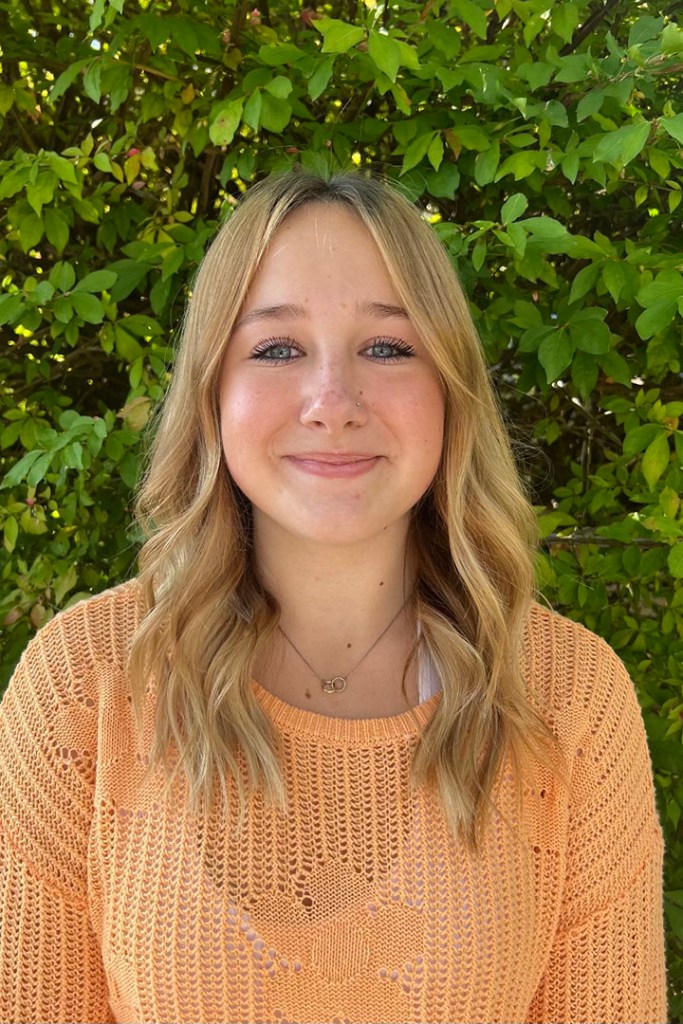
With fall sports in full swing, the Salem Psychos are busy showing their support.
The student section at sports events is there to bring fun to games and encourage the teams. These students are led by five leaders.
“Lauryn Swierczynski is our main leader,” Salem Psychos Advisor Mr. Nick DeMary said. “Then we have Kayla Ramer, Grace Sybesma, Dom Rosensteel and Cooper Dann.”
These leaders do their best to ensure that students have fun at sports events. But beyond this, they make sure that student athletes always have someone supporting them.
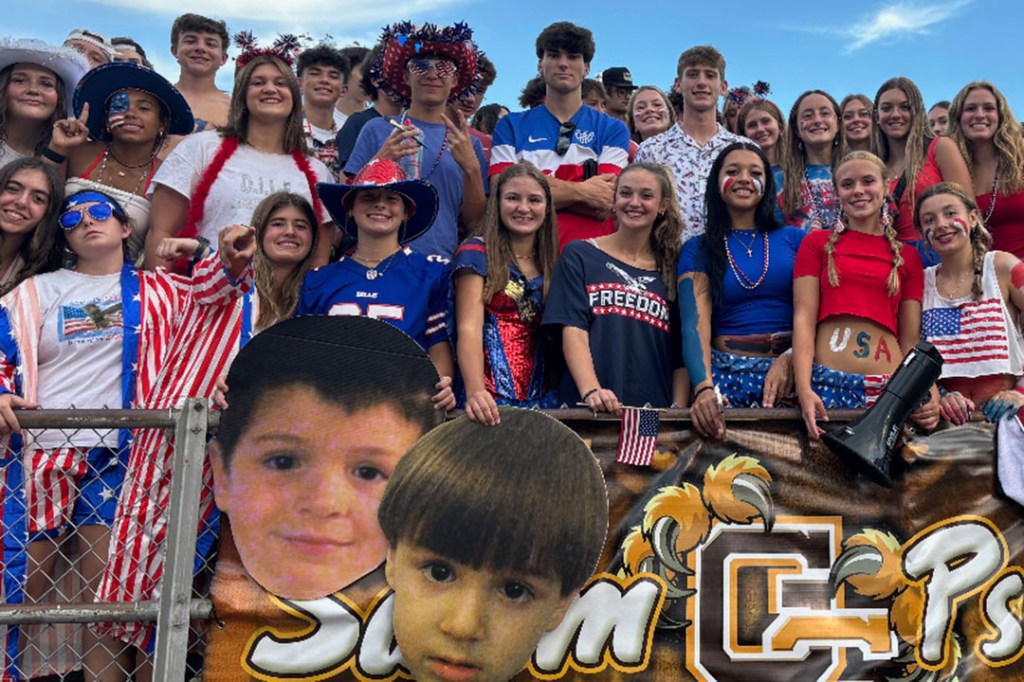
The HS student section at the GS vs. Valley football game.
Photo Courtesy: Mrs. Andrea Redinger
“The student section is a major driving factor of school spirit, no doubt,” Swierczynski said. “As an athlete, having your peers come to your games really does make a difference. It gives you another reason to play, to push through and gives the team a wave of school pride.”
While the student section works to keep them supported outside of school, they are also working to arrange in school support.
“I want to get involved in the school,” Mr. DeMary said. “Maybe a pep rally. We are also trying to get t-shirts made and stuff like that.”
Getting the students involved may draw bigger crowds to school events. The leaders and DeMary are working hard to get advisory meetings set up. This would open the opportunity to get more ideas and opinions.
“Hopefully we see student athletes from all grades and sports come down to Mr. DeMary’s room and have some input on future themes, chants and ways to get more involvement at games,” Swierczynski said.
Having student input can be helpful when trying to gain involvement. If students like the themes and chants there will be more of a turn out.
“Everything is truly for the students and your voice matters,” DeMary said. “What students want is important because I’m a teacher and what was cool six years ago isn’t anymore.”
Although DeMary works to make things happen for students, the leaders play a role in keeping things up to date.
“Right now, we are working on Gold Rush t-shirts that will most likely be free,” Swierczynski said. “Another thing the other leaders and I are working on is a short video to go over different chants and traditions we do at each game.”
The chants are a way to keep the students having fun and interested at games. This video could help students be prepared for the games and louder when chants are called.
Although all students are in the same general area, it can be hard for some groups to hear and stay involved due to the grade sectioning. In the student section seniors are in the front and it goes by grade level all the way to the back.
“I think they could do a little better trying to involve the freshmen,” freshman Sophia Ginder said. “I think it’s awkward sometimes because they already know what they are going to do in the front and no one in the back knows what’s going on.”
While it may be hard to hear chants, there are still fun things for the younger students participate in, such as themes.
“I like the themes because I feel like it’s a way we can all be connected,” Ginder said.
Another thing that has been updated this year is the location of the middle school student section. Instead of being on the other side of the field, it is now next to the band which is in between the two sections.
“I personally like this change,” Swierczynski said. “Another section can hear the band better, and it creates connectivity between the middle and high school.”
Introducing the middle school students to the high school section can help show them what they have to look forward to. It can get them excited for what they get to be involved with soon.
“What I really want to see happen after I leave is the revival of the old days,” Swierczynski said. “What I mean by this is it being competitive to become a psycho. Bring back the passing of the torch culture. And keep the energy for all sports, not just football. Pack the section.”
Overall, this year’s group of senior leaders have a lot of goals, and the hope is that they can achieve them all. But it’s also important that there is other students’ interest in carrying on the Salem Psycho traditions.
“We are one at GS and I’m excited to see what the future holds,” DeMary said.

 The Lions' Den