Blood Drive Update 

By: Emma Helmick 

The high school blood drive was a success.  

46 total units were collected from 44 donors. There were 41 procedures which made the event one of the best conversion rates compared to all other high schools around. 

“I thought SADD club did really well,” Secretary of SADD Lola Slavnik said. “I am excited for the Spring semester blood drive.” 

Students and teachers filled in every single appointment, leaving 20 extra people on the waiting list. Most of these donors were left with the same question, where was their blood going and what was it going to do? 

“It was a great experience, they were all so sweet for my first time donating, but I would like to know how they store and test it,” junior Marley Perrone said. 
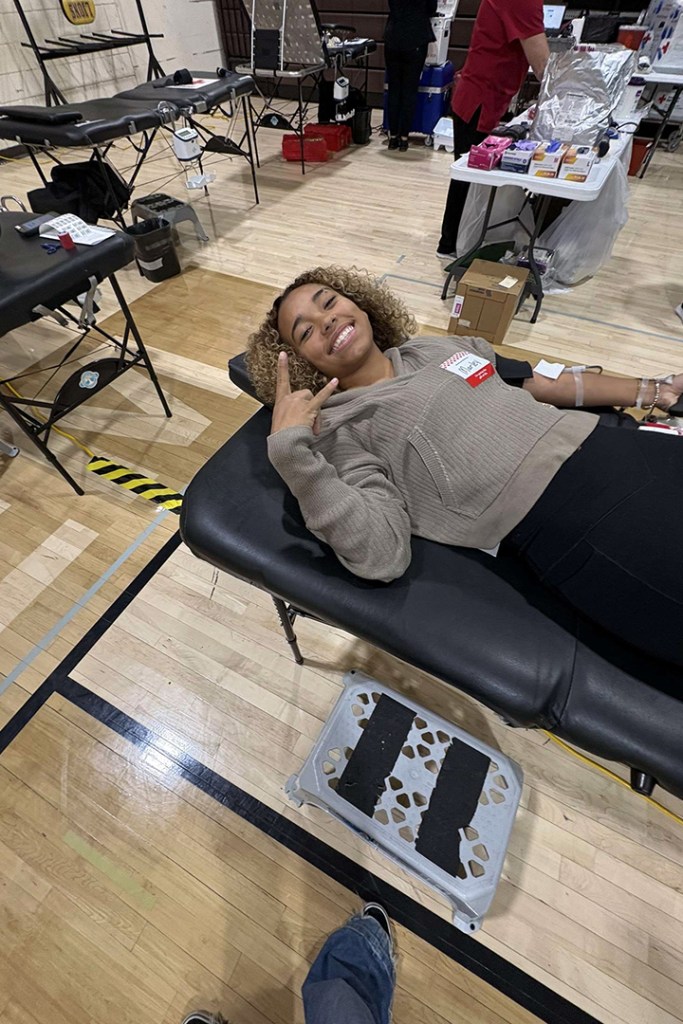

Perrone poses for a photo as she gets her blood taken.

Photo By: Emma Helmick


After the blood is donated to the Red Cross, it is sent to a processing lab in Johnstown where it is tested and tagged.  

 “When we say that your one donation can save up to three lives it is because there may be three products derived from your blood, such as red cells to treat trauma, plasma to help a premature baby and platelets to help a patient battling cancer,” Red Cross Strategic Business Planning Manager Cletus McConville said. 

The Red Cross also takes the blood cells and separates them from red cells, platelets and plasma.  

They take two units of blood from each person; it takes 51 ml to fill a bag.  

“You never know when you or someone close to you will need blood,” McConville said. “Giving today ensures that lifesaving blood is available to patients in need. So, it is likely that if you or a loved one ever have a need, you would desire that others have the same generous spirit as you.” 

SADD Club Blood Drive 

By: Rubee Stillwagon 

On Monday November 25, students and teachers at GS put an arm in to help with blood shortages. 

Last year SADD club took over the blood drive after the Red Cross club disbanded.  

“Mrs. Firmstone has done it the whole time until last year when she started including SADD club,” SADD Club Advisor Mrs. Alyssa Lukatch said. 

The blood drive was held in the gym, where American Red Cross volunteers set up and got to work at meeting their goals. 

“We had a ton of people sign up this year,” Mrs. Lukatch said. “Our top amount that we had was 42 and all of those spots have been filled. We also had 22 other people on a wait list.” 

There are certain requirements donators must meet to give blood. One must be in good general health, have stable iron levels, be at least 17 years old or 16 years old with parental consent, be at least 110 pounds and have not donated blood in the last 56 days. 


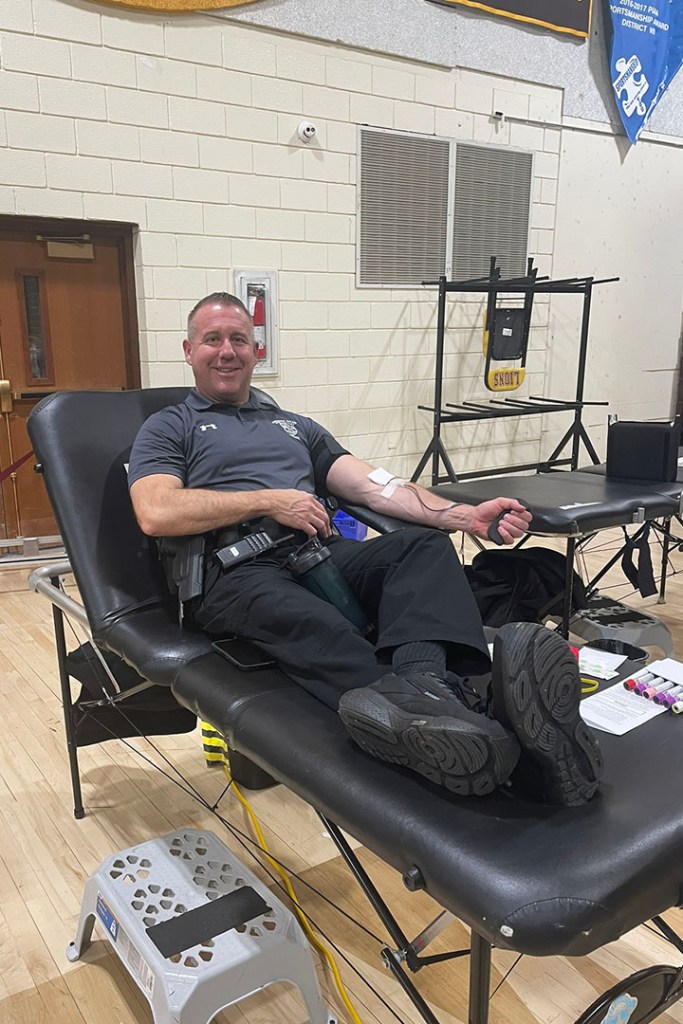
Officer Dieter gets his blood taken.

Photo By: Emma Helmick


“Donating blood helps people who are struggling with severe blood loss,” sophomore Cora Lehman said. 

After the blood is donated, it is then processed and shipped out to medical facilities in need. Blood transfusions are given to patients in many situations such as surgeries, childbirth, cancer treatments and so much more. 

For SADD club a lot went into planning for this event. 

“We had to have many meetings about it and walk around school asking people if they wanted to sign up,” Lehman said. “It worked out really well and we were able to get a lot of people to sign up.” 

Along with talking to students and teachers about the blood drive, members of the club also hung fliers throughout the school.  

They also set things up for people who have donated as a thank you for their donations. 

“After they donated, they got Chick-fil-A and there were also snacks and drinks,” Lukatch said. “They also got put into a drawing. We have ten different gift cards, and they are ten dollars each.” 

Students who did a Power Red donation, which is where one gives a concentrated dose of red blood cells, got their names entered in the drawing three times. The American Red Cross also gives out gift cards. 

“Students should donate because it can save a life, and the blood drive is a great opportunity for the school to help the community,” Lehman said. 

Stress Management

By Samarah Guy

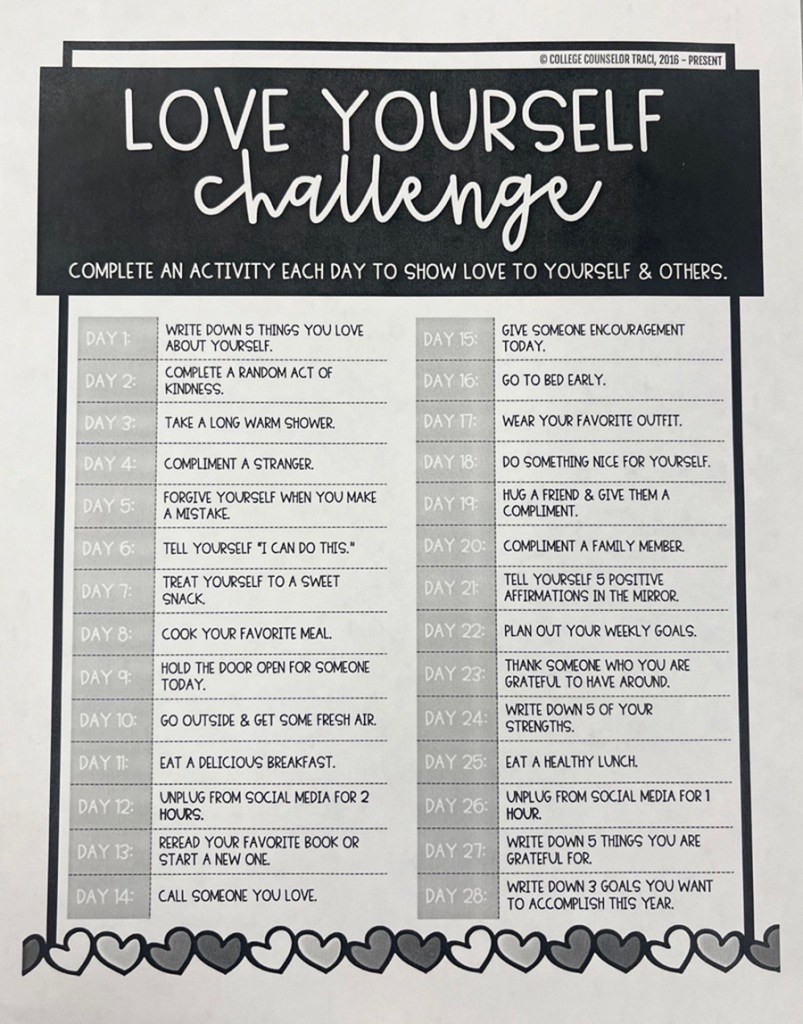
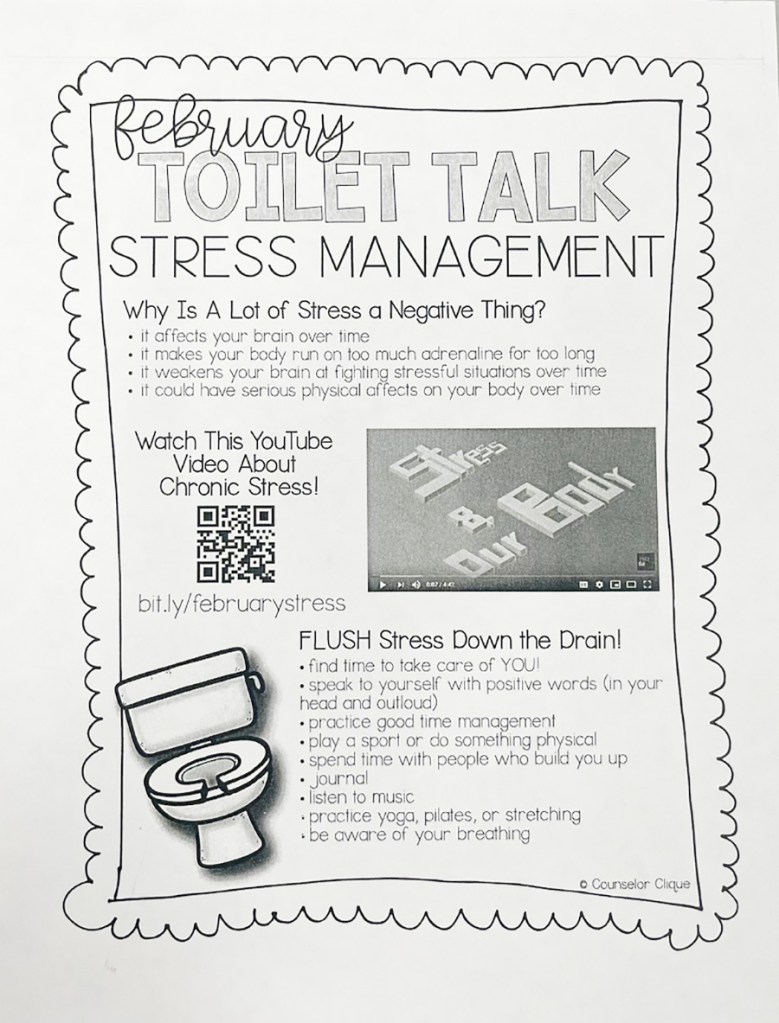
Resources are available in the Guidance Office to help alleviate stressful situations and to promote healthy solutions to issues students may be having.

Stress happens when the mind goes through a state of worry or tension.

Things like big changes, too many responsibilities, lack of control, trying to reach expectations, hate or abuse can be some of the leading causes of stress.

“There’s going to be stressors, things that stress us out in life, but being able to deal with them in healthy ways is important,” Guidance Counselor Mr. John Manley said.

Deep breathing, counting back from a number or simply just finding something that can ease the mind are great ways of releasing stress.

“I try to remove myself from the stressful environment that I’m in,” Manley added.

When people are stressed, they tend to fidget around or become emotional as well. This is because stress can be too much emotion for one’s body to handle and needs to be released in some manner.

“When I’m stressed, I tend to get angry or frustrated,” sophomore Cora Gray said.

Trying to understand what is causing the stress is the first step to take. From there one can start talking about it and find ways to help ease the stress.

“I like to find three things to focus on because then I’m not thinking about what is stressing me,” Gray added.

Stress can also cause stiffness to parts of the body, so exercising or stretching when stressed can be an effective way to deal with it as well.

“Make sure that you have time to balance some sort of healthy distraction, so that you’re not constantly in a stressful situation,” health teacher Mr. Patrick Hutchinson said.

Stress happens to everyone, and preventing it isn’t necessarily possible. Staying organized, having a healthy diet, getting enough sleep, exercising and taking care of one’s mental and physical health are great ways to help minimize how much stress a person has.

Stress may also lead many teens to addiction because they don’t understand how to cope properly. To prevent stress-caused addiction, find the triggers and find a solution when triggered.

“Try to find yourself a distraction to help yourself, not drugs, not alcohol, not compulsively eating but something healthy like exercise, music or whatever it may be,” Mr. Hutchinson added.

Positive self-talk about stress management is a healthy form of coping with day-to-day stressors.