Queen | “A Night at the Opera”
By Kerrick Shaw
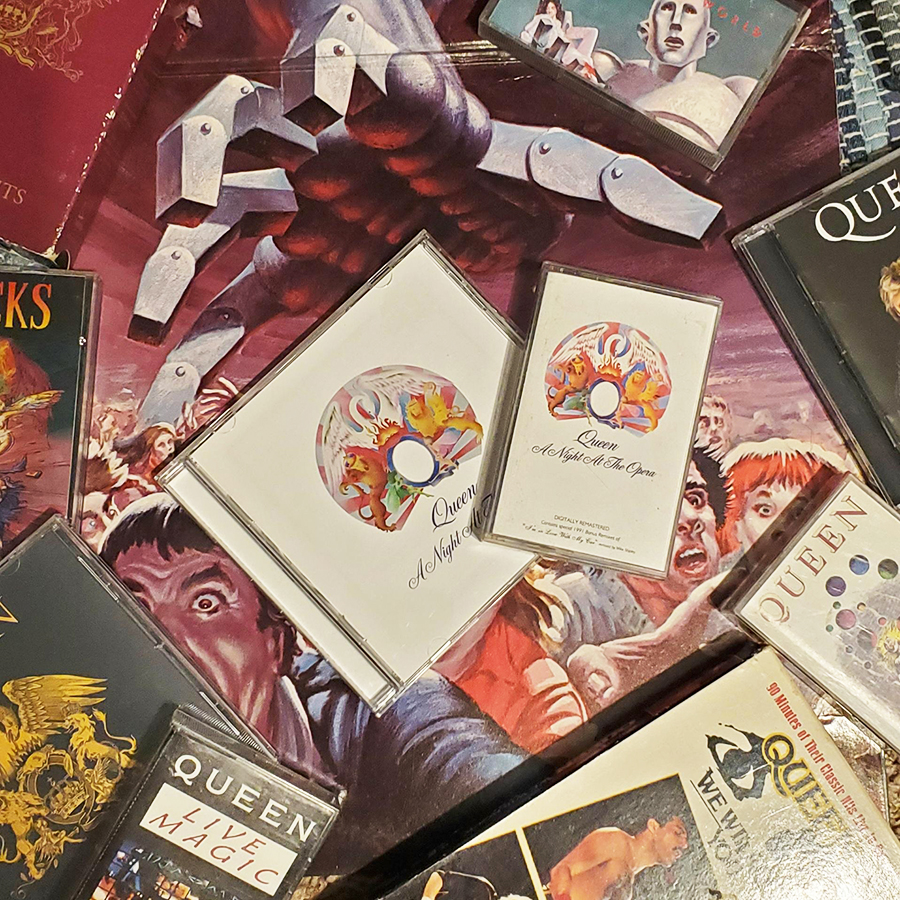
Photo by: Kerrick Shaw
Made up of Brian May, Roger Taylor, John Deacon and Freddie Mercury, Queen is no doubt solidified as one of the world’s most recognizable bands of all time. Their presence in the music realm is impossible to overlook; no matter your music taste, I’m sure you have participated in the stomp-stomp-claps of “We Will Rock You.”
Prior to Queen, May and Taylor worked together in a band called Smile, which brought a large enough following to stick them on the map, one of those followers being Mercury. Upon Mercury’s joining the band in 1970 and their eventual name change, Queen performed live with various bass players before Deacon joined in 1971. The band played their first live show with the iconic lineup that July and went on as one of the most exciting groups in rock ‘n’ roll history.
The opening track of their debut album, “Queen,” and their eventual first single, “Keep Yourself Alive,” caught the ears of visiting producers John Anthony and Roy Thomas Baker during the early recording sessions of the album. It prompted them to work with Queen, promoting them to a number of record labels through “showcase” performances before striking a deal with EMI Records and Trident and finally putting out the finished album in 1973.
After the drawn-out process that came before their debut, they held a steady pace, releasing an album yearly until 1980 and then releasing less consistently before Mercury’s death from bronchial pneumonia, a result of AIDS, in 1991.
All while playing minor shows on tours promoting their first album, Queen recorded “Queen II,” now with access to regular studio time. They took advantage of the tools at hand and earned themselves the number five spot on the British Album Chart. It featured their first hit, “Seven Seas of Rhye,” and helped to establish the layered sound that became a staple of theirs. Regardless of the complex yet fantastic instrumental passages and fantasy driven lyrics, and the overall boost it brought the band, it received mixed critical reviews; the Winnipeg Free Press called it an “over-produced monstrosity.”
They quickly one upped themselves with the release of “Sheer Heart Attack” in 1974, reaching number two in the UK and going gold in the US; it was their first go at international success. The album features various hits, but most prominently “Stone Cold Crazy” and “Killer Queen.”
Being fully welcomed by American fans as they grew with fame, Queen headlined tours in the US in 1975. Although they were quickly becoming one of Britain’s most popular bands, they were held back from living the lavish lives they earned because of their contract with Trident. They fought to break free from Trident’s management and landed in the hands of Elton John’s manager, John Reid.
“A Night at the Opera,” at the time the most expensive album to ever be produced, was released later that year. Like most of their work before it, “A Night at the Opera” experimented with the sounds of various genres and bent the radio rules with songs like May’s “The Prophet’s Song,” and, of course, “Bohemian Rhapsody,” arguably their most well-known single.
This album took Queen to an even higher level. It showcased each member’s talent and how the band as a whole was an incredible music machine. It opens with “Death on Two Legs,” a track dedicated to their manager before Reid. It brings an intense sci-fi sound to the album, but is then followed up with the soft, piano-led, “Lazing on A Sunday Afternoon.” The contrasting themes flow throughout the album.
After Roger Taylor’s heavier track, “I’m in Love With my Car,” Deacon, the most in-the-shadows member of Queen, shines in composing “You’re my Best Friend,” one of the bigger hits off the album.
Kicking off the B-side, the incredibly overlooked eight-minute-long track, “The Prophet’s Song,” was overshadowed by the singles and hits off the album, however it is where Brian May shines most. Although the A cappella segment takes up a large chunk of the song and can drag on for some, it is nonetheless a powerful and epic feature.
Serving as a cushion to land on after the long ride that is “The Prophet’s Song,” “Love of my Life” is yet another all-time greatest hit of theirs featured on “A Night at the Opera.” It’s an emotional ballad that lives on through Freddie and Brian May’s voices, being the one song not sung live by Paul Rogers or Adam Lambert after Mercury’s passing, because of being dedicated to Mercury’s ex-wife Mary Austin.
The closing track, “Bohemian Rhapsody,” was a shock to all. When recording, over 180 overdubs were used to accomplish the incredible operatic vocals that remain unbelievably recognizable today. The song may be one of the few to live on forever, having been revived various times, such as with the release of the (subpar) Queen biography of the same name in 2018, or its iconic cameo in Wayne’s World (1992).
Regardless of your taste in music, whether it’s modern pop or an obscure rock subgenre, I find it safe to assume that everybody knows and loves Queen’s hits. It is undeniable that Freddie Mercury’s voice is known amongst all, hopefully including today’s kids. It could be hard for some to explore the songs that aren’t as widely recognized as others, but no matter which one is chosen and when, Queen will always bring the same electrifying feel.
 The Lions' Den