The Effects of Summer  

By Samarah Guy  

Photo by: Samarah Guy

As the weather warms up and kids get excited to have fun in the sun, there are still some things to keep in mind as the summer months roll in.  

Summertime is a time for kids to experience freedom and relaxation, but many may feel a sense of loneliness or boredom.  

“I love it because I can just relax, but sometimes I get bored and don’t really have anything to do a few weeks into summer.” sophomore Xavier Zink said. 

Without school in session, many teens stay active the first few weeks of summer but quickly run out of things to do, leaving them bored. It can be hard for a teenager to enjoy their summer when they are still limited to what they can do.  

“In the summer I don’t hang out with as many people as I do when school starts,” Zink said. “It gets really boring after so long because there is only so much you can do as a teenager without your license or a car.”  

Self-isolation increases during the summer as well. School provides structure and the opportunity for kids to be social; without the structure of school, teens may run into issues with anxiety, depression, poor behavior or socialization.  

“My grades aren’t the best when I come back from summer break,” senior Jesse Keffer said. “It usually takes me a bit of time to get back into the habit of keeping up with schoolwork, so my grades end up suffering in the beginning of the year.”   

During summer months kids get a chance to relax their brain from working hard in school. Although this is good for a short period of time, students can experience summer learning loss; according to Brookings.edu, kids lose 17-25% of knowledge from the prior school year.  

“Summer really makes it hard for me to keep a good sleeping schedule,” Keffer added. “I end up staying up longer than I should and sleeping more into the day.” 

Without the worry of being up early for school, kids have the tendency to stay up late. Although this may sound appealing, a bad sleeping pattern can lead to poor mental health and cause issues with sleeping when school starts back up in the fall.  

Despite the negative effects summer has on teens, there are many positive effects that come with the warm weather.  

In the summer teens tend to build strong social connections with others because they usually hang out with friends or go to work; this skill can help with future jobs, community activities and it can better one’s mental health.  

Most people tend to use the free time in the summer to explore new interests. The exploration of new activities can lead to future career opportunities, develop new skills, stay intellectually involved and increase self-confidence.  

“Summer gives me a break from doing what I do every day,” Librarian Mrs. Carrie Vottero said. “It’s such a de-stressing time for me. I like to just spend my time outdoors in the sun listening and watching everything that’s going on around you.” 

Summer gives people the chance to just relax and take a break for as long as they please. This is good because it gives the brain a chance to stop working as hard. It also allows one to recharge and reduce stress levels.  

“I think summer is a great opportunity for you to step back from the electronic world that we are all so wrapped up in,” Mrs. Vottero added.  

Photo by: Samarah Guy

Pros and Cons of Teens Working  

By Samarah Guy   

Photo by: Samarah Guy

With the rise of teenagers working, it is important to look at the pros and cons of adolescents with jobs.  

Working can provide critical life lessons for young adults. It also gives them an opportunity to further explore different career paths while earning some spending money.  

“I’ve learned a lot while working, like communication and time management,” sophomore Mariah Mann said. 

Although some may say having a job as a teenager can be very time-consuming, it helps kids understand how valuable time is and teaches them how to schedule plans around important events. 

Teens can learn things like responsibility, how to work in stressful situations and building more confidence while staying active and motivated. Working also helps them to create a good work ethic. 

The teenage years are the best times for kids to learn these critical skills. Because the brain is still developing, it is easier to consume and hold new information.  

“Working teaches you that it is important to show up on time, you learn how to take orders, you have responsibility and commitment,” guidance counselor Mrs. Laura Klipa said.  

Regardless of the benefits, there are still some downfalls to working during the adolescent years.  

“Kids tend to devote more and more of their time and energy to their job, so much that they start to lose time for things like school,” Klipa added.  

Having a job can be very time-consuming and may end up leaving no time for things like hanging out with friends, family plans or hobbies.  

“Kids tend to see their first paycheck and lose the sight that a diploma and doing well in school is really going to ultimately give them a higher pay,” she said.  

Many kids put off schoolwork because they are earning money and feel that school isn’t as important anymore. This hurts kids because they still need to learn new information, and they may not be ready to completely give up their adolescence. 

On top of not being motivated, having work immediately after school most days of the week may cause students to struggle with sleeping and keeping their focus on assignments. 

“Trying to balance work and school can be hard at times, but you just have to make sure you push through and don’t give up,” senior Demetrious Daniels said.  

Teen Issues  

By Samarah Guy  

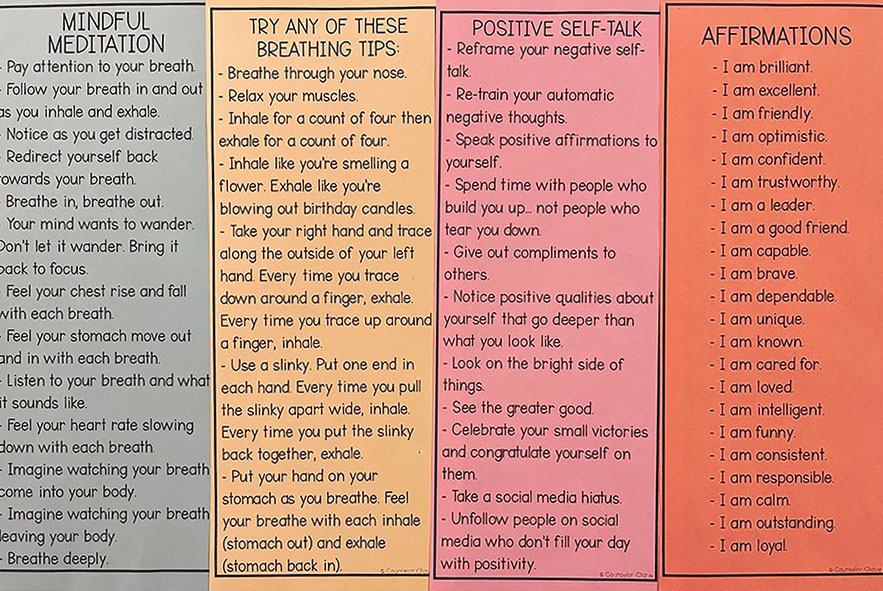
Resources can be found in the guidance office for further help with various teen problems such as bullying, low self-esteem and social anxiety.

Bullying  

Bullying is something that may never be stopped, but understanding what it is and why people do it is important.  

People bully for many different reasons, some of which being to feel a sense of power, to become popular, home issues, wanting attention or out of boredom. Some may even bully as a form of revenge for being bullied in the past.  

Dealing with bullying can be very difficult, but putting an end to it is more important. Avoiding engagement with the bully, staying positive, distracting one’s mind, talking it out with the bully or seeking higher authority are some of the most helpful ways to handle the problem.  

“It’s mostly verbal, I think, at this point,” French teacher Ms. Laura Hoffer said.  

Bullying can be physical, verbal, online or prejudicial. Physical bullying happens in person, and it involves someone assaulting another person. Verbal bullying is when one may use words to hurt someone’s feelings. Bullying that occurs online is called cyberbullying. Prejudicial bullying is when someone bullies another person because of their age, gender, religion, disability or sexual orientation.  

“I think it’s hard to get the bully’s words out of your head, especially at an adolescent age, so talking to someone is going to help a lot,” Ms. Hoffer added. 

When trying not to be a bully, one should think before doing it, remove oneself from the bullies around, change one’s perspective, stop being a bystander or talk to a professional.  

Low Self-esteem  

Low self-esteem is when one has a very negative opinion of themselves.  

There are many causes to low self-esteem, but the main causes are social media, peer pressure, bullying, parental influence or social interactions.  

“Surround yourself with positive people who will boost you,” Guidance Counselor Mr. John Manley said. 

After having low self-esteem, most people tend to gain anxiety, eating disorders, emotional distress or panic disorders.  

“Try not to focus your energy on the things that you can’t do, but focus your energy on the things that you can do,” Mr. Manley added.   

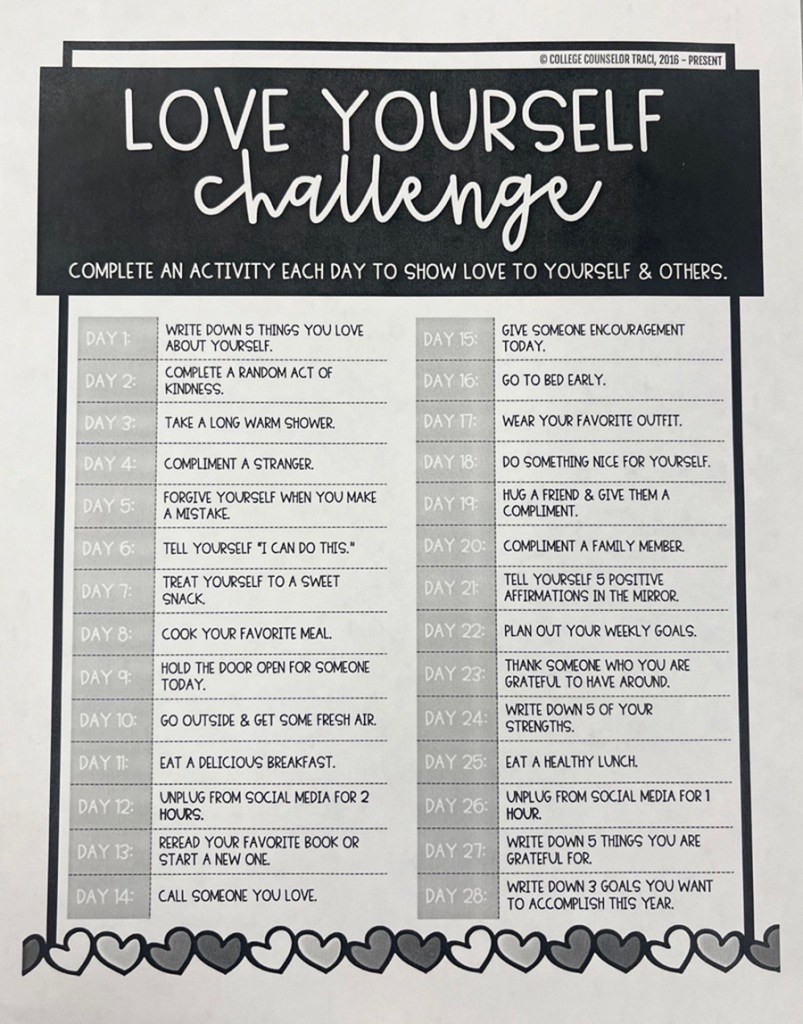
To help with one’s self-esteem one must encourage trying new things, encourage physical activity, find positive thoughts about oneself and simply just be positive. Talking to a friend, family member or professional is another way that can help.  

Social Anxiety  

Social anxiety is when one fears being social or has a lot of anxiety when in social environments.  

Social anxiety can look different for many people. Normally one will have few friends, avoid talking to people, especially strangers, avoid going out, feel embarrassed after being social, be self-conscious, be anxious about being around people, lack engaging with others or simply just be shy.  

“Just keep in mind that no one’s judging you and stay positive,” health teacher Mrs. Alyssa Lukatch said. 

To help someone suffering with the disorder one can offer breathing exercises, encourage therapy, congratulate the little accomplishments, be supportive or just listen when it’s needed. To ease one’s social anxiety, deep breathing, facing fears, fighting negativity or talking to someone are the most common ways to help.   

“You also want to be positive in who you are, and know that most people have social anxiety too,” Mrs. Lukatch added. 

Stress Management

By Samarah Guy

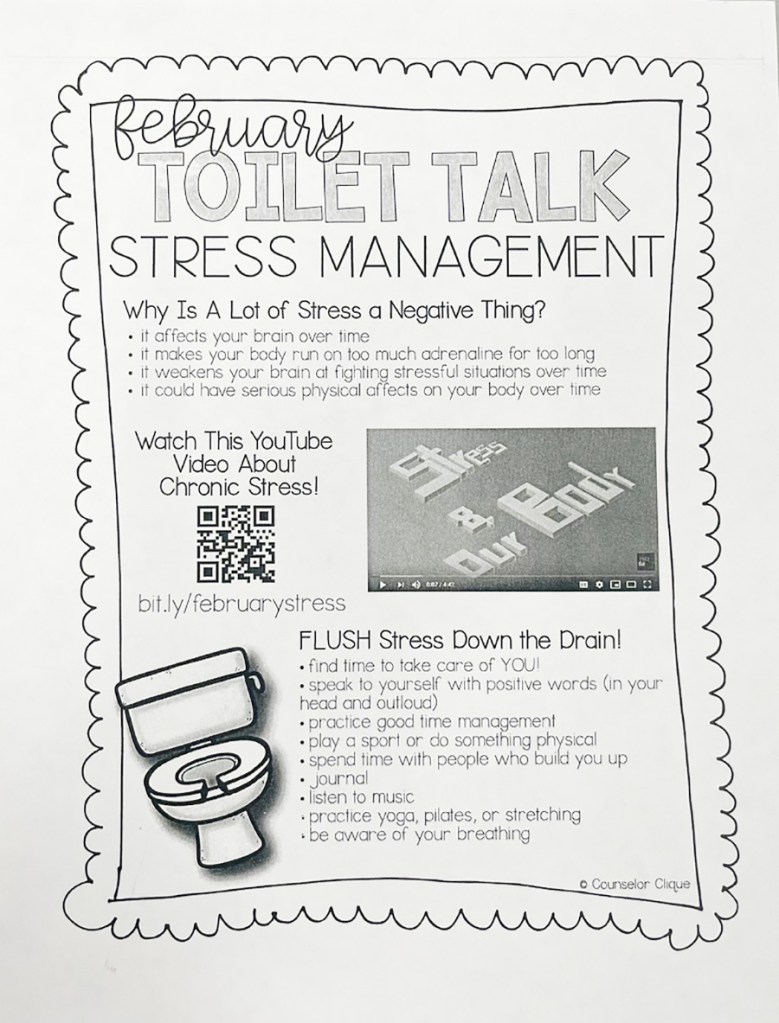
Resources are available in the Guidance Office to help alleviate stressful situations and to promote healthy solutions to issues students may be having.

Stress happens when the mind goes through a state of worry or tension.

Things like big changes, too many responsibilities, lack of control, trying to reach expectations, hate or abuse can be some of the leading causes of stress.

“There’s going to be stressors, things that stress us out in life, but being able to deal with them in healthy ways is important,” Guidance Counselor Mr. John Manley said.

Deep breathing, counting back from a number or simply just finding something that can ease the mind are great ways of releasing stress.

“I try to remove myself from the stressful environment that I’m in,” Manley added.

When people are stressed, they tend to fidget around or become emotional as well. This is because stress can be too much emotion for one’s body to handle and needs to be released in some manner.

“When I’m stressed, I tend to get angry or frustrated,” sophomore Cora Gray said.

Trying to understand what is causing the stress is the first step to take. From there one can start talking about it and find ways to help ease the stress.

“I like to find three things to focus on because then I’m not thinking about what is stressing me,” Gray added.

Stress can also cause stiffness to parts of the body, so exercising or stretching when stressed can be an effective way to deal with it as well.

“Make sure that you have time to balance some sort of healthy distraction, so that you’re not constantly in a stressful situation,” health teacher Mr. Patrick Hutchinson said.

Stress happens to everyone, and preventing it isn’t necessarily possible. Staying organized, having a healthy diet, getting enough sleep, exercising and taking care of one’s mental and physical health are great ways to help minimize how much stress a person has.

Stress may also lead many teens to addiction because they don’t understand how to cope properly. To prevent stress-caused addiction, find the triggers and find a solution when triggered.

“Try to find yourself a distraction to help yourself, not drugs, not alcohol, not compulsively eating but something healthy like exercise, music or whatever it may be,” Mr. Hutchinson added.

Positive self-talk about stress management is a healthy form of coping with day-to-day stressors.