Student Help Programs
By: Kerrick Shaw
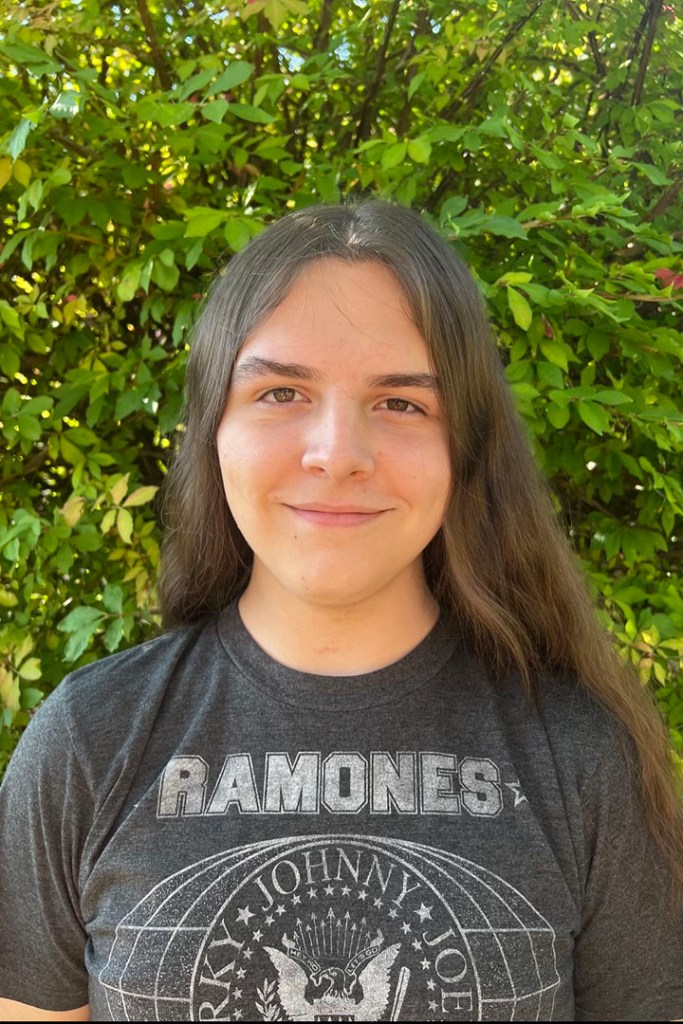
Resources are available at GS for students who need a boost with their classes.
Tutoring services at GS include the Next Step program and the National Honor Society’s student-led tutoring program.
Next Step is a resource for students to work on missing assignments, make-up/retake assessments and get help with any questions they may have. Next Step takes place from 3:05 to 4:05 p.m. in room 373 on Monday, Tuesday, Thursday and Friday. Transportation is available for students on Tuesdays and Thursdays.
“It’s not meant to seem like a detention, it’s meant to be more relaxed,” Next Step teacher Dr. Taylor Guido said. “As a student, I would’ve liked to have this because when you get home, you get distracted. It’s a quiet, extra hour of working time for students who need it.”
Next Step keeps students in “school mode,” according to Dr. Guido. No paperwork or form is required to participate in the program; students only need to communicate with Guido in advance, giving them freedom to pick and choose when they want to stay.
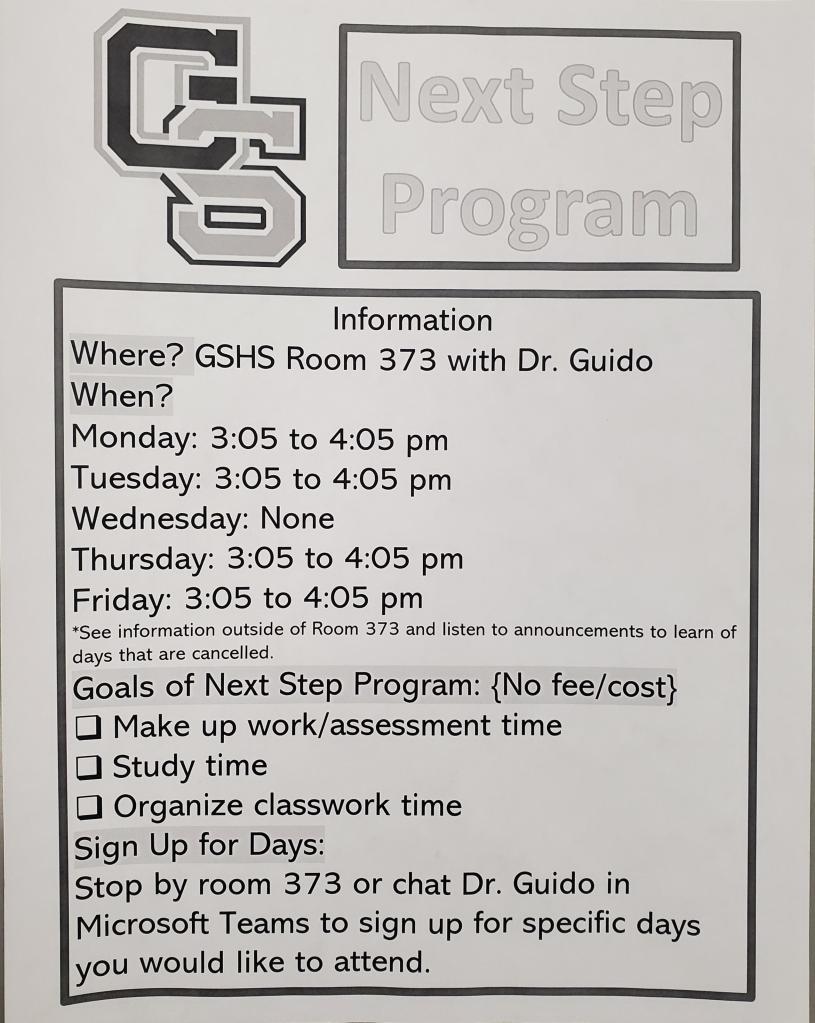
Next Step times and goals.
Photo By: Kerrick Shaw
“I like to ask students what their goal is for the day; I also communicate with their teachers,” she said. “More students have started to stay more recently, but I hope more do take advantage of it in the future.”
On the other hand, tutoring through National Honor Society (NHS) requires filling out a Microsoft Form that’s available with a QR code posted throughout the school. The form requires the student’s name, advisory and advisory teacher, the class they need help in and answering a few multiple-choice questions that will help them be set up with the best-fitting mentor.
NHS is a national program that gives students the opportunity to engage in community outreach and service and encourages the development of important skills. The GS chapter is a group of about 50 seniors who are highly engaged in the school and community.
“I go through the NHS members and find who’s able to help students in need,” NHS Adviser Mrs. Cheryl Harper said. “Once they’re matched, they meet in advisories and work it out. I think the students who show up, and want the help, really do benefit from it.”
NHS Member senior Everett Redinger believes the tutors are “very helpful” when working one-on-one. Tutors are working with the same education, having taken most of the same classes and knowing what hardships went with them.
“I don’t think enough students that need help take advantage of it,” Redinger said. “The students are generally all aware of the tutoring program, but for students to sign up for it, they themselves must want help. If the students don’t want to truly improve in the area, tutoring can be very difficult.”
Both Next Step and NHS’ tutoring have grown recently according to Dr. Guido and Mrs. Harper respectively, but both hope to see more students participate in the future.
“I hope that students who need help become more self-advocating, more willing to ask for help,” Harper said. “I think the school’s tutoring services are something kids should turn to before falling behind and having more trouble. They’re here to help.”
 The Lions' Den