Students and teachers watched social media as influencers crowded the stages to see popular music stars perform at the famous music festival known as Coachella.
The 24th annual Coachella music festival took place in California from April 11-13 and April 18-20.
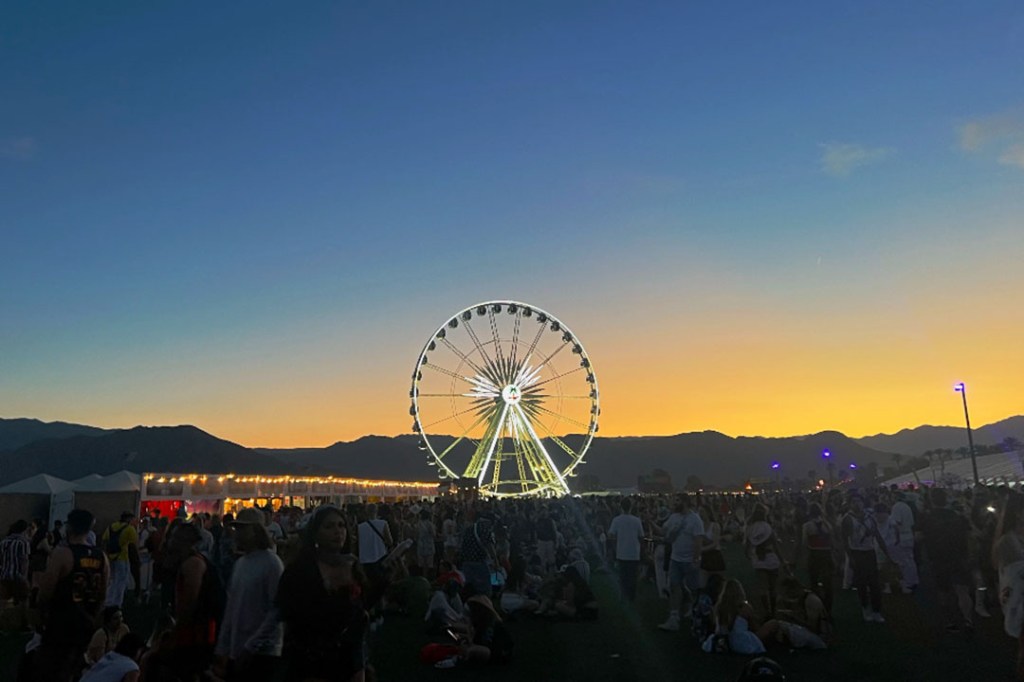
The world’s largest transportable Ferris wheel, featured at Coachella.
Photo Courtesy: Mrs. Maurissa Auer
“I didn’t really follow who was actually performing this year, but I do always enjoy the fashion,” senior Ksena Spencer said. “I saw other people saying that the performers didn’t get enough appreciation this year.”
Many artists headlined over the weekends including Lady Gaga on Friday, Green Day on Saturday and Post Malone and Travis Scott on Sunday. Several other artists performed leading up to the main stages.
“My sister-in-law went and she said it was fun,” Chorus teacher Miss Marissa Auer said. “She said it was really high energy, and she saw influences.”
Over the years, fewer celebrities attend the event because it has become less elite. It has become overcrowded with influencers recording every moment. This is caused by brands sponsoring them.
“Most people my age watch their favorite influencers or famous people go to Coachella and like to keep up with what they’re doing,” junior Lily Ewing said.
Even with all of the famous pop stars who perform, social media usually focuses on the guests who attend and what they are doing throughout the festival.
“I mean, it’s a bit bizarre watching people pay so much money on clothing, camping equipment and the actual concert part of it itself,” Spencer said.
With the 70s punk movement on the uprise, the Ramones provided a foundation with their simple yet strong lyrics and three-chord sound; they live on with being considered the first true punk band. The Ramones took shape in 1974 following each member’s adopting of the surname Ramone and went on to play a raging 2,263 concerts over the next 22 years.
The Ramones was the combination of members from two bands and a rookie in the New York City borough of Queens. The original lineup consisted of John Cummings and Thomas Erdelyi, who played together in a garage band during the late 60s; Jeff Hyman, singer of the early 70s glam rock band, Sniper; and Douglas Colvin, who had recently moved from Germany. Colvin and Cummings invited Hyman to join their new band, with Erdelyi looking to be their manager. As each member’s role in the band was solidified, the name “Ramone” was introduced by Colvin, inspired by Paul McCartney’s pseudonym: Paul Ramon.
Hyman, Cummings, Erdelyi and Colvin went on as Joey (vocals), Johnny (guitarist), Tommy (drummer) and Dee Dee Ramone (bassist), respectively.
Sporting their ripped jeans and leather jackets, the Ramones played their first CBGB gig in August of ’74, managing to cramp in over 70 more shows at the club before the year’s end. With their electric performances lasting barely 20 minutes per and still pulling in an incredible crowd, they quickly rose to be the faces of the New York punk scene.
Bands such as The Stooges, The Sex Pistols, The New York Dolls and many more all brought punk rock to life before the Ramones became known as originators, which I feel is necessary to mention. Depending on how you view it, punk music can even be traced back to the 1950s with ruder rock and roll garage bands. However, the influence the Ramones left is still undeniable.
After two years of earning a powerful reputation through intense performances all over New York, they finally recorded their debut self-titled album in only one week’s time and released it in late April of 1976.
Coming out to be just under thirty minutes long, “Ramones” consists of 14 hard-hitting tracks that each go only slightly above or below two minutes – the longest being the seventh track, “I Don’t Wanna Go Down to the Basement,” at two minutes and forty seconds. Although it stands today as one of the most famous albums of all time, especially for punk rockers, it didn’t push the Ramones up the charts – managing to only reach 111th on the US Billboard 200 chart with both singles falling flat upon release.
Their music took the early rock music essentials and boiled them down to the basics; each song remained simple and comedic, but they were loud, fast and kept everyone listening, regardless of whether or not they understood the gibberish coming out of Joey’s mouth.
“Ramones” kicks off with 20 seconds of their fast-paced instrumentals that immediately have you shaking your head and tapping your feet before hitting you with Joey’s iconic drum-backed hey-ho-let’s-go’s that have since become the band’s chant. “Blitzkrieg Bop” was one of the two singles that failed to become hits at the time, the other being “I Wanna Be Your Boyfriend.” Although it didn’t do much for them then, it’s now one of their most recognizable songs and is an iconic ‘70s punk rock tune.
“Judy Is a Punk,” is a prime example of their repetitive nature with the first and second verse being identical. Its fictional lyrics follow two juvenile girls, Judy and Jackie, through their antics and joining of the SLA (Symbionese Liberation Army, a far-left American terrorist organization of the 1970s). The girls returned in the 1980 album “End of The Century” track titled “The Return of Jackie and Judy.”
“I Wanna Be Your Boyfriend” follows “Judy Is a Punk” and is one of my all-time favorites from them. By far the slowest song on the album, “I Wanna Be Your Boyfriend” is a straightforward love song written by Tommy to breakup the trend of I-Don’t-Wanna’s in their song titles. It features instruments you wouldn’t expect to hear from a punk band like tubular bells and a glockenspiel. In comparison to their live performances, every song on this album is slower than what their fans were used to.
In my opinion, “Ramones” was never topped. Like most bands, their debut stood the test of time and is truly their best work – however they do have other classic albums to offer, like “Rocket to Russia” and “Road to Ruin.” The Ramones had countless big successes, such as: “Rock ‘n’ Roll High School” (1979), a film from legendary film producer Roger Corman; various iconic singles like “Do You Remember Rock ‘n’ Roll Radio?” (1980) and “Pet Sematary” (1989); and their induction into the Rock and Roll Hall of Fame in March of 2002.
Unfortunately, as of 2014, all original members of the Ramones have passed away, but sequential members, Marky, Richie and CJ Ramone, still tour to this day. In 2003, “We’re a Happy Family: A Tribute to Ramones” was released – co-produced by Rob Zombie and featuring Red Hot Chili Peppers, Metallica, U2, Kiss and many others.
I can almost say that you had to be there to fall in love with the sound of the Ramones – but, obviously, I was not. If you’re interested in punk music whatsoever, whether it be classic, ‘90s or ska, “Ramones” is an essential, no-skip listen.
Made up of Brian May, Roger Taylor, John Deacon and Freddie Mercury, Queen is no doubt solidified as one of the world’s most recognizable bands of all time. Their presence in the music realm is impossible to overlook; no matter your music taste, I’m sure you have participated in the stomp-stomp-claps of “We Will Rock You.”
Prior to Queen, May and Taylor worked together in a band called Smile, which brought a large enough following to stick them on the map, one of those followers being Mercury. Upon Mercury’s joining the band in 1970 and their eventual name change, Queen performed live with various bass players before Deacon joined in 1971. The band played their first live show with the iconic lineup that July and went on as one of the most exciting groups in rock ‘n’ roll history.
The opening track of their debut album, “Queen,” and their eventual first single, “Keep Yourself Alive,” caught the ears of visiting producers John Anthony and Roy Thomas Baker during the early recording sessions of the album. It prompted them to work with Queen, promoting them to a number of record labels through “showcase” performances before striking a deal with EMI Records and Trident and finally putting out the finished album in 1973.
After the drawn-out process that came before their debut, they held a steady pace, releasing an album yearly until 1980 and then releasing less consistently before Mercury’s death from bronchial pneumonia, a result of AIDS, in 1991.
All while playing minor shows on tours promoting their first album, Queen recorded “Queen II,” now with access to regular studio time. They took advantage of the tools at hand and earned themselves the number five spot on the British Album Chart. It featured their first hit, “Seven Seas of Rhye,” and helped to establish the layered sound that became a staple of theirs. Regardless of the complex yet fantastic instrumental passages and fantasy driven lyrics, and the overall boost it brought the band, it received mixed critical reviews; the Winnipeg Free Press called it an “over-produced monstrosity.”
They quickly one upped themselves with the release of “Sheer Heart Attack” in 1974, reaching number two in the UK and going gold in the US; it was their first go at international success. The album features various hits, but most prominently “Stone Cold Crazy” and “Killer Queen.”
Being fully welcomed by American fans as they grew with fame, Queen headlined tours in the US in 1975. Although they were quickly becoming one of Britain’s most popular bands, they were held back from living the lavish lives they earned because of their contract with Trident. They fought to break free from Trident’s management and landed in the hands of Elton John’s manager, John Reid.
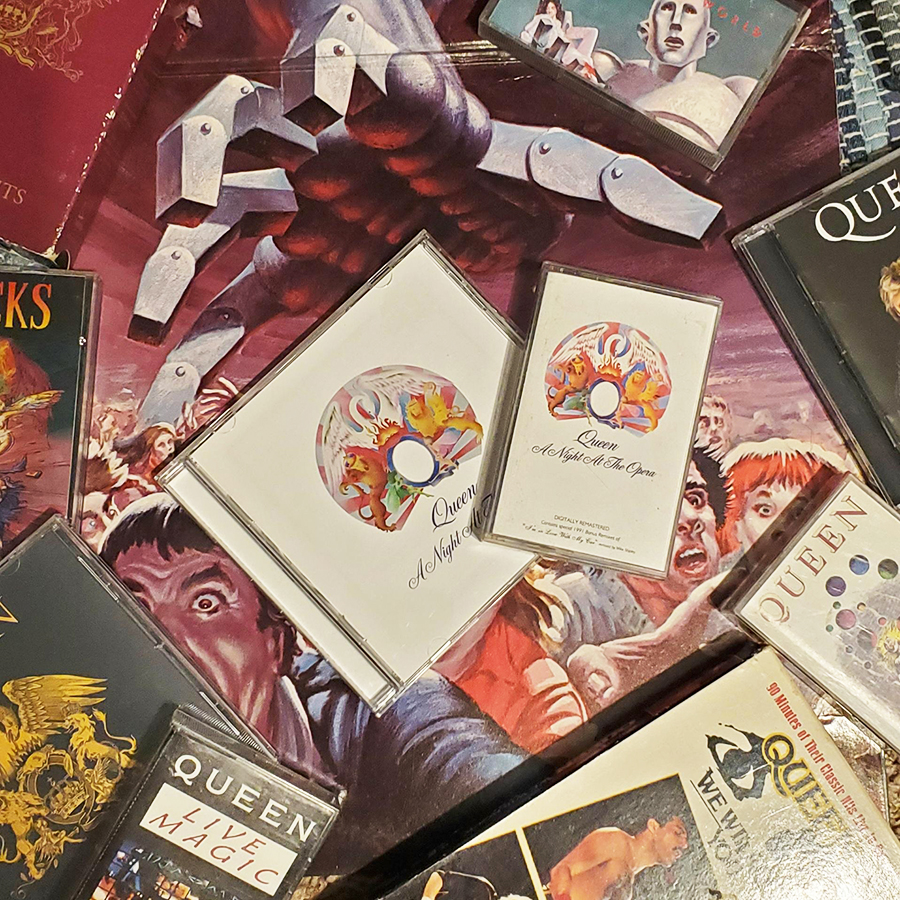
“A Night at the Opera,” at the time the most expensive album to ever be produced, was released later that year. Like most of their work before it, “A Night at the Opera” experimented with the sounds of various genres and bent the radio rules with songs like May’s “The Prophet’s Song,” and, of course, “Bohemian Rhapsody,” arguably their most well-known single.
This album took Queen to an even higher level. It showcased each member’s talent and how the band as a whole was an incredible music machine. It opens with “Death on Two Legs,” a track dedicated to their manager before Reid. It brings an intense sci-fi sound to the album, but is then followed up with the soft, piano-led, “Lazing on A Sunday Afternoon.” The contrasting themes flow throughout the album.
After Roger Taylor’s heavier track, “I’m in Love With my Car,” Deacon, the most in-the-shadows member of Queen, shines in composing “You’re my Best Friend,” one of the bigger hits off the album.
Kicking off the B-side, the incredibly overlooked eight-minute-long track, “The Prophet’s Song,” was overshadowed by the singles and hits off the album, however it is where Brian May shines most. Although the A cappella segment takes up a large chunk of the song and can drag on for some, it is nonetheless a powerful and epic feature.
Serving as a cushion to land on after the long ride that is “The Prophet’s Song,” “Love of my Life” is yet another all-time greatest hit of theirs featured on “A Night at the Opera.” It’s an emotional ballad that lives on through Freddie and Brian May’s voices, being the one song not sung live by Paul Rogers or Adam Lambert after Mercury’s passing, because of being dedicated to Mercury’s ex-wife Mary Austin.
The closing track, “Bohemian Rhapsody,” was a shock to all. When recording, over 180 overdubs were used to accomplish the incredible operatic vocals that remain unbelievably recognizable today. The song may be one of the few to live on forever, having been revived various times, such as with the release of the (subpar) Queen biography of the same name in 2018, or its iconic cameo in Wayne’s World (1992).
Regardless of your taste in music, whether it’s modern pop or an obscure rock subgenre, I find it safe to assume that everybody knows and loves Queen’s hits. It is undeniable that Freddie Mercury’s voice is known amongst all, hopefully including today’s kids. It could be hard for some to explore the songs that aren’t as widely recognized as others, but no matter which one is chosen and when, Queen will always bring the same electrifying feel.
The Clash, nicknamed “The Only Band That Matters,” formed in 1976 and quickly rose to the top of the 70s punk movement, second only to the Sex Pistols. Swimming in the musical movement of 1974, The Clash was surrounded by bands like Television, The Ramones and The Damned, all jumping from garages to the stages.
Formed by guitarist Mick Jones, the band, then named Weak Heartdrops and Psychotic Negatives, was made up of Paul Simonon (bass guitarist) and Terry Chimes (drummer). In search of their missing piece, the energetic and rough lead singer they needed, Joe Strummer left the 101’ers and completed the puzzle of The Clash.
They were considered the most political band stemming out of the U.K., however they thought of themselves more as social, having focused their music on the hardships they saw in people’s everyday lives – serving as a look into the world of the less fortunate.
Their explosive debut single “White Riot” and first studio album “The Clash,” both released in 1977, were kept on the shelf in America until their eventual, and late, releases in 1978.
In 1977, Chimes had left the band due to their chaotic nature and he was then replaced by Nicky “Topper” Headen, who went on to play with the band until 1982.
With their self-titled release considered too raw and disorderly for American audiences, their second album, “Give ‘Em Enough Rope” (1978), was overseen by an American producer in an attempt to make it more appealing for that potential audience.
Regardless of their efforts, The Clash didn’t make their big breakthrough in America until the release of their third studio album, “London Calling,” which was released in 1979 in the U.K. and 1980 in the U.S.
The album dips into multiple genres, stacking songs of blues and jazz on top of ska and dreary punk. Although the combinations may sound overbearing, they managed to make each song go together perfectly. To work around their controversially literal lyrics, “London Calling” displayed their growth in writing through hiding clever metaphors in the stories of each song.
After reaching their definitive peak with “London Calling,” The Clash tried replicating the same feel with the following album, “Sandinista!” which came out in 1980. Unfortunately, it failed to spawn the same reaction. Their next release, “Combat Rock,” released in 1982, the last album featuring Jones as the lead guitarist, thankfully included “Rock the Casbah,” one of the band’s most popular songs today.
However, they only put out one more, poorly received, album before disbanding in 1986.
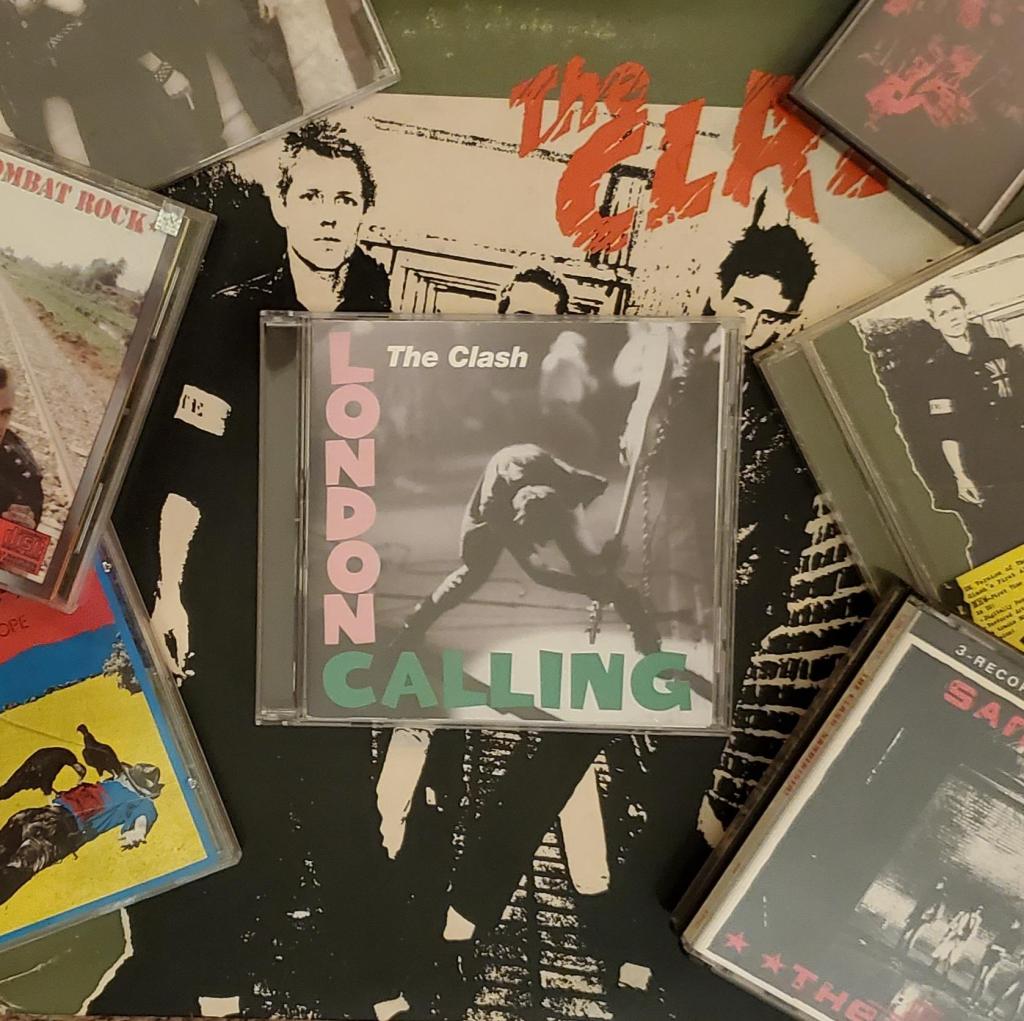
Although The Clash had a rough ending to their story, “London Calling” stands today as one of the most recognizable and popular punk albums, especially with its iconic cover: a photo of Simonon smashing his bass guitar.
To throw a little spice into the album, some songs feature organ and piano (“The Card Cheat,” “Wrong ‘Em Boyo” and “Clampdown”), as well as horns poking through, especially noticeable on “Rudie Can’t Fail.”
“London Calling” is essentially a greatest hits, only missing a few songs from their debut and future albums, such as “Should I Stay or Should I Go” from “Combat Rock.”
Regardless of the many different attributes I’ve explained for individual songs, a full listen through is the only way of understanding the level this album is on. As per usual with the albums I review, this one is another go-to pick when I need an album to play at room-filling volume. In my opinion, although The Clash aren’t at the top of my list for the best punk bands, “London Calling” is one of my favorite punk albums of all time.
David Bowie, born in 1947, was not one to take criticism to heart. He was able to switch personas as quickly as they came to him, allowing himself to express his creative mind to the absolute fullest.
He managed to make the world more diverse and more accepting of those who were unique; with his flashy makeup, glitzy costumes and ambiguous sexuality, he inspired fans to be confident in who and what they were. Affecting the lives of hundreds of millions, Bowie literally – and figuratively – changed the world.
The influence he spread throughout the music industry can be found within just about any genre. His work was sampled by Hip Hop artists such as A Tribe Called Quest, Public Enemy and Dr. Dre. He accumulated an incredible list of collaborations with artists like The Rolling Stones, Queen and Iggy Pop.
He never stopped making music, continuing to record into the 21st century, releasing “Reality” (2003), “The Next Day” (2013), and his final album, “Blackstar” (2016), just two days before his death from cancer.
During the modernist era of the 1960s, Bowie released what’s considered the kickstart of his career, “Space Oddity.” Although it made its way to the Top Ten in Britain in 1969, it, as well as his first two studio albums, failed to make his name a radio staple.
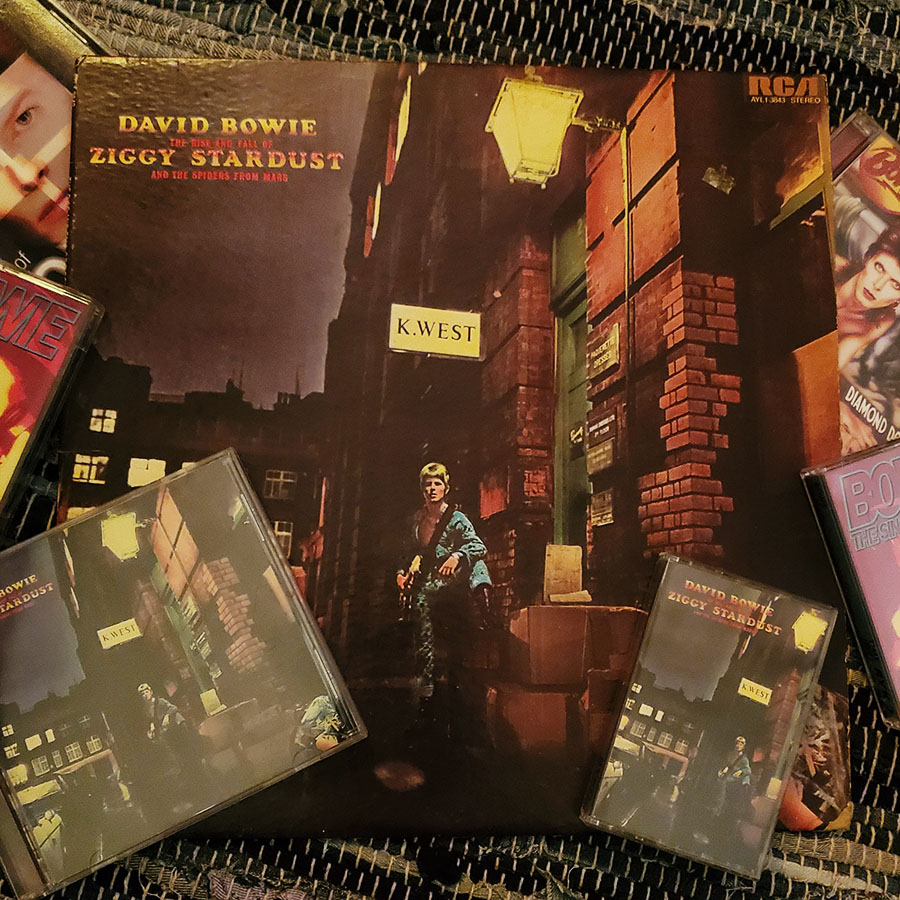
“The Rise and Fall of Ziggy Stardust and the Spiders from Mars” (1972) was what truly placed Bowie in the center of the dance floor. Using the boundaries of rock as a starting point and pushing past their limits with the flamboyant fashion and his seamless blending of genres, he transformed into what he is remembered as today.
Although it may not be his best album in a technical sense, meaning others were more compositionally groundbreaking, none, in my opinion, sit on the same level as “Ziggy Stardust.”
Kicking off with “Five Years” – one of my favorite songs of all time, let alone off the album – should immediately capture the ears of the listeners. It immerses you with its gloomy piano melody and simple drum beat and pulls you along as Bowie’s vocals and instrumentals build up to a sweeping end.
The melodramatic feeling of the first track is carried throughout the album with “Starman,” “Lady Stardust,” and the fantastic album closer “Rock ‘n’ Roll Suicide.” However, showing the power of his genre fluidity, the album also had rockers of the highest order like “Suffragette City” and “Moonage Daydream.”
Anybody can describe the sounds of the songs, but I see it best to solidify their greatness. Any time I’m packing for trips across the state, “Ziggy Stardust” manages to always find its way into my hands.
There are countless introductions to recommend for the 70s rock era, but no matter what, “Ziggy Stardust” has to be one of the first. There is Old Wave, there is New Wave, and there is Bowie.
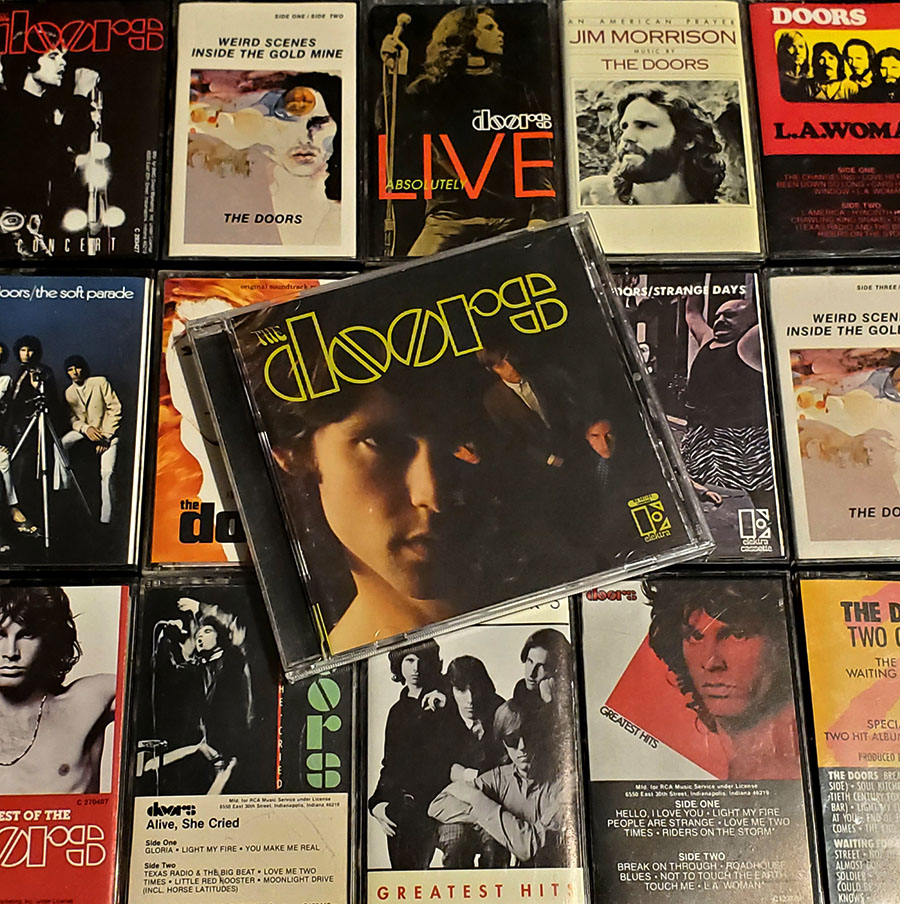
The Doors, officially formed in 1965, are one of the most quintessential Rock and Roll bands of all time. With the frontman, Jim Morrison, being one of Rock’s mythic figures, it is nearly impossible to avoid his troubled life and where it led the band.
Ray Manzarek (keyboardist), then frontman of Rick & the Ravens, immediately wanted Morrison in the band after hearing a poem of his, which later became “Moonlight Drive.” After one month of Morrison’s overshadowing role in the group, drummer John Densmore joined as well. Before the year’s end, the remaining two members of Rick & the Ravens had left, then being replaced by guitarist Robbie Krieger.
“The Doors,” their debut album, released in 1967, immediately gave the band their reputation for pushing the boundaries of what rock was, both musically and lyrically. With his poetic nature, alluring voice and the popularity that came from his traits, Morrison embraced his role of the wild artist.
With the continuous spotlight on him during live performances, the other members leaned back and watched the magic happen. However, with no precautions to help him, “Mr. Mojo Risin” quickly succumbed to misfortunes of his own making.
After leading them through fire and ice over their six-year drive, Morrison joined the infamous 27 club in 1971. This “club” consists of celebrities, such as Jimi Hendrix and Kurt Cobain, who all coincidentally passed at the early age of 27.
His many troubles with the law and his blackout concert performances stemmed from intense drinking and drug habits, one particularly famous event leading to no less than five misdemeanor charges and a felony charge to boot for public profanity and exposure during a show in 1969. He unashamedly lived the reckless rock ’n’ roll lifestyle until the end.
“The Doors” is, in my opinion, their strongest album. Filled from start to finish with absolutely iconic songs, some of which being their most popular, I’d consider it one of the greatest debut albums of all time. It managed to reach the number two spot on the Billboard 200, beat by The Beatles’ “Sgt. Pepper’s Lonely Hearts Club Band.”
The opening track, “Break on Through (To the Other Side),” has consistently been my favorite Doors song since my first time listening. Other songs off the album, such as “Light My Fire” and “The Crystal Ship,” hold high rankings as well.
The sound varies from the Chicago Blues, with “Back Door Man,” to German Opera, with “Alabama Song (Whiskey Bar).” A majority of the songs were birthed from poems written by Morrison, bringing an unmatched, almost mesmerizing feeling to each one.
If you’re looking for not just an entrance into the world of The Doors, but also a lead into Classic Rock as a whole, “The Doors” is the perfect place to start.
Made up of John Lennon, Paul McCartney, George Harrison and Ringo Starr, The Beatles are arguably the most famous and inspirational band to ever exist.
After forming the band in 1957, McCartney and Lennon played shows around their hometown of Liverpool, working with various bandmates before eventually adding Harrison by the end of that same year. Starting out with names like “The Quarrymen” and “The Silver Beetles,” they were soon picked up by record label Parlaphone.
After searching for a drummer to best complement their sound, Starr became part of the group in 1962, replacing Pete Best. As a result of numerous appearances on British television and their rise in popularity, the term “Beatlemania” came to fruition.
Despite their only seven-year run, the Fab Four managed to release 12 studio albums, some popular releases being: “Sgt. Pepper’s Lonely Hearts Club Band” (1967) and “Abbey Road” (1969). All four contributed their vocals to the songs, each using a variety of instruments while exploring new and unique studio techniques that separated new releases from their previous work.
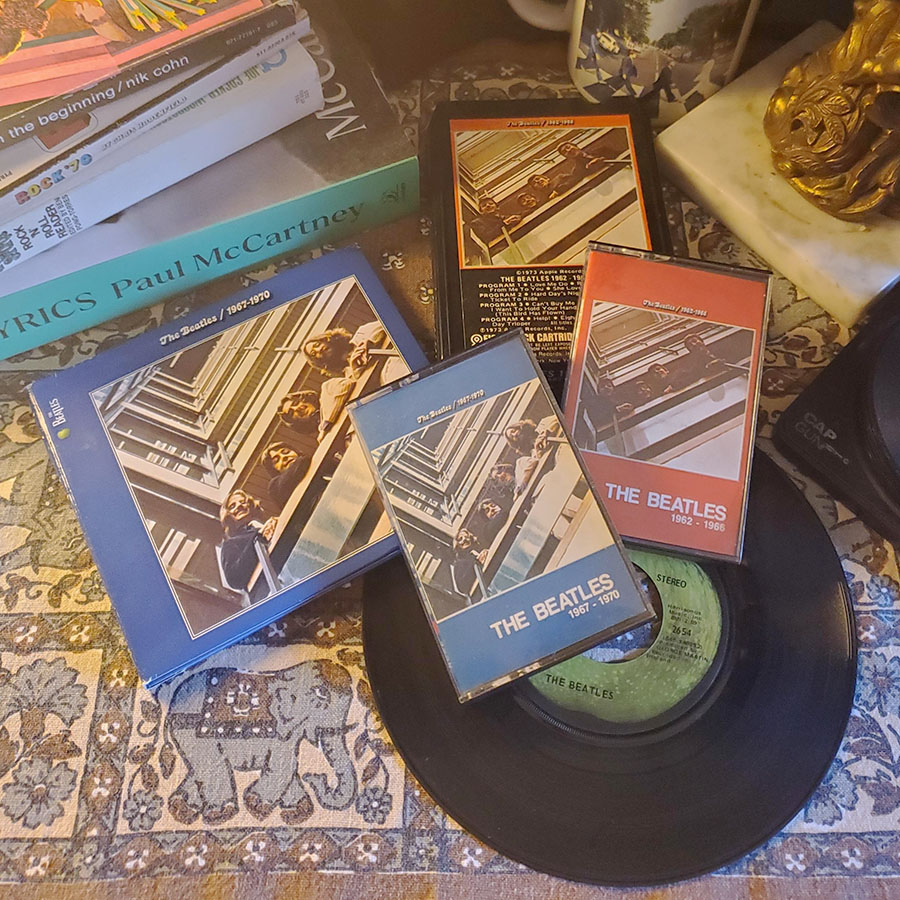
“1962-1966” and “1967-1970,” more often referred to as the red and blue albums respectively, are collections perfectly encapsulating their magic. The red album consists of the poppy, simple, love-filled Beatles music prior to their transition into the ‘60s hippie movement represented with the blue album.
With a combined total of 54 tracks, they serve as the definitive Beatles collection. Being that they’re filled with the absolute essentials, and that most Beatles songs are fantastic, it’s hard to choose standouts.
From the red album, a few favorites of mine would be “All My Loving,” “Yesterday,” and “In My Life.” For the blue, “Ob-La-Di, Ob-La-Da,” “While My Guitar Gently Weeps,” and “Across the Universe.” Both tracklists bring such a uniquely joyful feeling that no other band is capable of, moving me to twist and shout with the music.
Similar to The Cure’s “Staring at the Sea,” these are the best recommendations for anybody looking to begin their journey down the long and winding road of The Beatles, as well as being perfect for any Beatle-fanatic.
Formed in 1978, The Cure, originally called Easy Cure, is a British rock band known for their varying styles in music and the frontman’s unique look.
Through several lineup changes, the band has remained active, having released 13 studio albums and soon releasing their 14th. Robert Smith (vocalist, guitarist and primary songwriter) has remained the only constant member of The Cure, having originally formed it with Lol Tolhurst (drummer and keyboardist) and Michael Dempsey (bass guitarist).
The 80s proved critical for the band’s success, primarily in the U.S., finding their way into rock radio channels, as well as onto the Billboard Top 100 in 1985 with songs “In Between Days” and “Close to Me,” both from their sixth album, “The Head on the Door” (1985).
Their second album, “Seventeen Seconds” (1980), established their melancholic sound, especially apparent in “A Forest,” the seventh track. The darker style, different from the ‘70s punk feel of “Three Imaginary Boys” (1979), continued to be explored with many of their albums to come.
Along with bands like Bauhaus, Joy Division and Siouxsie and The Banshees, The Cure helped to define gothic rock with their haunting instrumentals and sophisticated lyrics. “Disintegration” (1989), their best-selling album, is considered the greatest goth album of all time.
Shifting between Gothic and New Wave, albums like “Kiss Me, Kiss Me, Kiss Me” (1987) and “Wish” (1992) have more upbeat tones with love-filled themes. The difference between a song such as “Lullaby,” with its long breaks of eerie guitar and synth sounds, compared to the strong and playful horns of “Why Can’t I Be You?” may make the two sound like completely different bands to those who are not familiar with them. Both albums lean more towards the Pop side of ‘80s and ‘90s music.
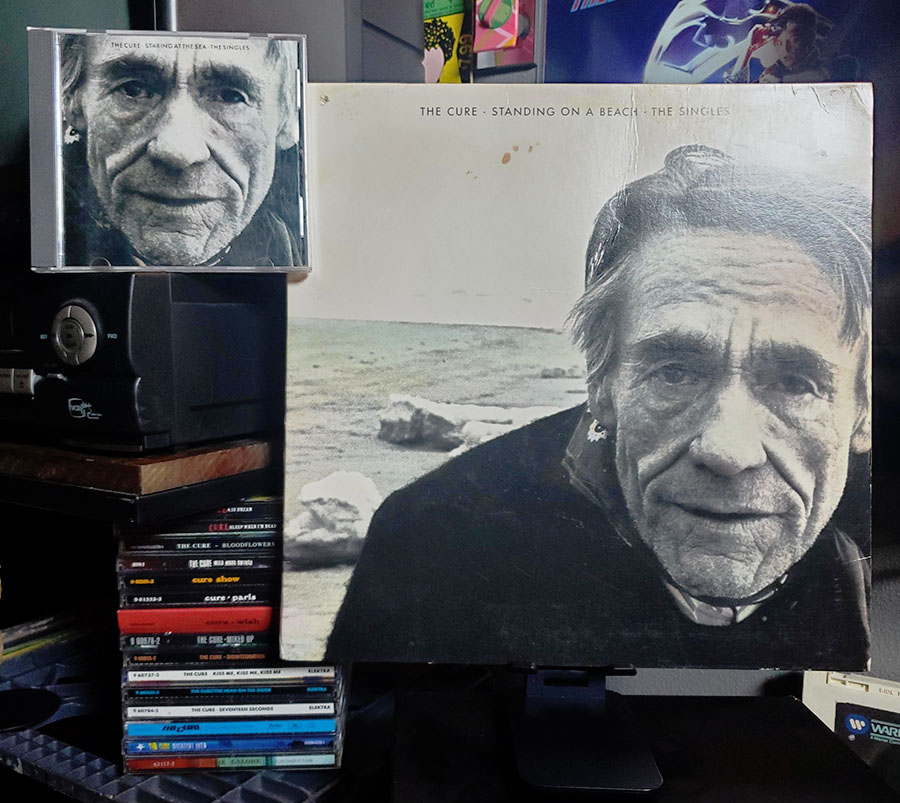
When picking CDs for a long car ride or a record to play as loud as possible, “Staring at the Sea” is a go-to. Made up of all their singles released up until 1986, this compilation perfectly encapsulates their changes in sound, filled with hits such as “Boys Don’t Cry” and “The Lovecats.”
In my opinion, The Cure has released some of the most emotion-inducing music; having equal portions of their darker goth rock music and their cheerful, keyboard led pop-like music, this collection is perfect for jumping around and flipping your hair to, as well as for sitting in a corner and moping.
I see it as the best place to start for those interested in listening to The Cure as it appeals to different tastes as well as essential for fans of their popular songs to find lesser-known hits like “The Caterpillar.”

 The Lions' Den