Concerns Surrounding the Department of Education 

By: Kerrick Shaw

A controversial push to eliminate the U.S. Department of Education is gaining momentum in Congress, raising concerns about the future of federal oversight in schools.  

If the Department of Education (DOE) is dissolved, school districts could face significant disruptions in funding and resources. Programs that rely on federal support, such as Title I for low-income schools or special education services under the Individuals with Disabilities Education Act, could stall or disappear, forcing districts to find alternatives. 

On March 20, President Donald Trump signed an executive order to begin shutting down several functions of the DOE. 


Greensburg locals participating in the Hands Off protest on April 5.

Photo Courtesy: Barb Ciampini


“It feels very rushed, without deeper thought into the implications of dismantling or reducing,” GS Superintendent Dr. Ken Bissell said. “Our district relies on federal funding for our Title I, II, III and IV grants, which help us with things such as special education needs and equity issues for students from marginalized populations. If there were no federal funds, that’s a lot of teaching positions that go away.” 

The federal government’s role in schooling is to “uphold civil rights” for children, Dr. Bissell explained. He stated that he believes the shut-down will not happen, but acknowledged the hypothetical question of how those funds would be made up.  

“Teachers are the direct support for students; education is a human-to-human endeavor of building relationships and trust, to then learn from each other,” Bissell said. “If we lose funding, it will definitely result in us not having enough funds to support the teachers and staff.”  

 According to the district’s Director of Curriculum and Federal Programs, Dr. Lenni Nedley, school districts handle variations in their funding yearly, stating that schools will adapt as necessary if federal funding is dissolved.  

“Each school year, districts are faced with federal and state funding fluctuations; they’ll make adjustments to their general budgets as needed in different areas,” Dr. Nedley said. “The district always places children at the forefront of their decision-making to ensure they’re receiving what they need to be successful.” 

The federal grants support four reading specialists, three school counselors, one science teacher and two classroom assistants, as stated by Nedley.  

“If funds are reduced, we’d be put in a situation where we’ll have to make very difficult decisions,” Bissell said. “Staffing is the number one indicator of student success; good teachers make successful students. If we’re forced to reduce the number of staff we have, that’s going to directly impact the kids.” 

On top of the human resources students are provided through teachers and staff, a majority of students in the GS school district take advantage of the food services available. 

“Our school district is just over 60% free and reduced lunch,” he said. “That is a lot of kids that these funds help provide resources to.” 

Having heard of the possible closure of the DOE, some students are considering what the absence of such programs could mean for their school experience. Senior Adien Carota expressed confusion over the reasoning behind the proposed closure. 

“It simply shouldn’t be closed, I don’t understand the motivation,” Carota said. 

Senior Kyle Keller believes “education will go down” following the change in funding. 

Principal Mr. Adam Jones echoed concerns about how the closure could impact schools across the country. He explained that a lack of federal guidelines will result in disparity among states. 

“Not having oversight to ensure students across the country are receiving the same protections and rights makes me worry about if it’ll further create ‘haves’ and ‘have-nots’,” Mr. Jones said. “Some states could take advantage of it, seeing it as them not having to follow federal mandates anymore. I don’t think every state values their educational system the same.” 

The DOE’s involvement in schools is generally focused on broad policy and compliance with federal regulations. In contrast, states directly shape the daily operations of schools, making key decisions that affect classroom instruction and testing. 

“For the country to run an effective educational system, you have to have an overall level to ensure that all of the states and kids are getting roughly the same standards, curricula and resources,” Jones said. 

Although much remains uncertain, GS’ faculty and administration will focus on maintaining stability for students, regardless of what decisions are made at the federal level. Their attention remains on adapting to whatever comes next. 

“Pennsylvania has always had a very strong educational system, so I don’t fear a major negative outcome for our district,” Jones said. “In ten years, if there’s no Department of Education, I don’t think there will be a noticeable difference in our school.” 

The Purpose of School Sanctions

By: Theresa Schuetz

GS enforced punishments this year for students who played hooky.  

Sanctions go into play when a student misses 13 or more days of school. The main premise of sanctions is to make it more of a priority for students to be present in school. When a student is put on sanctions, attending prom, walking at graduation or attending extracurriculars is not allowed. 


GS 2025 prom advertisement posted throughout the halls.

Photo by: Theresa Schuetz


“Fundamentally, they are a goal to get kids to make up the academics that they miss when they miss school, especially when they miss a lot of school,” Dean of Students Mr. Jeff Kronenwetter said. “And in order to go on sanctions in and of itself, you’re missing 12, 13, 14 days of school. And there’s going to be an academic consequence to that.” 

When a student is put on sanctions, they can be reduced by staying after school for two hours on Tuesdays and Thursdays.  

“The punishments could be fair for the people who genuinely skip school,” senior Josselyn Blawas said. “To knock off an absence you have to stay after school for two hours, and you have to do that twice to get one absence off. So, if you’re someone who just skips school, you could use that time to do work.” 

When students stay later for two of those days, it removes one absence from the record. When students stay at the school they are not allowed to be on their phones, and they must be working on schoolwork. However, this way of removing absences may be hard for students who have jobs outside of school. 

“Each student should be able to pick what day of the week they want to stay to make up for an absence,” senior Gregory Paravate said. “It’s unfair for students who work outside of school.”  

To be put on the list requires 12 unexcused absences. Excused absences that do not count towards sanctions include doctor’s appointments, funerals and college visits. When students are out because of illness, parents can write them an excuse, but it still gives one point towards sanctions. 

“If we don’t know where you were or even if a parent sends a note that explains, ‘this student was absent on this date because she was sick,’ it does count towards sanctions,” Mr. Kronenwetter said. 

Students are not required to make up unexcused absences through participating in detentions, but if they do it allows them to participate in extracurriculars, dances and the graduation ceremony. 

“We’re just trying to establish a routine like there is in the workforce when it comes to sanctions,” Kronenwetter said. 

GSHS Outdoor Classroom Project

by: Quinn Isenberg


Summer is over and school has begun, but GS students’ time in the sun isn’t over yet.  

The outdoor classroom has made significant progress over the summer with brand new additions marking the beginning of a new learning environment at GS. 

“They fixed the concrete patio and they put the pavilion up,” biology teacher Mrs. Andrea Redinger said.   

These specific changes were made to create a safer environment for students compared to the state of the outdoor classroom last school year.  

“The concrete had exposed wires and pipes because it used to be a greenhouse that went up, so we couldn’t go out there at all because it wasn’t safe,” Mrs. Redinger said. “They also made it wheelchair accessible I believe.” 


The Outdoor Classroom so far.

Photo by: Quinn Isenberg


The outdoor classroom taking shape allows for more class activities to be held out there this school year. The new additions have already proven to be helpful. 

“We were using the scientific method to test how mass affects paper airplanes, and we used it as a shady area to have some consistency in the data,” biology teacher Mrs. Julie Firmstone said.   

Students and teachers alike are pleased with the upgraded outdoor classroom. Students have already recognized the benefit of having classes outside in the shade when it’s too hot inside the school building. 

“It’s a good thing because then they can go outside and learn from there,” senior Valerie DiNunno said.  

It’s not just a way to escape the heat inside the school building, but also a way to create a change of pace for students’ classes.  

“I feel like it’s going to help students learn better if they need to be outside more, rather than just sitting in a classroom,” senior Jackie Dennis said.  

Despite the improvements to the classroom there is still much to be done for it to reach its full potential. Staff who have been involved in the project, including Redinger, physics teacher Mrs. Cheryl Harper and former ecology teacher Mr. Angelo Testa, had ideas for the future of the outdoor classroom. 

“We are definitely getting furniture of some type, and the pond is up next to be revamped,” Redinger said.  

Although, there is still much to be done. The new aspects of the outdoor classroom are already working to create a wonderful learning environment.  

“It was wonderful, better than being indoors,” Dennis said.  

Changes Being Made to the GS Schedule 

by: Emma Helmick 

Students and staff at GS were met with a few unexpected changes after walking through the school doors this year. 

Many changes have been made throughout the high school for the 2024-2025 school year. Former high school English and creative writing teacher Ms. Alyssa Bewszka and former high school math teacher Mr. Scott Shirey were moved to teach at the middle school.   


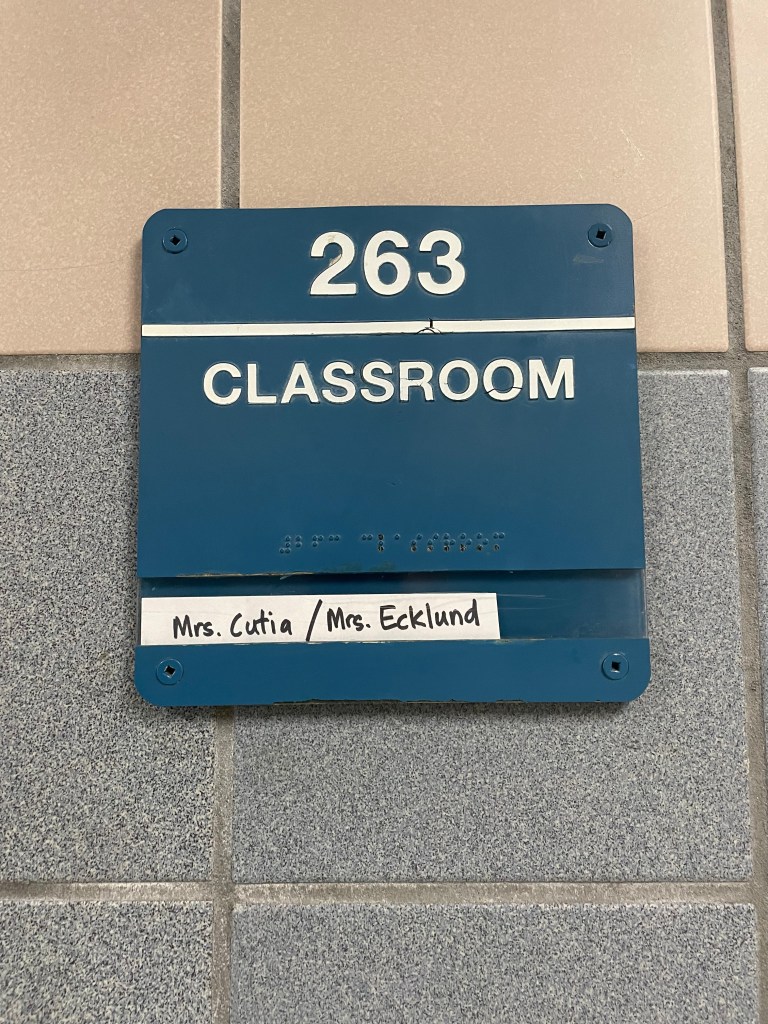
Ms. Bewszka’s old room number.

Photo by: Emma Helmick


Former science teacher Mr. Angelo Testa left the district, but a teacher has been hired to replace him. Building substitute Mrs. Joan Zahorchak is filling in for his classes until the new teacher arrives. 

Unlike Mr. Testa, no one has been hired to replace Mr. Shirey or Ms. Bewszka. This resulted in Sports Stats and Creative Writing being cut as classes. 

“The middle school lost two teachers, they left,” High School Principal Mr. Adam Jones said. “So, they needed a math and an English position. They absorbed two from up here, so all of that trickled down to why you see those courses being cut.” 

Bewszka’s room was turned into a life skills classroom, while Shirey’s room is used by Dean of Students Mr. Jeff Kronewetrer during the afternoon for his Freshman Seminar classes. 

“I am very sad to hear the class is gone because I felt it gave many students an outlet to write freely and really express themselves,” Bewszka said. “Many of the students, if not all of the students in my Creative Writing class, really enjoyed what we did and enjoyed the class as a whole.” 

Both teachers received a phone call over the summer telling them that they would be teaching at the middle school. 

“I taught middle school before and didn’t enjoy it very much, but I thoroughly enjoyed teaching at the high school,” Shirey said. “I also wish I knew I was being moved before the school year ended so I could have said proper ‘goodbyes’ to the students I made connections with and enjoyed talking to, as well as my coworkers.” 

Sports Stats being removed left an open spot in Math teacher Mr. Jake Cole’s schedule, allowing him to take on the role of Shirey’s Math for the Trades class. 

Both teachers’ classes were dispersed through other teachers in both subjects. This causes core subjects to have more students. 

“I’ve noticed an increase with my class sizes this year, which is one of those things that they don’t realize when they move a teacher,” Mr. Cole said. 

This could make it harder for teachers to check in with each student, which could impact some ways students learn. 

“I think we lost two really great teachers who both brought joy into the classrooms,” junior Lorelai Leatherman said. “I never had Mr. Shirey, however he had lunch duty in my lunch last year, and he was always nice, welcoming, and made conversation with everyone. I did have Ms. B for creative writing last year, and she was one of my favorite teachers.” 

Mock Trial Recap 

By Samarah Guy  

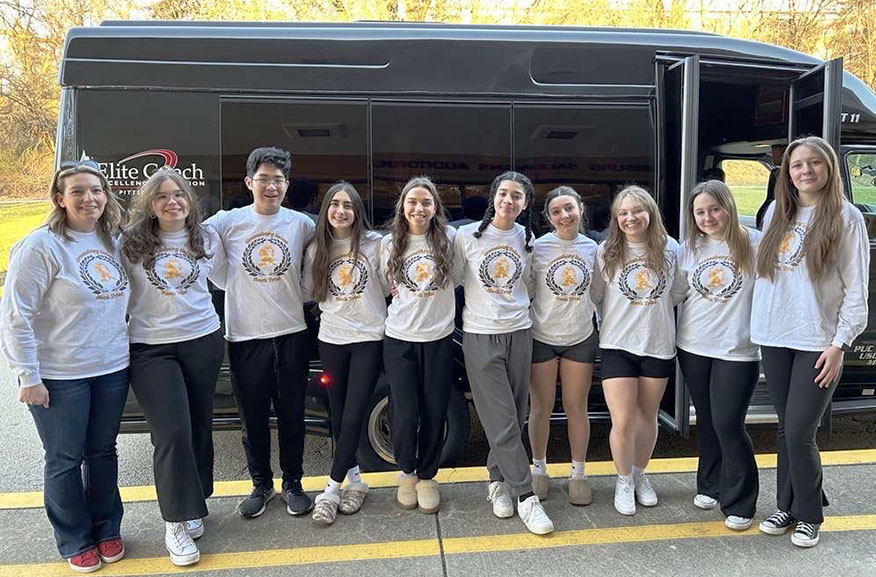
Photo Courtesy: Mr. Zilli

GS’ Mock Trial team placed 3rd during the State Championships in Harrisburg.  

On March 24th, the team earned 1001 points by the end of the second trial, placing 3rd out of the 14 teams in the championships.  

“We were the only team in our district to go to states, and we had the third most points out of everyone there,” Mock Trial Advisor Ms. Kristen Solomon said.  

Mock Trial is an organization that gives students the opportunity to take part in the courtroom and understand how the court system works while also competing against other schools. 

“Mock Trial is a program where students can actually try to participate in a ‘mock’ trial and have an experience similar to a real trial,” Ms. Solomon said. 

The main goals are to score more points than the opposing team and to win the case with strong evidence. 

“They are given a case, and the students are either attorneys or witnesses,” Solomon added. “They also have to write open and close directs and cross examinations to present at the Mock Trial.” 

Direct and cross-examinations come at the beginning of the trial, providing information on the case. The performance and content of the examinations, as well as the attorneys’ performances are graded on a scale of 1-10. The opening and closing statements are also scored on the same scale. At the end of the trail, all the points are added up, and that number is the team’s final score. 

“There’s a ballot that has everything that happens in the trial on it,” senior Lea Kasmer said. “There’s opening and closing statements from both prosecution and defense, along with six witnesses who each have a direct and a cross examination on the ballot. The judges and jury will score it on a scale of 1-10.”  

Mock Trial helps students see and understand the court system firsthand. This group can help set students up for their futures in law, and it also helps form bonds. 

“To me, Mock Trial is not only about building cases, but it’s really important to have a relationship with your team and communicate with everyone,” junior Katie Shea said.             

GSHS Outdoor Classroom Project

By Kerrick Shaw

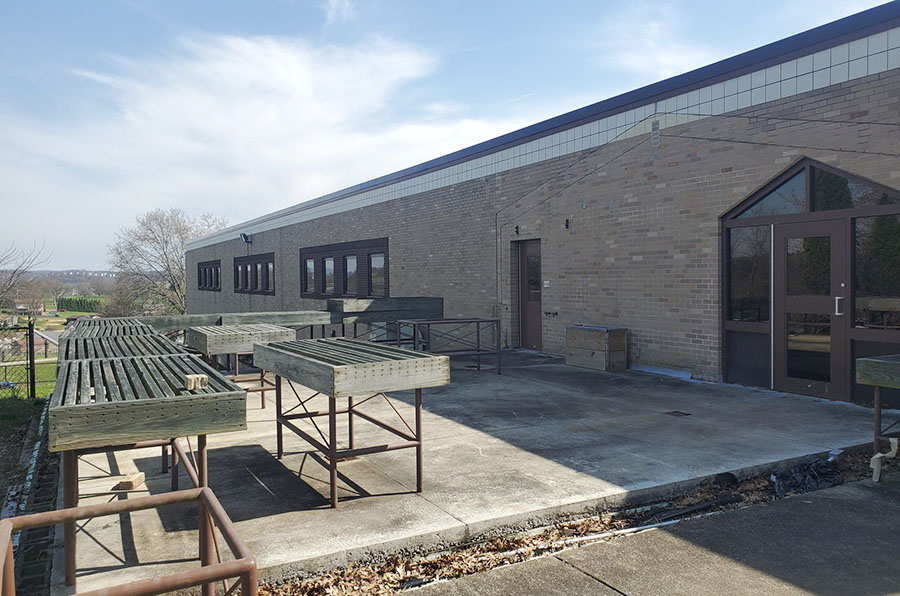
Photo by: Kerrick Shaw

A change in scenery will be implemented by the start of the next school year for students and teachers to enjoy time learning in the sun. 

On top of renovating the pond and landscaping, the school board is moving forward with a pavilion project for classroom purposes, building on top of the cement slab outside of the science wing. 

“There used to be a greenhouse that sat outside by Mrs. Harper’s room … when that got taken down, that cement area was just left there,” GS Superintendent Dr. Ken Bissell said. “A lot of the science teachers still use that outdoor space … the science department really took the lead on deciding how to renovate it.” 

All students were taken into consideration during the decision making for this project, keeping it available to all classes rather than exclusively sciences. 

“It became, ‘can we have an area that any class or any student can use?’ with the pavilion and seating,” Environment and Ecology teacher Mr. Angelo Testa said. “Everything from science classes, obviously, to art classes, English – just anyone who wants to go outside will get to have this space.” 

Students have shared excitement for the space, agreeing that it will be beneficial for everyone. 

“I think the introduction of an outdoor classroom will be a great addition to the school, especially with the ecology classes,” junior Aiden Carota said. “… many students will be happy to get out of the building for some fresh air.” 

The School Board will be voting to move forward with a contractor and will then be able to map out the full timeline of the project. 

“I am hopeful for the pavilion to be done before summer,” Dr. Bissell said. “However, for the whole project – pavilion, pond, landscaping – I’d like that all to be ready for the next school year.” 

The staff involved are eager to provide this designated spot for outdoor learning. 

“There’s a certain energy that comes out of it,” Principal Mr. Adam Jones said. “It’s like: ‘Aw man!’ That’s what I hope it becomes, ‘Hey, let’s go use the outdoor classroom.’”