The Issue of Online Gambling and Betting
Due to the sensitive nature of this topic, anonymous names have been used to protect the privacy of the sources.
By: Rubee Stillwagon

Underage online gambling and betting is rising among teenagers.
According to the National Council on Problem Gambling, 80% of high school students have reported that they have gambled for money in the past year; 4-6% are considered problem gamblers.
Connecticut’s Council on Problem Gambling reports that 10% of teens gamble twice a week or more, and about 4% of boys aged 14-21 have a gambling problem.
There are many different betting sites available. Some of them include FanDuel, DraftKings, Golden Nugget and many more.
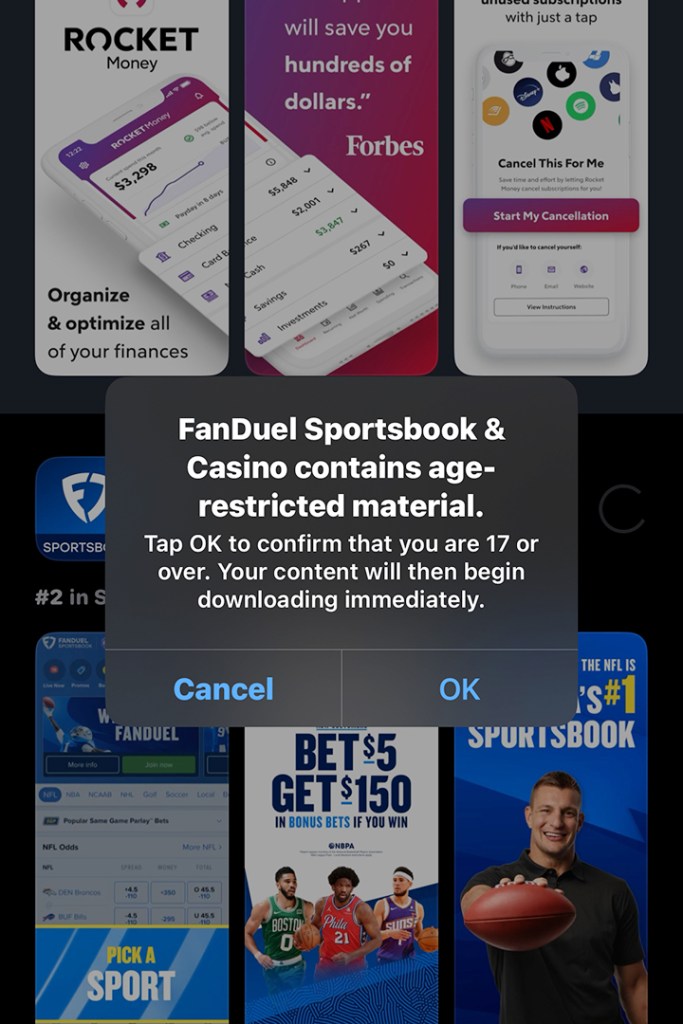
The above shows that nothing more than the
honor system checks for a person’s age
when using this app to bet.
Screenshot from the app store.
“Everything usually comes from Vegas,” Jane Doe, a teacher, said. “They come up with values essentially, that they have assigned to the teams. They take information from previous games, previous years and other websites, but it’s still a giant unknown.”
The main issue with a lot of the sites is how accessible they are for underage use. According to a study done by the University of Michigan, 33% of parents think online gambling and betting sites need to check IDs-and carefully-to ensure users are of legal age.
Results from a study by Kathryn LaTour, a professor in the Integrated Marketing Communications Department at Northwestern Medill, and colleague June Cotte, a Professor of Marketing at the Ivey Business School, show online gamblers bet more frequently and aggressively.
LaTour and Cotte also recommend that online gambling casinos minimize their use of flashing bold graphics to signal wins to lessen emotional excitement.
Studies done by the University of Nevada, Las Vegas have shown that online gambling is more dangerous. Because it can be done anywhere, it can lead to mindless consumption which can result in addiction and financial loss.
Financial consequences include overdue bills, maxed-out credit cards, inability to provide basic needs and a necessity to sell possessions for cash. Problem gamblers have also been known to be more likely to pull money from home equity, savings, investment or retirement accounts.
“It’s the thrill of winning for most people,” Doe said. “Think of it like sports. You play sports because you enjoy it, but you also enjoy the rush of it. There’s an adrenaline factor. That’s why they have different ways to get help because people get addicted.”
The Mayo Clinic says that a major part of treating gambling addictions is to acknowledge there’s an issue.
Treatments may include therapy, medications such as antidepressants and mood stabilizers and self-help groups.
Another game that has become very popular among teenagers is Fantasy Football.
“Fantasy football is when you draft teams of NFL players and those players get points by scoring touchdowns, passing yards, rushing yards and receiving yards,” John Smith, a student, said. “You join a league, and you play against another person in the league every week.”
ESPN Fantasy Football is the number one fantasy football game with more than 13 million players. It is possible to bet money on these games, but most teens have their own way of having fun without betting money.
“It’s fun to compete against your friends,” Smith said. “Typically, some leagues have some type of consequences if you finish last. It gets very competitive because most people don’t want to do the consequences of losing, which for my league is 24 hours in Denny’s.”
There are also fantasy leagues for other sports as well, including basketball, tennis, hockey, baseball, NASCAR and more.
Although this can be a fun activity for people to do with friends, the Center for Parent/ Youth Understanding (CPYU) says that fantasy sports can get ugly. They encourage young people to stay in leagues with people they know. Because there are ways to communicate through the game, it can be safer to know who they are talking to.
CPYU also said that although fantasy is a great way to stay in touch with the pastime of pro sports, it can lead to unhealthy habits. People may become distracted from everyday activities so they can research and watch their stats and how their games are going.
“I think the biggest problem is addiction,” Jane Doe said. “It’s quick to lose a lot of money. You fall into the trap where people say I didn’t win last week but I’ll win this week. It’s like a vicious cycle. Now there are people who can handle it, but there are people who can’t, and you see people lose everything because of it.”
 The Lions' Den