Club Overview

By: Quinn Isenberg

Clubs across GS have started up and have exciting things planned for their members.  

From interacting with the community to getting together with students who share interests, there is something for everyone to get involved in. 

 Students looking to gain community service hours and make a difference will be interested in checking out the Interact Club. 

“The cool thing about Interact is that it’s networking around the world since the Interact Club is an international organization,” president of the Interact Club Ian Smith said. “You learn a lot about volunteer opportunities in other countries and how you can help.”  

The GS Interact Club has begun helping across the globe, starting with orphaned children in Ukraine. The club has already distributed 15 tags that include the name of a Ukrainian orphan and a list of items they need to club members. 

 “We have already distributed them, so at this point we are not sure if there’s any more to give,” Smith said. “If people really want to do it, we certainly could have students collaborating to buy stuff for the same orphan.”  

The club will be attending a conference with other Interact Clubs in the area to discuss more community service opportunities in the future.  

“On Oct. 17 during school we have our district interact conference with the Rotary Club at Greensburg Country Club,” he said.  

Interact Club isn’t the only club looking to better the community. Another wonderful option for students looking to get involved is the SADD club.  

“SADD Club has Red Ribbon Week, which is very exciting, lots of club meetings and fundraisers,” vice president of the SADD Club Riley Campbell said.  

Red Ribbon Week is a campaign that focuses on preventing drug use. Joining SADD Club allows students to play a part in keeping their peers drug free. 

“Red Ribbon Week is Oct. 21-25, and the theme is: Life is A Movie, Film Drug Free,” Campbell said. 

SADD Club’s community involvement doesn’t end with Red Ribbon Week. The club is also very involved with projects relating to Sage’s Army.  

“We work with people who run school therapy sessions and do a lot of community outreach,” she said. “We will work with them and also do our own community outreach.”  

Not all students feel their communication skills are strong enough to participate in community wide events such as those in Interact Club or SADD Club. Students looking to improve these skills should look to join the Speech and Debate Club.  


Speech and Debate officers promote GS for T-Mobile Friday Night 5G Lights Sweepstakes.

Photo By: Mrs. Andrea Redinger


“A big part of Speech and Debate is that it’s an opportunity to work on yourself, work on your emotions and work on your speaking skills,” vice president of Speech and Debate Emily Ziska said.  

The club also hosts festivals for those looking to expand upon their skills and compete against other Speech and Debate members.  

“Festivals are where people are finding what they like, what they want to do and working on whatever makes them happy,” Ziska said. “There is also the more competitive stuff like debating.”  

The open-endedness of the club allows for many different types of students to find their place within Speech and Debate.  

Students who find the competitive aspect of Speech and Debate particularly exciting should consider joining the Chess Club. Like debating, chess can help students become more calculated and innovative.  

“It helps you look ahead on your future plans, because in chess you have to plan your moves ahead of time,” president of the Chess Club Elijah Miller said. 

To enhance these skills, the Chess Club maintains a very competitive nature during their meetings.  

 “We have Mr. Lenzi make us a bracket and every Tuesday we come together and do the tournament,” Miller said.  

Students who do well in the club will have the chance to attend a tournament between other highly skilled chess players in the area.  

“We have a chess tournament planned for November and will have in-house tournaments to determine who’s going to the big tournament,” secretary of the Chess Club Lucy Giovannelli said.  

There are also plenty of options for students who like more relaxed environments where they can collaborate with others who share their interests. One of these clubs is the Guitar Club.  

“Sometimes we have members who have been with it for a while who like to jam with each other and it’s always exciting when out of nowhere a song starts to happen and they’re all combining their efforts,” Advisor of the Guitar Club Mr. Darryl Audia said.  

For those who aren’t as experienced at the guitar, the club serves as motivation to get better.  

“The goal is to at least learn a couple chords and stuff like that,” Mr. Audia said. “The hope by the end is, if people want to continue to come, that they do some of their own research.”  

Experienced members in the club will even come together on occasion to put on performances for other students.  


Members of guitar club preform in the Library.

Photo Courtesy: Mr. Audia


“The thing we’ve done historically the last two years is the week right before holiday break we will have a coffee shop-like performance that will be in the library probably during lunches,” he said.  

Like Guitar Club, French Club members come together over a shared interest and orchestrate an incredible performance every year. This performance is none other than Culture Day. 

“The officers themselves go on stage and announce any sort of French speaking activities during Culture Day,” vice president of the French Club Alyssa Barber said. “The food taste testing that went on last year was entirely run by French Club.”  

French Club has a lot to offer students interested in French even outside of Culture Day. 

“We do a lot of fun things,” Barber said. “This year we’re planning on going to the French bakery in South Greensburg, get together to play games and do things for the trip.” 

Students looking to improve their experience at GS should look for a club that interests them and begin making connections with their peers.  

“Really it’s about networking and getting these friendships to grow,” Mr. Audia said.  

GSHS Outdoor Classroom Project

by: Quinn Isenberg


Summer is over and school has begun, but GS students’ time in the sun isn’t over yet.  

The outdoor classroom has made significant progress over the summer with brand new additions marking the beginning of a new learning environment at GS. 

“They fixed the concrete patio and they put the pavilion up,” biology teacher Mrs. Andrea Redinger said.   

These specific changes were made to create a safer environment for students compared to the state of the outdoor classroom last school year.  

“The concrete had exposed wires and pipes because it used to be a greenhouse that went up, so we couldn’t go out there at all because it wasn’t safe,” Mrs. Redinger said. “They also made it wheelchair accessible I believe.” 


The Outdoor Classroom so far.

Photo by: Quinn Isenberg


The outdoor classroom taking shape allows for more class activities to be held out there this school year. The new additions have already proven to be helpful. 

“We were using the scientific method to test how mass affects paper airplanes, and we used it as a shady area to have some consistency in the data,” biology teacher Mrs. Julie Firmstone said.   

Students and teachers alike are pleased with the upgraded outdoor classroom. Students have already recognized the benefit of having classes outside in the shade when it’s too hot inside the school building. 

“It’s a good thing because then they can go outside and learn from there,” senior Valerie DiNunno said.  

It’s not just a way to escape the heat inside the school building, but also a way to create a change of pace for students’ classes.  

“I feel like it’s going to help students learn better if they need to be outside more, rather than just sitting in a classroom,” senior Jackie Dennis said.  

Despite the improvements to the classroom there is still much to be done for it to reach its full potential. Staff who have been involved in the project, including Redinger, physics teacher Mrs. Cheryl Harper and former ecology teacher Mr. Angelo Testa, had ideas for the future of the outdoor classroom. 

“We are definitely getting furniture of some type, and the pond is up next to be revamped,” Redinger said.  

Although, there is still much to be done. The new aspects of the outdoor classroom are already working to create a wonderful learning environment.  

“It was wonderful, better than being indoors,” Dennis said.  

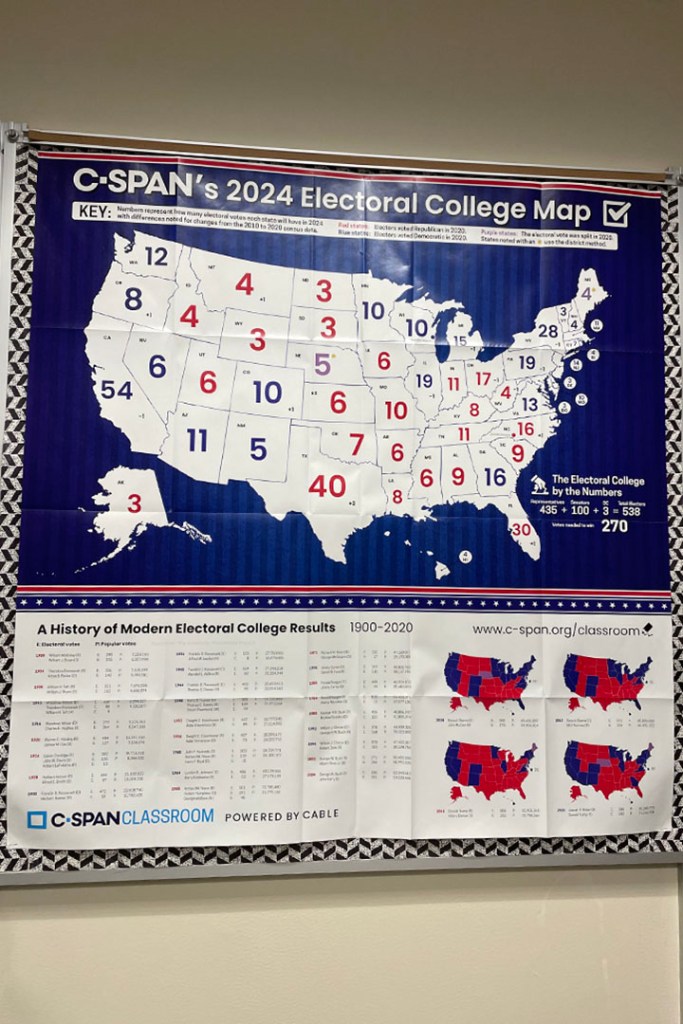
The 2024 Election  

by: Ever Schmidt 

As the election approaches students and teachers discuss their options.  

Many people do not pay attention to politics and how it is affecting their everyday life, but if you look around at the world today, it is quite different than it used to be. 

The republican nominees for president are former president Donald J. Trump and J.D. Vance, and the democrat nominees are Kamala Harris and Tim Walz.  

English Teacher Mrs. Mary Logan said that in her classes there is a lesson where she shows her students how news sources can make things biased. She shows them the headlines and how things are embedded into the articles and how they can be persuasive.  


A poster outside the Library encourages students to register to vote.

Photo by: Emma Helmick


The election is November 5th, 2024. 

 Having different news sources showing each side of politics can be helpful, but it also be hard to find the truth. They can make the other nominees seem different and might use their own opinion and make one seem better than the other, which can cause outrage from supporters of both parties. 

 “I think it is important for students to see how different places like the media and news may be attempting to manipulate them, but from there, I hope they can see the bias and make their own decisions and know when the persuasive techniques are working,” Mrs. Logan said. 

 Being able to understand politics and being too involved in them are quite different. When teachers talk about politics in a classroom, students could listen to the teacher and get informed instead of taking it personally and getting mad about other people’s opinions. It is perfectly fine to have your own views and beliefs on politics and the candidates.  

  I do not have an opinion on either side of the parties, but I do follow along with them,” junior Olivia Humberger said. “I believe it is interesting seeing the different sides even though I don’t have my own opinion.”   

  Being able to be open-minded helps to hear both sides of the parties. It helps to gain factual knowledge and being able to understand the election. Going to factual news sources that are unbiased also helps to get full knowledge from both sides. 

 “The election will be very close again; I think no matter what, whoever wins half of America will be upset no matter what,” accounting Teacher Mr. Lou Downey said. “Most of the election is all about debating and not what the nominees are going to do better for America.” 

Many people find a lot of information on online bulletin boards, commercials, ads, and most social media. Harris is ahead of the polls by about two percent according to The New York Times. Some people are basing their information off what they hear and say they are going to do with the country. Most adults are voting and some seniors at GS are, too.  

 “I will be voting because I personally feel that there is a lot at stake this election,” senior Lily Slavnik said. 

Personal Learning Time 

by: Adison Poole  

GS is looking to revamp student schedules to encourage a more personal learning environment.  

This year Principal Mr. Adam Jones and Superintendent Dr. Ken Bissell have pushed for more freedom in student schedules. Personal Learning Time or PLT is a free block seniors can choose to take.  

If a student chooses to take PLT then the free block will fit into their schedule wherever there may be a gap. This year many seniors with gaps in their schedules filled the open space with PLT not even knowing what it really was.   

“I wasn’t really sure what it was initially, but I really like it now,” senior Everett Redinger said.  

The block can be used to the student’s liking and may be utilized in whatever way is most beneficial to the student. If that means leaving school, then the student will have that option or they can choose to stay and work in the library.   


Senior Riley Campbell sits in the Library to do homework during her PLT.

Photo by: Adison Poole


“As a senior, my conversation with Dr. Bissell was you’re a senior, you’re mature enough to leave,” Mr. Jones explained. “Why would I put you in a study hall when you don’t have to be?” 

PLT is an attempt to offer up more freedom to students throughout the school. The idea is that this will create an organized system while also allowing kids to make their own decisions.  

“It’s a flexible period showing you’re mature enough to do what you need to do; you do with it what you please,” Jones said.  

PLT can fall into a senior’s schedule wherever they may have a free block. Depending on when their PLT is, the student may have to leave and sign back in before the next class starts.  

“I’ve been staying in the building,” senior Kylie Kolenc said. “I feel like I won’t get anything done and it will just end up being wasted time.”  

While students have been encouraged to use the time wisely, it’s ultimately up to the kid to decide what’s best for them. The level of maturity was considered when deciding what grade levels would have PLT available for them to take.  

With the graduation requirements changing next year from 28 credits to 25.5 Jones was eager to test out this new schedule as a possibility for students to take for years to come.  

“I would recommend it to upcoming seniors,” Kolenc explained. “Not just as a blow off thing, but more along the lines of using that as time to do things you might not have time to do after school.”  

According to Jones, freedom is a “privilege” that can be taken away if used incorrectly or for inappropriate reasons. To be eligible for PLT, students must be passing classes and attending class regularly.   

“As it goes on, I think there will be a lot of kids working on their senior project, especially the second semester scramblers,” Jones laughed. “The conversation will be ‘oh don’t come crying to me if you have an hour and a half to work on it.’” 

While the choice is up to the student, there won’t be any excuses for late work from kids with PLT time. 

“I’m using it to work on college stuff and my senior project, as well as learning new instrument skills,” Kolenc said.  

Kolenc isn’t the only senior putting in work during PLT, Redinger also emphasized that he is using his time to focus on his senior project as well.  

“I like to stay sometimes and use it to talk to my advisor about my senior project,” Redinger said.  

Being the first year with such lenient requirements compared to past years, this year serves as a test run for future scheduling. Students will be required to be on school grounds for less hours and credit requirements change in under a year.  

Due to this, students and staff can expect a change in upcoming years and will see PLT as well as other forms of individualized learning being implemented throughout the school.  

“We’re one foot in with the PLT for next year, but we’re still under the schedule of last year,” Jones said. “We’re just trying to get to next year where everything is weeded out. It’s like the appetizer and I hope everyone understands.”  

Changes Being Made to the GS Schedule 

by: Emma Helmick 

Students and staff at GS were met with a few unexpected changes after walking through the school doors this year. 

Many changes have been made throughout the high school for the 2024-2025 school year. Former high school English and creative writing teacher Ms. Alyssa Bewszka and former high school math teacher Mr. Scott Shirey were moved to teach at the middle school.   


Ms. Bewszka’s old room number.

Photo by: Emma Helmick


Former science teacher Mr. Angelo Testa left the district, but a teacher has been hired to replace him. Building substitute Mrs. Joan Zahorchak is filling in for his classes until the new teacher arrives. 

Unlike Mr. Testa, no one has been hired to replace Mr. Shirey or Ms. Bewszka. This resulted in Sports Stats and Creative Writing being cut as classes. 

“The middle school lost two teachers, they left,” High School Principal Mr. Adam Jones said. “So, they needed a math and an English position. They absorbed two from up here, so all of that trickled down to why you see those courses being cut.” 

Bewszka’s room was turned into a life skills classroom, while Shirey’s room is used by Dean of Students Mr. Jeff Kronewetrer during the afternoon for his Freshman Seminar classes. 

“I am very sad to hear the class is gone because I felt it gave many students an outlet to write freely and really express themselves,” Bewszka said. “Many of the students, if not all of the students in my Creative Writing class, really enjoyed what we did and enjoyed the class as a whole.” 

Both teachers received a phone call over the summer telling them that they would be teaching at the middle school. 

“I taught middle school before and didn’t enjoy it very much, but I thoroughly enjoyed teaching at the high school,” Shirey said. “I also wish I knew I was being moved before the school year ended so I could have said proper ‘goodbyes’ to the students I made connections with and enjoyed talking to, as well as my coworkers.” 

Sports Stats being removed left an open spot in Math teacher Mr. Jake Cole’s schedule, allowing him to take on the role of Shirey’s Math for the Trades class. 

Both teachers’ classes were dispersed through other teachers in both subjects. This causes core subjects to have more students. 

“I’ve noticed an increase with my class sizes this year, which is one of those things that they don’t realize when they move a teacher,” Mr. Cole said. 

This could make it harder for teachers to check in with each student, which could impact some ways students learn. 

“I think we lost two really great teachers who both brought joy into the classrooms,” junior Lorelai Leatherman said. “I never had Mr. Shirey, however he had lunch duty in my lunch last year, and he was always nice, welcoming, and made conversation with everyone. I did have Ms. B for creative writing last year, and she was one of my favorite teachers.” 

2024-2025 Rule and Policy Changes 

by: Ari Case 

Every school year brings new changes, and this year is no different. 

During the class meetings held the first day of school, High School Principal Mr. Adam Jones and Dean of Students Mr. Jeff Kronenwetter reminded students of old and changing rules in the school. These included the returning cell phone rule, a change in second run bussing and the attendance policy. 

The cell phone rule, initiated last year, dictates that each student is required to place their phone into numbered and assigned pockets before class. All students are prohibited from using phones during classes and exceptions must be approved prior to implementation. 


A typical phone holder hangs on a door.

Photo by: Ari Case


“We did it [to] get kids more engaged in their learning,” Mr. Jones said.  

Teachers have varying opinions on it, but most appreciate the value in removing classroom distraction.  

“The teacher part of me loves it, [because] it is a distraction for students that have them out in class,” Mr. Kronenwetter said. 

Student views on the rule are hard to quantify, but many agree with the idea—just not the execution. Some students aren’t normally on their phones but prefer to have them in backpacks or pockets. 

“It’s not that I like being on my phone, but I like it being near me,” junior Nico Bortz said. “So at least I know if I need it in any case of emergency, it’s there.” 

The rule has not changed since last year, but its application is stricter. Previously, many teachers did not mind if students kept their phones away in their bags or used them to listen to music during independent work time. This year, however, students felt some teachers had been rude or overbearing about their cell phones even if they did not want to be. 

Bortz shared that the rule can distract them from learning more than their phone at times. One class they accidentally put their phone in the wrong numbered pocket, which prompted the teacher to disrupt class and have them move the phone. 

Students, like senior Leia Felmley, feel the rules are causing “unnecessary mayhem” and extra stress. 

This added stress, for students like Bortz, takes away from their learning. 

“I come to school and I want to learn,” they said. “I don’t want to have to worry about making sure my phone’s put away so I don’t get a detention.”  

Some have raised concerns about the potential negative impact on student learning when there is reliance on only school-provided technology. Historically, school devices and Wi-Fi networks are unreliable and cause consistent issues for many students and teachers. 

“A lot of our classes depend on technology,” Felmley said. “A lot of us went through Covid, and [technology] was our only source of education.” 

According to Jones, teachers are expected to have a backup plan for all lessons that can be completed without technology.  

Reportedly, the blame would fall on teachers if students were caught with their phones during classes. This has increased classroom tension, and Felmley disagrees with the choice to broadly pressure teachers when only some behaviors are truly disruptive or problematic.  

Education has changed drastically in large part due to the pandemic, coupled with technological advancements—many teachers have had to shift how they teach in recent years. 

“The teacher’s job is to educate their students,” Felmley said. “They should not be punished for it [because] it’s making them feel like they aren’t doing a good job of teaching when they’re trying their best just to learn how to redo everything again.” 

The high school also changed the procedure for second run bussing this year. 

Previously, students who rode second run buses waited in the auditorium lobby or outside after school. This year, they are assigned seating areas in the auditorium based on which bus they ride and dismissed accordingly.  

It was explained that the reason for changing the bussing procedure was initially unrelated to students. In previous years, the buses were often clumped and out of order, sometimes blocking the road. Along with some conflicts between students, the main goal was to organize things for the sake of safety and efficiency.  


Students wait in the auditorium for their buses.

Photo by: Quinn Isenberg


Jones explained that “it just streamlines the process” of getting students home safely. He also said that it is important they are able to find students in case of emergency. 

Second run bus riders have decidedly less positive views about the change. 

“I absolutely hate it because [it] is wickedly hot in the auditorium, even though we have an air conditioning unit in there, and it seems like they aren’t applying something that they put lots of money towards,” Felmley explained.  

She believes the air conditioning has been on some days, but it has not seemed like it most days.  

Bortz expressed frustration at losing the freedom of standing outside. 

“It feels like they’re treating us like elementary schoolers,” they said. “I don’t like being treated like that when I’m 16 years old in high school. It’s kind of annoying and demeaning.” 

Both Bortz and Felmley resent being separated from friends and social groups. 

“It feels like you’re being isolated, away from those people you normally would bond with,” Felmley said. 

The bus procedure is new this year, but the attendance policy remains the same on paper as it has been for years.  

In recent years, several unexpected challenges disrupted the attendance policy at GS. Now, Kronenwetter hopes to get attendance more consistent. 

“We’re trying to help establish good habits,” he explained. 

He expressed that during and after the COVID-19 pandemic, he was just glad to see students attending school at all. 

The district policy is that any absences after 12 missed days count towards sanctions. A student on the sanctions list must make up two hours for every day missed over the limit and may not participate in school-related activities like sports or dances. 

The school legally excuses any absence with a note, but notes from parents still mean an absence counts toward sanctions. Any absence excused by a third party, like a doctor, does not count toward the sanctions limit. Neither do pre-approved absences for vacations, college visits, job shadows and senior projects. 

Bortz expressed concerns for specific medical and family situations, and the appearance of transcripts for college. Kronenwetter explained that he isn’t concerned about potential issues, because they can be handled on a case-by-case basis—and the rules aren’t the important part to him. 

“I know the academics come first,” he said. 

The policy has not significantly changed this year, so any grievances are largely the same as last year. General frustration at the scheduling of school is the most common, with such an early start in the morning. 

“There’s so many reasons for being tardy to school that should be excusable, but to the school are not,” Bortz said, mentioning car and health problems. 

Both Bortz and Felmley expressed concerns about COVID-19, considering the recent surge in cases. Current Center for Disease Control and Prevention (CDC) guidelines do not have a set quarantine, though they were previously five days at least. Now, quarantining until fever-free and limiting contact while wearing a mask for several days are recommended. 

According to Jones, the district has no current policy on COVID-19, and “it’s treated as any illness.” If you do not have a doctor’s note, days missed because of it will count towards the sanctions limit. 

Amid student frustration and added stress from new rules and policies, most students just want to be treated like their opinions and experiences matter. 

“I know that as a young adult, I hope that our voices will be heard,” Felmley said. 

Salem Psychos  

By: Rubee Stillwagon 

With fall sports in full swing, the Salem Psychos are busy showing their support. 

The student section at sports events is there to bring fun to games and encourage the teams. These students are led by five leaders. 

“Lauryn Swierczynski is our main leader,” Salem Psychos Advisor Mr. Nick DeMary said. “Then we have Kayla Ramer, Grace Sybesma, Dom Rosensteel and Cooper Dann.” 

These leaders do their best to ensure that students have fun at sports events. But beyond this, they make sure that student athletes always have someone supporting them. 


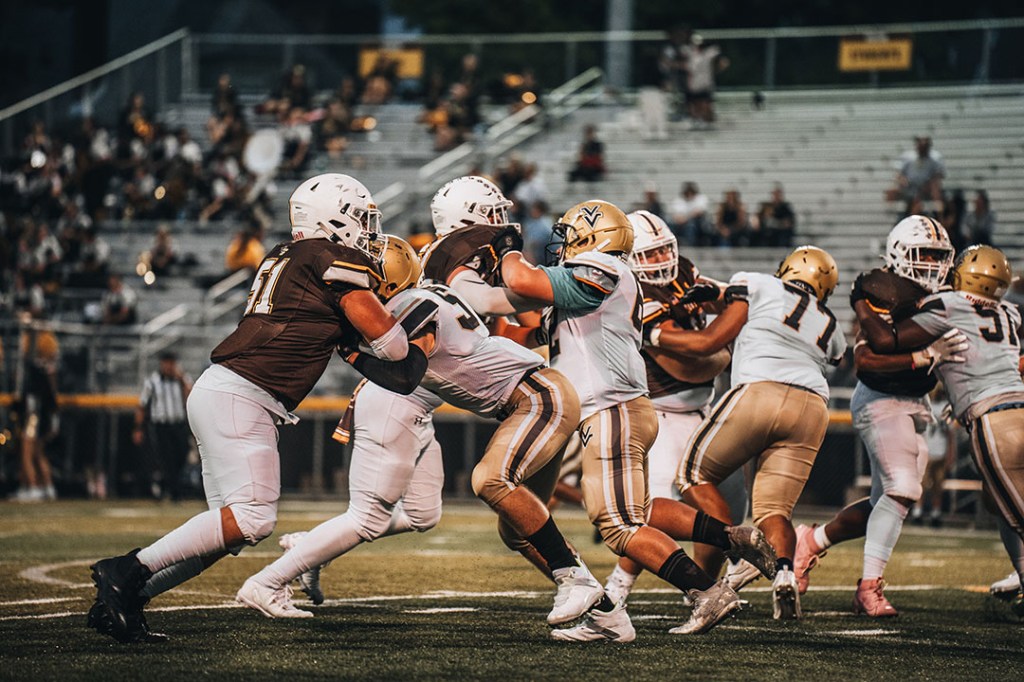
The HS student section at the GS vs. Valley football game.

Photo Courtesy: Mrs. Andrea Redinger


“The student section is a major driving factor of school spirit, no doubt,” Swierczynski said. “As an athlete, having your peers come to your games really does make a difference. It gives you another reason to play, to push through and gives the team a wave of school pride.” 

While the student section works to keep them supported outside of school, they are also working to arrange in school support. 

“I want to get involved in the school,” Mr. DeMary said. “Maybe a pep rally. We are also trying to get t-shirts made and stuff like that.” 

Getting the students involved may draw bigger crowds to school events. The leaders and DeMary are working hard to get advisory meetings set up. This would open the opportunity to get more ideas and opinions.  

“Hopefully we see student athletes from all grades and sports come down to Mr. DeMary’s room and have some input on future themes, chants and ways to get more involvement at games,” Swierczynski said. 

Having student input can be helpful when trying to gain involvement. If students like the themes and chants there will be more of a turn out. 

“Everything is truly for the students and your voice matters,” DeMary said. “What students want is important because I’m a teacher and what was cool six years ago isn’t anymore.” 

Although DeMary works to make things happen for students, the leaders play a role in keeping things up to date. 

“Right now, we are working on Gold Rush t-shirts that will most likely be free,” Swierczynski said. “Another thing the other leaders and I are working on is a short video to go over different chants and traditions we do at each game.” 

The chants are a way to keep the students having fun and interested at games. This video could help students be prepared for the games and louder when chants are called. 

Although all students are in the same general area, it can be hard for some groups to hear and stay involved due to the grade sectioning. In the student section seniors are in the front and it goes by grade level all the way to the back. 

“I think they could do a little better trying to involve the freshmen,” freshman Sophia Ginder said. “I think it’s awkward sometimes because they already know what they are going to do in the front and no one in the back knows what’s going on.” 

While it may be hard to hear chants, there are still fun things for the younger students participate in, such as themes. 

“I like the themes because I feel like it’s a way we can all be connected,” Ginder said. 

Another thing that has been updated this year is the location of the middle school student section. Instead of being on the other side of the field, it is now next to the band which is in between the two sections. 

“I personally like this change,” Swierczynski said. “Another section can hear the band better, and it creates connectivity between the middle and high school.” 

Introducing the middle school students to the high school section can help show them what they have to look forward to. It can get them excited for what they get to be involved with soon. 

“What I really want to see happen after I leave is the revival of the old days,” Swierczynski said. “What I mean by this is it being competitive to become a psycho. Bring back the passing of the torch culture. And keep the energy for all sports, not just football. Pack the section.” 

Overall, this year’s group of senior leaders have a lot of goals, and the hope is that they can achieve them all. But it’s also important that there is other students’ interest in carrying on the Salem Psycho traditions. 

“We are one at GS and I’m excited to see what the future holds,” DeMary said. 

Greensburg Summer Wrap-up 

By: Kerrick Shaw 

The community is soaking up the sounds that carried them through the past three months as the summer season events end. 

The summertime was packed full of concerts, markets and other events to keep locals busy over break. The festivities kicked off with Elton Rohn, the Elton John tribute band, at St. Clair Park for SummerSounds. 


Elton Rohn performs at St. Clair Park for SummerSounds.

Photo Courtesy: David Baldinger


SummerSounds is an annual free concert series put together entirely by 50 volunteers who present Greensburg with a wide variety of musicians over 14 weeks. Preshows lasted from 6:15 to 6:45, the main show then starting at 7 p.m.  

“It’s a very exciting thing,” junior Maddox Kunkle said. “I think it’s done very professionally, it’s more top-of-the-line.” 

The SummerSounds lineup included various tributes and original acts to appeal to music lovers of all ages. This summer’s end marks 24 years of concerts for SummerSounds with more to come under new management from the Greensburg Community Development Corporation. 

“Because it’s free, anyone could go if they wanted,” Kunkle added. “People might’ve even been in for a surprise with what bands they saw.” 

Once a month on select Thursdays from April through December, the Greensburg Night Market is active across four city blocks with over 140 vendors selling foods, art, jewelry and much more. 


A typical view of the street during the Greensburg Night Market.

Photo Courtesy: Alex Newill


“The turnout for all the markets was pretty good this year,” owner and founder of the Night Market Ms. Jessica Hickey said. 

The Greensburg Vintage Market was also active throughout the summer season. Over 50 vendors gather throughout St. Clair Park and the parking lot behind the Amphitheatre, selling vintage décor, collectables, clothing and other vintage items along with food and plants.   


The vintage market set up.

Photo Courtesy: Alex Newill


“The heat can be a bit of a challenge during the summertime,” Ms. Hickey said. “We had a couple hot markets, but our water refill station and being in the park for some shade helped a lot.” 

On August 16, GS held the annual Back to School Bash at Offutt Field to kick off the 2024-2025 school year. 

“It seemed pretty crowded, and everyone had a great time,” Associate to the Superintendent and Back to School Bash Coordinator Mrs. Kayla Tamer said. “It was an exciting night.” 

The Bash was in conjunction with Mini-THON, which provided students and families with the dunk tank and cornhole fundraiser at the event. There were over 25 community vendors, 10 student organizations and five food vendors. 


Mr. Nick DeMary sits in the dunk tank.

Photo Courtesy: Mrs. Tamer


“It was a team approach,” Mrs. Tamer added. “The layout this year was a little bit different, we recognized the athletes and activities in the middle. I think the weather kept some people away, but overall, it was really fun.” 

On August 24, the Greensburg Music Fest was back for the 6th consecutive  year. This year’s festival was spread throughout three locations with five stages total and 15 bands who played throughout the day. The Music Fest is presented by the Westmorland Cultural trust in partnership with Green Beacon Gallery and Band Together Pittsburgh.  

“It was a fantastic experience,” senior Wesley Heverly said. “The talent from the kids who are a part of Band Together was mind blowing.” 

Band Together Pittsburgh is a nonprofit organization that creates music with musicians on the autism spectrum. Heverly had the pleasure of participating in the event at St. Clair Park and helped promote it with posters he made himself.  

Greensburg always has something to look forward to, but especially during the summertime. Each of these events will be back around next year, with an all-new lineup of bands with SummerSounds for students and Greensburg locals to enjoy. 

“It’s always tough to see the summer end because of the events that occur during the season,” Greensburg Mayor Robert Bell said. “I couldn’t be more happy with the results of this past summer’s event calendar. Hopefully, we’ll be able to announce a few new events for next year.”   

National Honor Society Events 

by: Samarah Guy 

With school back in session, GS’ National Honors Society can begin helping the community once more. 

NHS is a group of senior students that helps other students become active leaders in their school and community. 

“It’s an organization that promotes and celebrates the character, scholarship, leadership and service courses,” NHS advisor Mrs. Cheryl Harper said. 

Each activity helps the participating students reach the criteria to become a better leader, while also reaching the standards to be in NHS.  

The students have the opportunity to use these skills while volunteering during different events or activities like the Croquet Tournament, Match-O-Matics, GS Threads and other school functions.  


GS Threads is up and running and being added to continuously.

Photo by: Samarah Guy


“The main event that we take part in every September is the croquet tournament held at the WCCC, where NHS members take part as referees and staff,” senior Nick Reinhart, NHS President, said. 

NHS has received a donation from this tournament for several years, but the main reason the students help at these events is to be a part of their local community.  

“The reason we perform so much service is to help our local community and make an impact on what we see around us,” Reinhart added. 

GS Threads is the major opportunity that NHS does throughout the school year to help students get clothes if they need them. 

“GS Threads is probably our biggest ongoing project,” senior Sabrina Kasic, NHS Vice-President said. “We get bags of clothes donated, we sort through them to make sure everything is good for students to take when they need.” 

NHS also offers great scholarship opportunities for those involved. This is another reason that drives many students to become active members in NHS. 

“A lot of people joined NHS for the scholarships at the end because if you have consistent good grades while also helping people you can get a scholarship,” Kasic added. “NHS is a group for people who like to help people, while also helping your chances of scholarships.” 

Besides the scholarships and leadership skills, NHS opens a whole new world for teens to get involved with their community and build good social skills. 

“NHS is a great program to be a part of, and it will benefit you in more ways than one could imagine,” senior Emily Ruggieri said. 

The Effects of Summer  

By Samarah Guy  

Photo by: Samarah Guy

As the weather warms up and kids get excited to have fun in the sun, there are still some things to keep in mind as the summer months roll in.  

Summertime is a time for kids to experience freedom and relaxation, but many may feel a sense of loneliness or boredom.  

“I love it because I can just relax, but sometimes I get bored and don’t really have anything to do a few weeks into summer.” sophomore Xavier Zink said. 

Without school in session, many teens stay active the first few weeks of summer but quickly run out of things to do, leaving them bored. It can be hard for a teenager to enjoy their summer when they are still limited to what they can do.  

“In the summer I don’t hang out with as many people as I do when school starts,” Zink said. “It gets really boring after so long because there is only so much you can do as a teenager without your license or a car.”  

Self-isolation increases during the summer as well. School provides structure and the opportunity for kids to be social; without the structure of school, teens may run into issues with anxiety, depression, poor behavior or socialization.  

“My grades aren’t the best when I come back from summer break,” senior Jesse Keffer said. “It usually takes me a bit of time to get back into the habit of keeping up with schoolwork, so my grades end up suffering in the beginning of the year.”   

During summer months kids get a chance to relax their brain from working hard in school. Although this is good for a short period of time, students can experience summer learning loss; according to Brookings.edu, kids lose 17-25% of knowledge from the prior school year.  

“Summer really makes it hard for me to keep a good sleeping schedule,” Keffer added. “I end up staying up longer than I should and sleeping more into the day.” 

Without the worry of being up early for school, kids have the tendency to stay up late. Although this may sound appealing, a bad sleeping pattern can lead to poor mental health and cause issues with sleeping when school starts back up in the fall.  

Despite the negative effects summer has on teens, there are many positive effects that come with the warm weather.  

In the summer teens tend to build strong social connections with others because they usually hang out with friends or go to work; this skill can help with future jobs, community activities and it can better one’s mental health.  

Most people tend to use the free time in the summer to explore new interests. The exploration of new activities can lead to future career opportunities, develop new skills, stay intellectually involved and increase self-confidence.  

“Summer gives me a break from doing what I do every day,” Librarian Mrs. Carrie Vottero said. “It’s such a de-stressing time for me. I like to just spend my time outdoors in the sun listening and watching everything that’s going on around you.” 

Summer gives people the chance to just relax and take a break for as long as they please. This is good because it gives the brain a chance to stop working as hard. It also allows one to recharge and reduce stress levels.  

“I think summer is a great opportunity for you to step back from the electronic world that we are all so wrapped up in,” Mrs. Vottero added.  

Photo by: Samarah Guy