New Electronics for the 2025-26 School Year

by Kerrick Shaw

District Approves $535K for iPads and MacBooks in 5–4 Vote

Students will be welcomed with new electronics next school year following the $535,000 funding approved by the GS School Board.

The decision, which followed a split vote of 5-4, will fund the purchase of updated devices and classroom technology designed to support student learning. The plan is part of the district’s ongoing effort to keep pace with the evolving demands of digital education.

The funding will provide 900 iPads for high school students and 65 MacBook Air laptops for teachers.

“We investigated multiple options for student use, including HP laptops, Google Chromebooks and iPads,” GS Superintendent Dr. Ken Bissell said. “Ultimately, the iPads met all of the instructional and learning needs and were the most cost-effective in building a four-year cycle of device replacement. The cost of the device includes a keyboard case, a plan for broken or replacement devices, and a buy-back plan at the end of the 0% lease.”

The total cost per device will be $513, according to Dr. Bissell; but this price will be discounted after the buyback by Apple in four years. 

Although the vote was not unanimous, board members who supported the investment emphasized the need to modernize the district’s educational tools. Board member Ms. Kacey Byrne-Houser described technology as “vital” rather than a luxury.
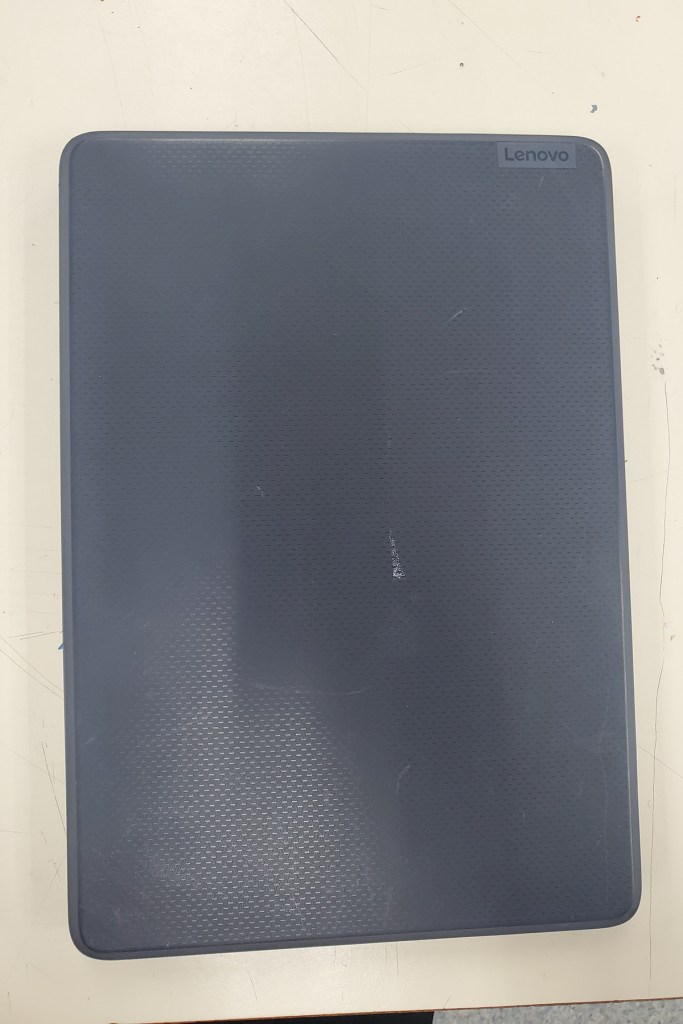

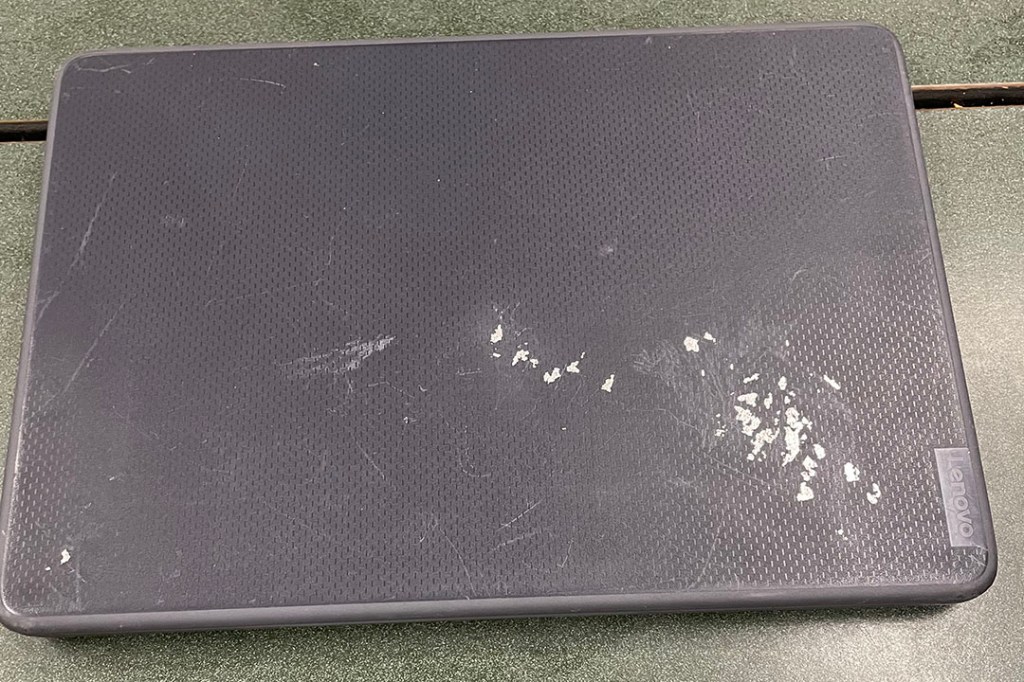
The exterior of a students’ old laptop

Photo by: Kerrick Shaw


“It’s a smart, forward-thinking move that aligns with where education is headed,” Ms. Byrne-Houser explained. “This new approach not only saves money over time, but also supports sustainability and better tech management. I have a great deal of trust in our school administrators who spent considerable time researching and evaluating options before bringing this recommendation forward.”

In agreement, board member Mr. Brian Conway thinks the access to technology is essential, stating that the new electronics “will allow the district to ensure that the necessary devices are available.”

“Initially, I had reservations about transitioning from laptops to tablet devices,” Mr. Conway said. “However, after considering the inclusion of protective cases and keyboards, along with assurances from the administration that no additional technology would be necessary to facilitate the change, I ultimately supported it.”

While some board members opposed the purchase due to cost concerns, board Vice President, Mrs. Robin Savage, voted against the purchase based on the limited time board members had to fully review the details before voting.

“The main reason I voted against it is we were not given what I believe was enough time to review,” Mrs. Savage explained. “As a board member, I felt that we should have had a thorough discussion and had more time to review the proposal.”

Despite the differing viewpoints, the district will be able to move ahead with its technology replacement in time for the 2025–26 school year.

Students, who use the current laptops on a daily basis for everything from taking notes to submitting assignments, are especially eager about the arrival of the new technology. Sophomore Kelsey Wigfield said she found out about the purchase through teachers.

“I’m excited to have a working school device,” Wigfield said. “Our laptops now never wanted to load and are very slow; they freeze a lot, too. I know from having my own iPad that they work really well even if they’re not brand new.”
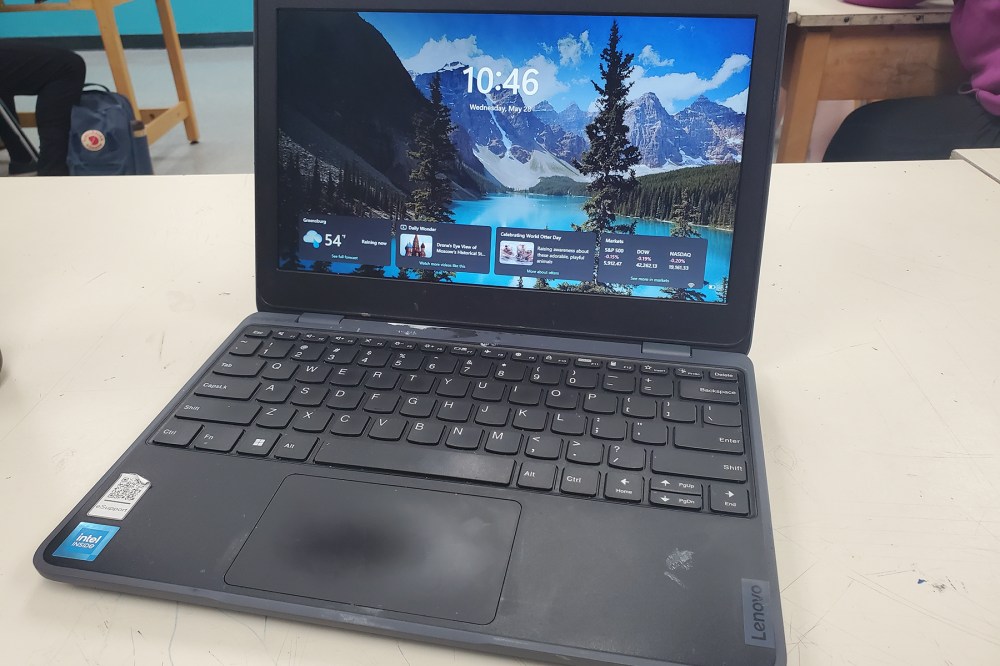

Students current laptop conditions

Photo by: Kerrick Shaw


Sophomore Grady Rizzo heard about the iPads from other students. He explained the new electronics will be “great” as he uses his laptop in nearly every classroom.

The implementation of this Apple package is one of the most significant steps in upgrading the educational process over recent years, going along with multiple upgrades underway at different buildings in the district.

“At the end of the day, this isn’t just about upgrading devices,” Ms. Byrne-Houser said. “It’s about investing in our students’ future, supporting our educators, and making sure our district stays ahead of the curve.”

Technology Changes 

By: Emma Helmick

Students at the high school are experiencing technical difficulties. 

The district changed its technology company this summer when their contract ended, causing a shift throughout the schools. 

This resulted in things going a little differently this year such as distribution being delayed, kids not getting the same laptop and some devices being dirty. 


Abegail Spaugy’s school laptop this year.

Photo By: Emma Helmick


“It was going to take an awful lot of time to get laptops back in the hands of the same student that it came from,” Superintendent Dr. Ken Bissell said. “So that’s where I made the decision and said, ‘get them ready as best as you can and let’s get them out to the students.’” 

The plan was to put in new software, clean them up and organize them to be returned to the same student, but there was not enough time. 

“Last year my computer worked as it was supposed to and also had a touch screen,” junior Andrew Lehnhardt said. “I can tell I was given a much older one that doesn’t function nearly as well.” 

Next year there is a plan to get all new touch screen computers that have double memory and will run faster to all grade levels to fix the problem of slow and older devices. 

“The computers that I have had in the past are super slow,” senior Joshua Nepple said. “I didn’t get the right one when I got my computer this year, but I heard they are getting faster computers for next year which I think is good.” 

Another change that has been made is that there is now a tech line that students can call at any time to get issues resolved. 

“I like how the tech line is 24/7,” senior Abegail Spaugy said. “Last school year, the tech office was only open a few days a week, and if you had an issue, you had to wait until the tech company workers were in their office.” 

There is currently no in-person tech office available to students during the school day, but as of right now the plan is to have someone in the tech office eventually along with the tech line to try to minimize any possible issues that students could face. 

“My job is, I have to look at what’s best for the student body, for the staff, and the community and the taxpayers, and how we make that happen,” Dr. Bissell said. “That’s why we made the decisions that we made, with the plan for next year being we’re going to get new devices across our system.” 

2024-2025 Rule and Policy Changes 

by: Ari Case 

Every school year brings new changes, and this year is no different. 

During the class meetings held the first day of school, High School Principal Mr. Adam Jones and Dean of Students Mr. Jeff Kronenwetter reminded students of old and changing rules in the school. These included the returning cell phone rule, a change in second run bussing and the attendance policy. 

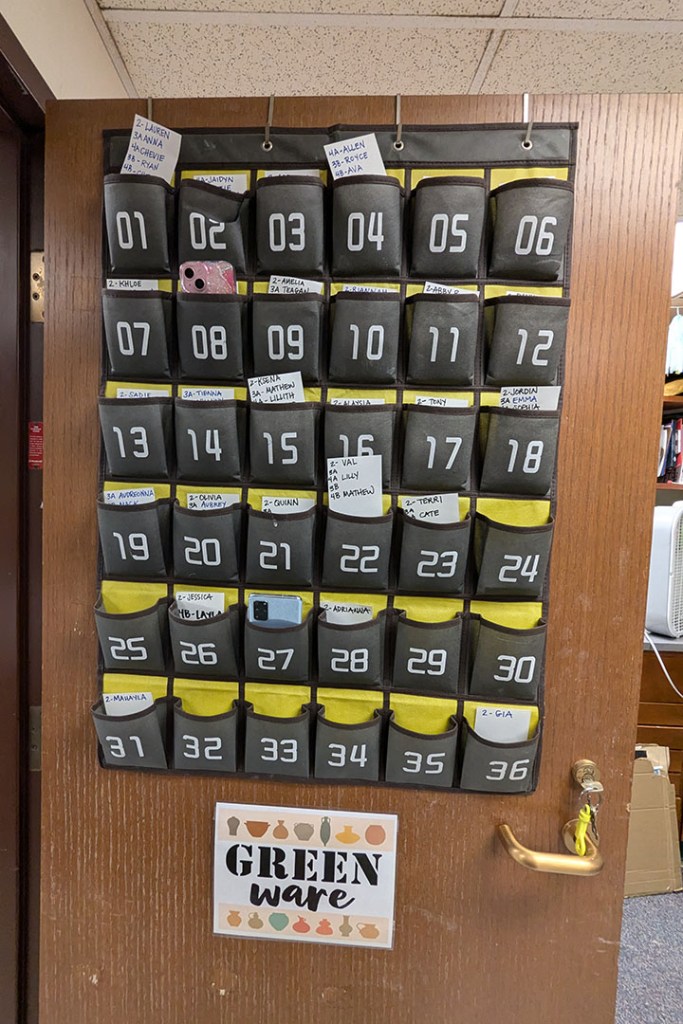
The cell phone rule, initiated last year, dictates that each student is required to place their phone into numbered and assigned pockets before class. All students are prohibited from using phones during classes and exceptions must be approved prior to implementation. 


A typical phone holder hangs on a door.

Photo by: Ari Case


“We did it [to] get kids more engaged in their learning,” Mr. Jones said.  

Teachers have varying opinions on it, but most appreciate the value in removing classroom distraction.  

“The teacher part of me loves it, [because] it is a distraction for students that have them out in class,” Mr. Kronenwetter said. 

Student views on the rule are hard to quantify, but many agree with the idea—just not the execution. Some students aren’t normally on their phones but prefer to have them in backpacks or pockets. 

“It’s not that I like being on my phone, but I like it being near me,” junior Nico Bortz said. “So at least I know if I need it in any case of emergency, it’s there.” 

The rule has not changed since last year, but its application is stricter. Previously, many teachers did not mind if students kept their phones away in their bags or used them to listen to music during independent work time. This year, however, students felt some teachers had been rude or overbearing about their cell phones even if they did not want to be. 

Bortz shared that the rule can distract them from learning more than their phone at times. One class they accidentally put their phone in the wrong numbered pocket, which prompted the teacher to disrupt class and have them move the phone. 

Students, like senior Leia Felmley, feel the rules are causing “unnecessary mayhem” and extra stress. 

This added stress, for students like Bortz, takes away from their learning. 

“I come to school and I want to learn,” they said. “I don’t want to have to worry about making sure my phone’s put away so I don’t get a detention.”  

Some have raised concerns about the potential negative impact on student learning when there is reliance on only school-provided technology. Historically, school devices and Wi-Fi networks are unreliable and cause consistent issues for many students and teachers. 

“A lot of our classes depend on technology,” Felmley said. “A lot of us went through Covid, and [technology] was our only source of education.” 

According to Jones, teachers are expected to have a backup plan for all lessons that can be completed without technology.  

Reportedly, the blame would fall on teachers if students were caught with their phones during classes. This has increased classroom tension, and Felmley disagrees with the choice to broadly pressure teachers when only some behaviors are truly disruptive or problematic.  

Education has changed drastically in large part due to the pandemic, coupled with technological advancements—many teachers have had to shift how they teach in recent years. 

“The teacher’s job is to educate their students,” Felmley said. “They should not be punished for it [because] it’s making them feel like they aren’t doing a good job of teaching when they’re trying their best just to learn how to redo everything again.” 

The high school also changed the procedure for second run bussing this year. 

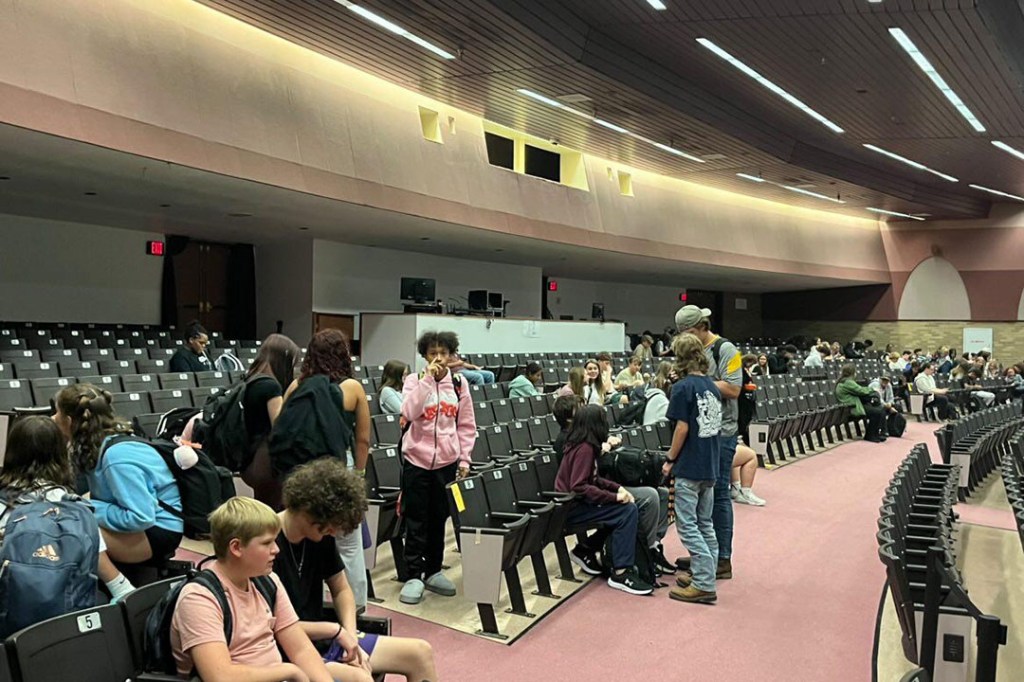
Previously, students who rode second run buses waited in the auditorium lobby or outside after school. This year, they are assigned seating areas in the auditorium based on which bus they ride and dismissed accordingly.  

It was explained that the reason for changing the bussing procedure was initially unrelated to students. In previous years, the buses were often clumped and out of order, sometimes blocking the road. Along with some conflicts between students, the main goal was to organize things for the sake of safety and efficiency.  


Students wait in the auditorium for their buses.

Photo by: Quinn Isenberg


Jones explained that “it just streamlines the process” of getting students home safely. He also said that it is important they are able to find students in case of emergency. 

Second run bus riders have decidedly less positive views about the change. 

“I absolutely hate it because [it] is wickedly hot in the auditorium, even though we have an air conditioning unit in there, and it seems like they aren’t applying something that they put lots of money towards,” Felmley explained.  

She believes the air conditioning has been on some days, but it has not seemed like it most days.  

Bortz expressed frustration at losing the freedom of standing outside. 

“It feels like they’re treating us like elementary schoolers,” they said. “I don’t like being treated like that when I’m 16 years old in high school. It’s kind of annoying and demeaning.” 

Both Bortz and Felmley resent being separated from friends and social groups. 

“It feels like you’re being isolated, away from those people you normally would bond with,” Felmley said. 

The bus procedure is new this year, but the attendance policy remains the same on paper as it has been for years.  

In recent years, several unexpected challenges disrupted the attendance policy at GS. Now, Kronenwetter hopes to get attendance more consistent. 

“We’re trying to help establish good habits,” he explained. 

He expressed that during and after the COVID-19 pandemic, he was just glad to see students attending school at all. 

The district policy is that any absences after 12 missed days count towards sanctions. A student on the sanctions list must make up two hours for every day missed over the limit and may not participate in school-related activities like sports or dances. 

The school legally excuses any absence with a note, but notes from parents still mean an absence counts toward sanctions. Any absence excused by a third party, like a doctor, does not count toward the sanctions limit. Neither do pre-approved absences for vacations, college visits, job shadows and senior projects. 

Bortz expressed concerns for specific medical and family situations, and the appearance of transcripts for college. Kronenwetter explained that he isn’t concerned about potential issues, because they can be handled on a case-by-case basis—and the rules aren’t the important part to him. 

“I know the academics come first,” he said. 

The policy has not significantly changed this year, so any grievances are largely the same as last year. General frustration at the scheduling of school is the most common, with such an early start in the morning. 

“There’s so many reasons for being tardy to school that should be excusable, but to the school are not,” Bortz said, mentioning car and health problems. 

Both Bortz and Felmley expressed concerns about COVID-19, considering the recent surge in cases. Current Center for Disease Control and Prevention (CDC) guidelines do not have a set quarantine, though they were previously five days at least. Now, quarantining until fever-free and limiting contact while wearing a mask for several days are recommended. 

According to Jones, the district has no current policy on COVID-19, and “it’s treated as any illness.” If you do not have a doctor’s note, days missed because of it will count towards the sanctions limit. 

Amid student frustration and added stress from new rules and policies, most students just want to be treated like their opinions and experiences matter. 

“I know that as a young adult, I hope that our voices will be heard,” Felmley said.