Gas Prices on the Rise

by Reese Price
As the conflict between the United States and Iran continues, rising oil price are making everyday costs, like gas, more expensive for Americans.
Over the past several weeks, tensions between the United States and Iran have escalated into a major conflict, with fighting and failed peace talks creating uncertainty across the globe. One of the biggest impacts has been on energy, particularly oil, which directly affects how much people are paying at the gas pump.
“I have never really been one to worry about gas prices and I never really noticed a difference in the amount I was putting into my tank until recently,” senior Julie Elias said. “It makes me not want to drive anywhere as much because I know how expensive gas is right now.”
A key reason gas prices have been rising is because of the global oil markets. In March, the national average price for gas rose above $4 per gallon for the first time in many years. The price has risen more than $1 since before the conflict began.
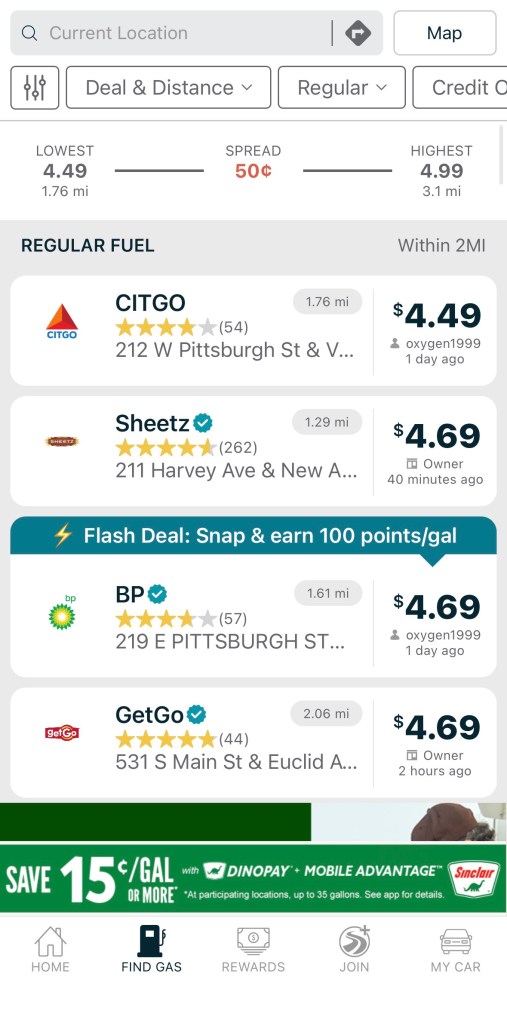
A picture of the Gas Buddy App showing the prices at local gas stations.
Photo By: Reese Price
“One of the worst experiences you can have is when 40% of your income as a high schooler is going into your gas tank just to get you to school and work,” senior Jeremiah Faulk said.
When conflict threatens oil shipments, oil prices rise quickly, and those increases eventually show up at gas stations across the nation. Even though America produces much of its own oil, it still relies on other countries to provide shipments. This means that what happens overseas can greatly affect the prices in the United States.
“I have a long commute, so I fill my tank every 5-6 days,” History and Psychology Teacher Mrs. Beth Simone said. “Driving to school is a need, so I continue to fill the tank. It is definitely costing me more the last few months.”
For high school students, these rising costs can add to the financial burdens they face on a day-to-day basis. Many students drive themselves to school, sports practices and jobs, making it hard to utilize their cars as little as possible. With gas prices climbing, even short commutes to school can become more expensive.
“I have not bought as much recently because I know I need to save money for my gas,” Elias said. “I’m not really happy with how high the prices are.”
Students who also work part-time jobs are setting aside a larger portion of their paycheck towards gas. For some, these prices can affect their work hours and how much time they have for other extracurriculars.
“I have been in a situation where I’m exploring different job opportunities because of the rise in price,” Faulk said. “Where I’m working, I’m not making enough just to afford getting there and doing things that I want to.”
GS bussing systems are also affected by these gas prices. Higher transportation costs can impact bus systems, field trips and extracurricular travel. Budgets may have to be adjusted to keep up with the fuel prices while also maintaining efficient travel systems.
“Who pays for that increased cost depends on their contractual agreements,” Mrs. Simone said. “If there was already a negotiated agreement for service rates, the bus company will pay more and lose profit.”
The conflict between the United States and Iran still remains unpredictable. While ceasefire talks and negotiations are still being settled, there are many setbacks that continue to push gas prices up, making it more challenging for everyone in the United States.
“Unfortunately, I know that based on economic principles, even if it was resolved today, gas prices would not immediately drop to their prior levels,” Simone said. “With the significant impacts on the supply chain, it will take a while before consumers actually see relief.”

