A Warm Meal with a Touch of Art

By Ksena Spencer

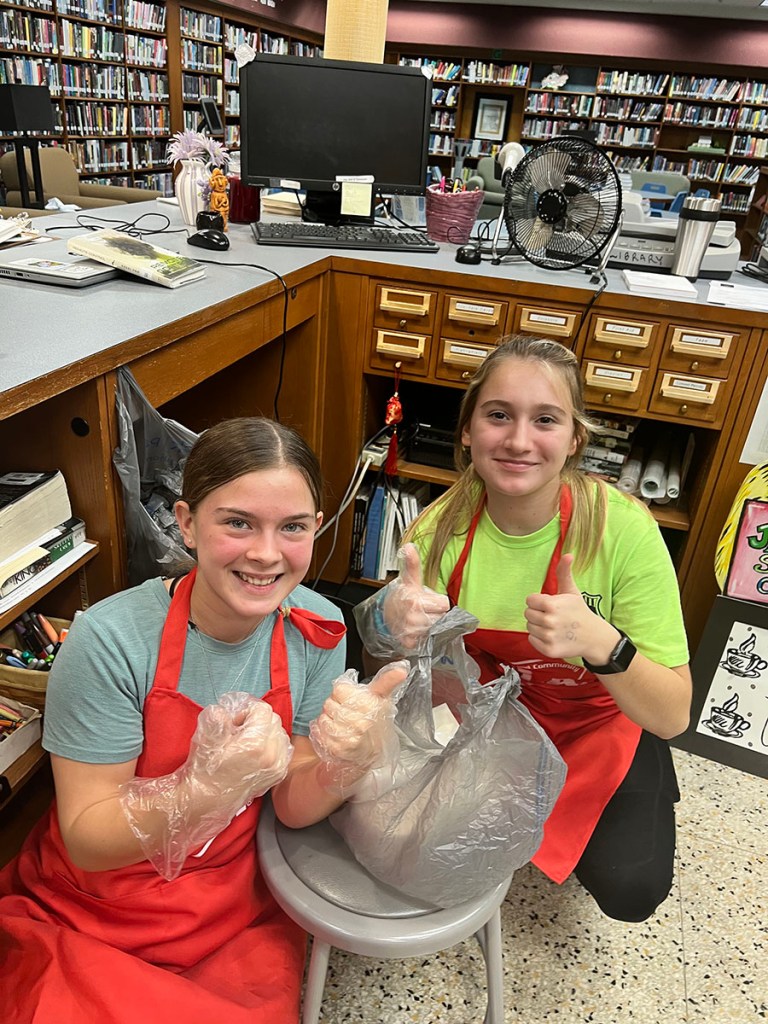
Eden Wilson and Neela Narrison serving soup to the guests. Photo courtesy: Ella Henry.

As the weather gets cold again, hot soup was provided at GS’ Souper Bowl night.

Senior Ella Petrosky helped to organize and put together Souper Bowl night as her senior project. Petrosky took an interest in this idea when she and pottery teacher Mrs. Kelley Audia talked last year about making this idea into an actual event.

“I went into the Pottery 1 classes and taught them how to make what’s called a slab bowl and helped construct them,” Petrosky said.

This event was a fundraiser in which soup was sold. For every cup of soup purchased, people got to take a homemade bowl made from pottery classes in GS.

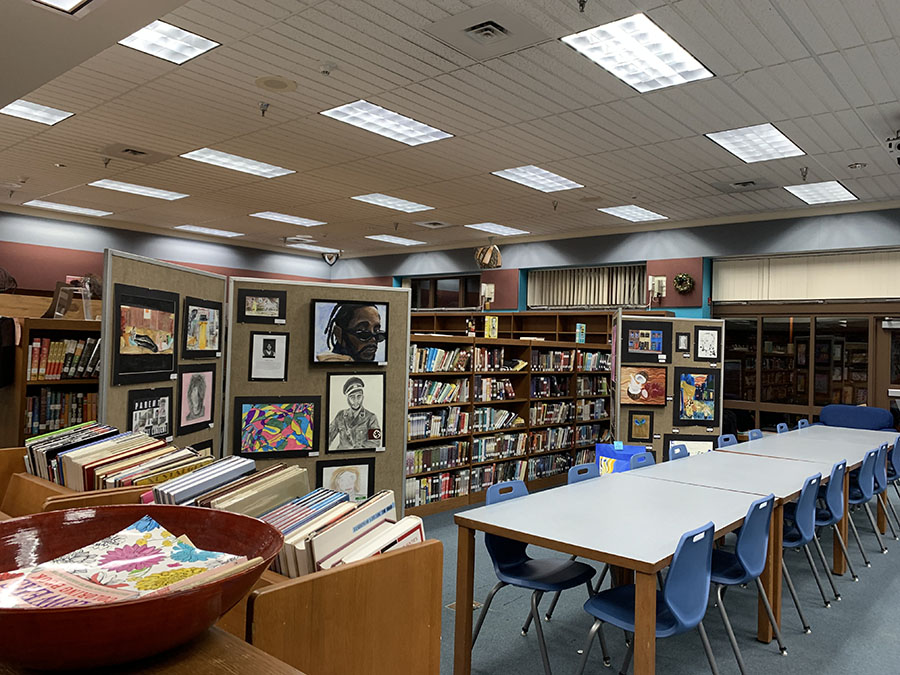
At the same time as the Souper Bowl, the annual AP Art Show also took place. It has been an annual tradition held in the library at GS. This year it marks the 15th anniversary of the display.

A view of some of the exhibits for the AP art show. Photo by Emily Frazier.

“My AP Art class exhibits their entire art portfolio which contains a concentration series- as well as their best work created throughout their high school career,” Mrs. Audia said.

People throughout GS’ community and parents of the students who have art displayed in the art show were able to see the exhibits and buy bowls made by other pottery classes.

Soup was sold for $6 and anyone who bought soup received a handmade bowl to take home.

The money raised from Souper Bowl night went to GS’ The Giving Tree.

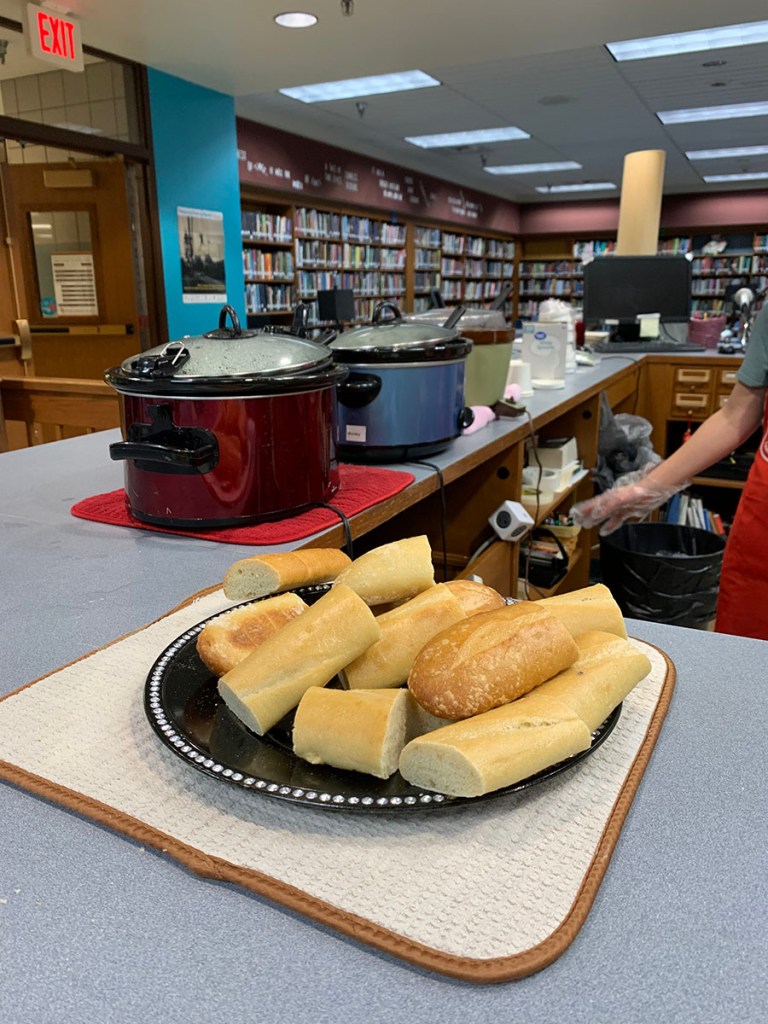
Panera baguettes were also served alongside the soup. Photo by Emily Frazier.
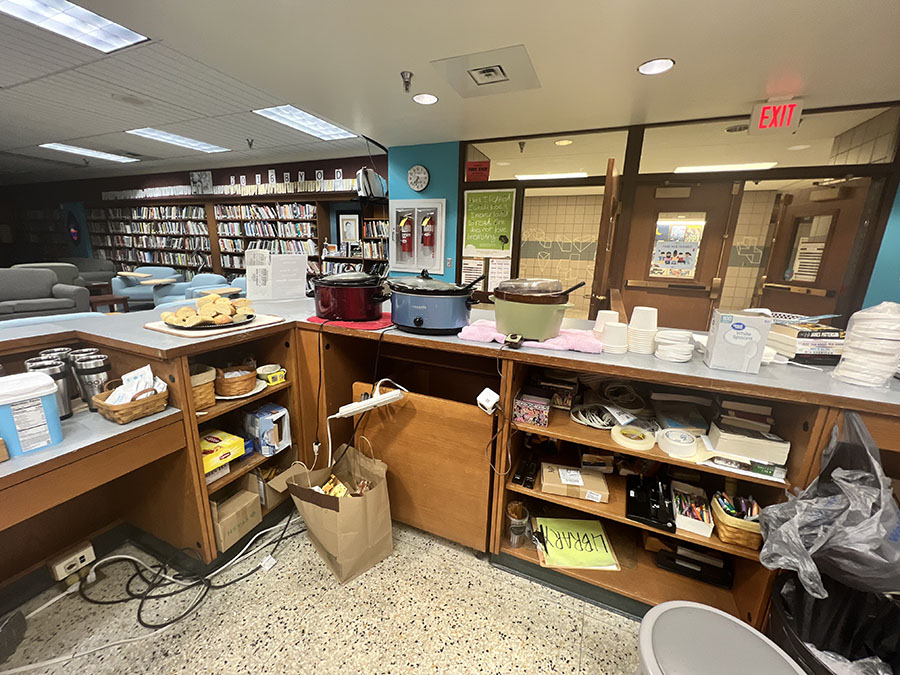
Behind the counter of the serving area. Photo courtesy: Ella Henry.

The event only had 50 bowls and 50 servings of donated soup from Panera Bread.

The bowls donated to this event varied in colors, shapes, patterns, designs and other materials.

“The pottery classes made different bowls with beautiful designs to sell at this event,” senior Sejah Franklin said.

Mrs. Audia estimated 10 bowls were made by last year’s pottery class, 10 were made by her and the last 30 were made by this year’s Pottery 1 class.

FCCLA organized getting the soup and volunteered alongside the Art Honors Society in running this event. They distributed soup and sold the handmade bowls.

“I’m hoping to gain some more [publicity for] our FCCLA club in the high school and get our name out there so people know that we are willing to help wherever we can,” Franklin said.

The Souper Bowl was an opportunity for people in the GS community to get together and enjoy talents from art students as well as raise money for the Giving Tree.

“Souper Bowl is an event that brings people together,” Franklin said.

Martin Luther King Jr., the Man Who Began a Revolution

By Mia Saraceni

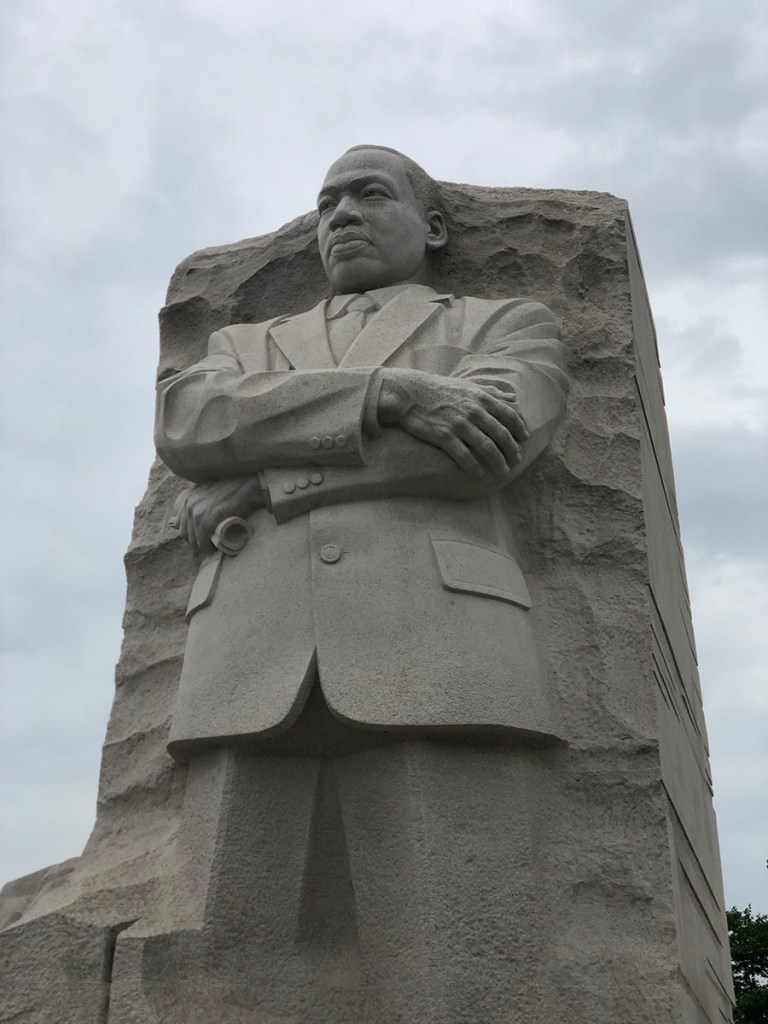
A stone statue of Martin Luther King Jr. in Washington, DC. Photo by Mia Saraceni.

A resurgence of hate and violence has butted its ugly head into the United States, forcing a call to action being made across the country.

Racism has been an issue from the very birth of the nation, with the 1950-60s being one of the most prolific periods due to its revolutionary ideas and leaders, forcing a halt to segregation and judgement.

So, who or what allowed for such an impactful change?

Almost 60 years after segregation was officially ended in the United States by the Civil Rights Act of 1964, a man is still being celebrated and commended for his work to help the brutal battle.

Dr. Martin Luther King, Jr. was the face of the Civil Rights Movement in the 1960s and has maintained a world-famous status for his immense impact and speeches.

Dr. King was a Baptist minister, following in the footsteps of his father and he even worked with him for a period of time.

King got his start in activism, though, in 1955 when he joined the Montgomery bus boycott, the same one political activist Rosa Parks was arrested for.

The boycott ultimately led to segregation on buses being banned, but that wasn’t enough for King; he had a mission to end segregation and obtain equality completely.

Being a minister certainly helped him in his mission, as he was used to writing long and heartfelt sermons, all centered around love and peace.

High school history teacher Ms. Lucy Iapalucci is one of the millions of people who admire King for his activism, sharing her personal view of all that he did.

“MLK exposed the ugliness of race hatred,” Ms. Iapalucci said. “He opened up the eyes of America and showed them that laws do not change behavior. His actions, words and deeds show how simple it is to be kind to each other.”

King’s “I Have a Dream” speech is arguably what he is most known for, and it bares the truth of what was going on in America at the time, which is just what Iapalucci was referencing.

The speech is riddled with King’s hopes, detailing a country full of love and acceptance, but also his own personal struggles with racism.

“He not only wanted to protect his peers and family members, but he wanted to protect all black people across the country,” senior Geneva Brookins said. “He fought for every race to be together treating each other like brother and sister.”

King was an all-around revolutionary, but his life was cut short by an assassin in 1968.

“He lost his life protecting ours,” Brookins said.

King left a legacy that was felt by all Americans, no matter the color of their skin.

“His courage and leadership inspire others to live with respect and change the course of history,” Iapalucci said. “We respect his life by showing empathy to others and honoring diversity. We can learn from our differences.”

His ideas were those unheard of and unspoken, but the fear of what might happen never scared him away from making lasting change.

People today honor him by celebrating Martin Luther King, Jr. Day, a federal holiday to celebrate his birthday, which is observed on the third Monday of January.

The impact he had on the country is too great to be written into word, but he made sure everyone who was being unfairly judged had someone in their corner fighting for change.

“Darkness cannot drive out darkness, only light can do that,” King wrote in his book Strength to Love. “Hate cannot drive out hate, only love can do that.”

GS Follows the Trend of Online Testing for the Keystones

By Emily Frazier

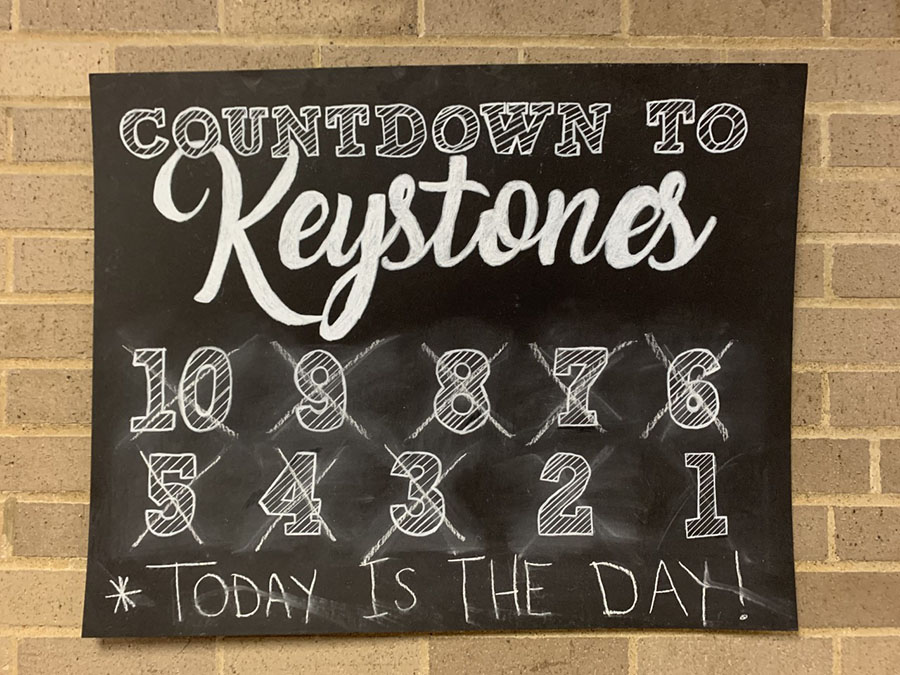
A countdown that was in the lobby as a reminder for students. Photo by Emily Frazier.

GS took on the Keystone exams with a more modernized approach, for the district opted to do them online.

The Keystones are a state-required assessment that determines students’ proficiency in literature, algebra, and science.

“Teachers use the data to find growth from year to year,” guidance counselor Mrs. Laura Klipa said. “There’s a whole lot of information that comes out of that. It shows you exactly what skill sets students are proficient in or need remediated in.”

Students take the exams for federal accountability which helps low-performing schools improve their academic performance. Through the results of the exams, schools can see what they need to do to guide students towards meeting the state standards.

“[It’s] like a basic measure of competency,” Mrs. Klipa said.

Students who don’t achieve a proficient score are expected to remediate and retest. The catch is that students scoring 4452 between the three with no scores below basic move on as well, so a consistent effort can show results.

“The Act 158 is a state requirement, and the first way to meet that graduation requirement is to pass the Keystones,” Klipa said. “In some students, it is difficult for them depending on levels of ability. So, then they give you other ways to do it.”

For those who struggle to pass or opted out of taking the test, there are other ways to prove you’re ready, such as acceptance into a four-year college, excelling at CWCTC or meeting the NCAA requirements.

Some students were more comfortable and had no worries going into the tests, for they felt well ready from their classes.

“I felt pretty prepared, and it was pretty easy and all,” sophomore Elanor Swanson said. “It was mostly the reading that was hard.”

Unlike in the past, the Keystones were taken online. Students used their school-issued laptops. Many precautions were taken so that no problems would occur during testing.

“It’s the trend to push towards paperless,” Klipa said. “There’s lots of tools on there.”

Whether this method of testing is successful or not is up to the students’ preferences.

“I did not like it all,” Swanson said. “It was more difficult to stay focused for me because it was like you’re just looking at the screen for hours. I find it easier to do it on paper, and you can write stuff out easier and jot things down.”

Some prefer to have a physical booklet to flip through while others enjoy the option to have passages read to them through that tool.

“We figured [we’d] kind of get our feet wet there and see how it goes,” Mrs. Klipa said, “I’m interested to hear what the student feedback is on it.”

Wild Weather Strikes Again

By Luke Dinkel

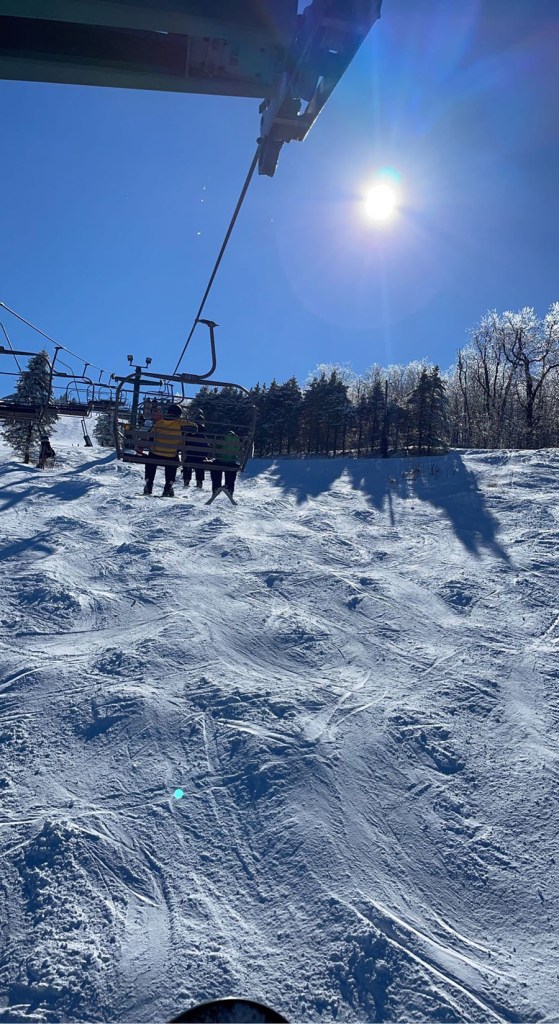
The view from a ski-lift at Seven Springs. Photo by Luke Dinkel.

Over Christmas break, an Arctic cold front struck a majority of the country, bringing temperatures into the negatives and windchills of -30 degrees to town.

Moving can be a hassle on a regular day, but when Principal Mr. Adam Jones’ pipes burst a day before moving day, it turned into a catastrophe.

“I woke up at 4 in the morning to my wife screaming,” Mr. Jones said. “I ran downstairs where I was greeted by water pouring out of the ceiling onto my living room carpet, which came at the worst time since I was selling my house the next day. I knew some of my pipes had frozen the day before, but I wasn’t expecting them to burst.”

Having connections with friends and family can always come in clutch when in need.

“Since it was the day after Christmas, most plumbers weren’t working or were already busy fixing frozen pipes somewhere else,” Mr. Jones said. “Luckily, I have a friend who was willing to drop what he was doing and come help. He might have had 30 calls about other pipes bursting that day. I’m extremely thankful for all the people who came over to help my family move, even Mr. Zilli came over to help, which made everything much easier.”          

With everything freezing, it even made it difficult for some to get inside of their car, let alone drive it.

“When I went out to my car, the first thing I needed to do was clear the snow off the windshield,” junior Ryan Ebersole said. “When I went to grab the scraper out of the backseat, the door wouldn’t open, so I let the car warm up for about 10 minutes hoping that the ice on the door would melt. When I went back out, the door still wouldn’t open, so I just grabbed an extra scraper from the garage since I had to get to work.”

If a car’s rubber gaskets are dirty, the dirt and debris can prevent the car door from sealing shut. This allows moisture to seep in and freeze the door.

“It turns out the door ended up becoming frozen open,” Ebersole said. “I tried pushing it closed but it wouldn’t move. I ended up having to drive all the way to work with the car beeping because it thought the door was actually open.”

Luckily, one good thing that came out of this arctic weather was the perfect conditions at Seven Springs Mountain Resort.

“Over Christmas break the conditions at Seven Springs were immaculate,” sophomore Lauryn Swierczynski said. “The majority of break there was lots of fresh snow every day, and more terrain was getting opened because of it. From the beginning to the end of break, I saw at least three new hills open.  Although the lines were extremely long, I still had a ton of fun with friends and family.”

The snow and cool weather made for the perfect Christmas climate, something that most northerners dream of every year.

“It’s perfect,” Swierczynski said. “The way the snow laid on the trees, the Christmas lights glistening off the snow was amazing. This time last year the weather was 50 degrees and rainy, it felt dreary and depressing. I don’t think we had a Christmas like this in years.”

New Year’s Resolutions

By Brianna Campagna

As the clock strikes midnight and the ball drops from Times Square, many feel a sense of relief and the sensation of having a clean slate.

Worldwide, many people ring in the New Year with a resolution, which people create to better oneself.

Senior Chloe Ecklund has begun her resolution by reading The Goal by Elle Kennedy.

“I plan on reading more,” Ecklund said. “[I plan on] doing that by tracking how much I read and finding more books I like.”

Cartoon by Ari Case.

Rather than planning on enhancing a skill, sophomore Lexxi Reynolds wants to restore something she once had by rekindling an old friendship.

“My resolution is to become friends with an old friend,” Reynolds said. “It’s been a couple years, but we fell off. Not for any specific reason, there was never a problem, but it was just a nice friendship and I want it back.”

Cartoon by Emily Frazier.

Reynolds has set goals to help the friendship fall back into place.

“I’m going to try to text them first and call them at least once a week just to reconnect with them,” she said.

Others take a different approach on New Year’s resolutions. Rather that setting a goal, some people choose a motto to live by.

“The word of intention is you create a word or think of a word that’s going to make you a better person throughout the whole year,” Health and Physical Education teacher Mrs. Alyssa Lukatch said.

The words of intent that Mrs. Lukatch chose this year are “present and content.”

“I struggle a lot with just being in the present moment,” Lukatch said. “We’re always focused on the future and what’s going to happen and what we should be doing. I want to focus on where I am right now and being content in the moment that I am in right now.”

Cartoon by Bri Campagna.

By the end of the year, everyone wants to have done something that changed their life for the better.

“I think words of intention, for me at least, helped me to focus on a lot of different things that I could positively change in my life,” Lukatch said.

Bah Humbug: An Opinion

By Mia Saraceni

Christmas awakens warm and fuzzy feelings for everyone. Some are filled with happiness from being with family, and others are stuffed with good food. It’s a time of joy, love and celebration.

But whose reality is that?

Homelessness in the United States has been an ever-evolving issue for years, but more notably after the 2020 Covid-19 pandemic.

There are millions of people experiencing homelessness in the U.S, but the saddest issue of all is that approximately 1 in 6 children are homeless, which is about 11.1 million according to the 2021 census.

That might be a meek number in comparison to the country’s entire population, but those numbers are strikingly high and share a sad look into a side of American culture.

But it begs the question, why are there so many people/children living in such horrible conditions? Why hasn’t any solution been brainstormed yet?

 America, and frankly the rest of the world, has such a disdain for the homeless that they have integrated hostile anti-homeless architecture in their cities such as spikes on the ground and curved benches to prevent napping.

 There isn’t a solution, and nobody cares to come up with one; they’d rather sweep the issue under the rug and hope it solves itself.

 It’s an issue year-round, but the holidays can be an especially tough time for homeless individuals and families alike.

While we’re wrapped in blankets and enjoying the peace and tranquility of the holiday season, there are 11.1 million children who won’t get a visit from Santa because that simply just isn’t an option.

Our warm fireplaces and fuzzy socks offer us comfort, but most homeless shelters won’t even open their doors until it hits 20 degrees.

It’s forgotten that Christmas is a luxury that the majority can’t afford. It’s taken for granted entirely, and the people who are struggling the worst don’t even get a second thought.

So how do we help? If our government won’t, is there a way for the people to?

There are many charities dedicated to brightening up the lives of those less fortunate both around the holidays and every other day, such as the Salvation Army.

They offer many different programs such as bill assistance, grocery and food assistance and possibly the most heart-warming: gift/holiday parties for children of low-income families.

Samaritan’s Purse is another charity, and they focus on crafting little boxes full of school supplies, food and toys to deliver to children over the Christmas season.

People can donate to any charity that supports low-income families, and that is a bigger help than is probably known.

A bigger gripe and part of the reason surrounding the ostracization of people in poverty is the lack of human empathy some show, especially concerning items that aren’t essential for living.

There is so much shaming when someone with low-income is seen with nails or hair done, a phone, a computer or anything that is seen as a “luxury.”

This shame extends to homeless or impoverished children with toys.

There is a difference between surviving and living, and they are simply just surviving.

When someone is constantly worried about where their next meal will come from, how and if they’ll even get by and the judgement they’re facing from others who have the upper hand, they deserve to get a haircut if they want it.

The people who judge are the same people who have never experienced anything except privilege their entire lives, so there isn’t even an ounce of understanding for struggle because they just perceive it as laziness.

The holiday and its mascot are supposed to be representations of love, giving and charity, but many won’t look past their own families for this type of behavior.

The Christmas patron is Saint Nicholas, a bishop from Greece who was notorious for gift giving and charitable acts.

Should people not follow in the footsteps of the man the entire holiday is based around?

Should people not offer both acts of charity, whether that be volunteering or donating, as well as compassion and understanding?

We are all just people who are trying to wade through the muck of life, and some have just been dealt a more difficult hand than others, but that does not make them any less human.

It’s our duty as people to help those in need through whatever means we can offer, not just during the holiday season, but year-round.

Those 11.1 million children deserve to feel the same joy as the children who receive bikes and teddy bears for Christmas, and they deserve to have a holiday that isn’t just another day of struggle.

These families deserve a break, especially over a time claiming to be about peace.

Local Holiday Events

By Brianna Campagna

The holiday spirit swells the streets of Western Pennsylvania. Many local activities help to spread the winter cheer.

Overly’s Country Christmas is hosted at the Westmoreland County Fairgrounds and provides a family-friendly experience with a drive-through light display and a walk-through Christmas Village. Activities such as shopping, tractor wagon rides, a winter playground and Santa’s Workshop are all presented in the village. From now until December 30th, excluding Christmas Eve and Christmas Day, Overly’s is in operation. Ticket prices begin at $5 per person.

Something unique about Overly’s is that it is entirely run by volunteers. GS’ Interact Club has been volunteering in the Christmas Village for the past six years.

“Overly’s provides a fun Christmas light show that is in a family-friendly location,” senior Logan O’Brien, who volunteers yearly, said. “You can enjoy Christmas music, fun lights for the kids and they can talk to Santa about what they want for Christmas.”

Winter Lights are displayed at The Westmoreland Museum of American Art. Every night until January 29th, from dusk to 10 p.m., it is free to walk the outside perimeter of the museum. Their light display is sponsored by Luxe Creative, FirstEnergy Foundation and Penn State New Kensington.

Kennywood Holiday Lights tickets start at $19.99. Smaller rides and attractions, such as the Kangaroo, will be in operation. Shows, train displays, a petting zoo, and a Santa meet-and-greet are all included with the ticket price. A dinner with Santa add-on is available for up to $25.99.

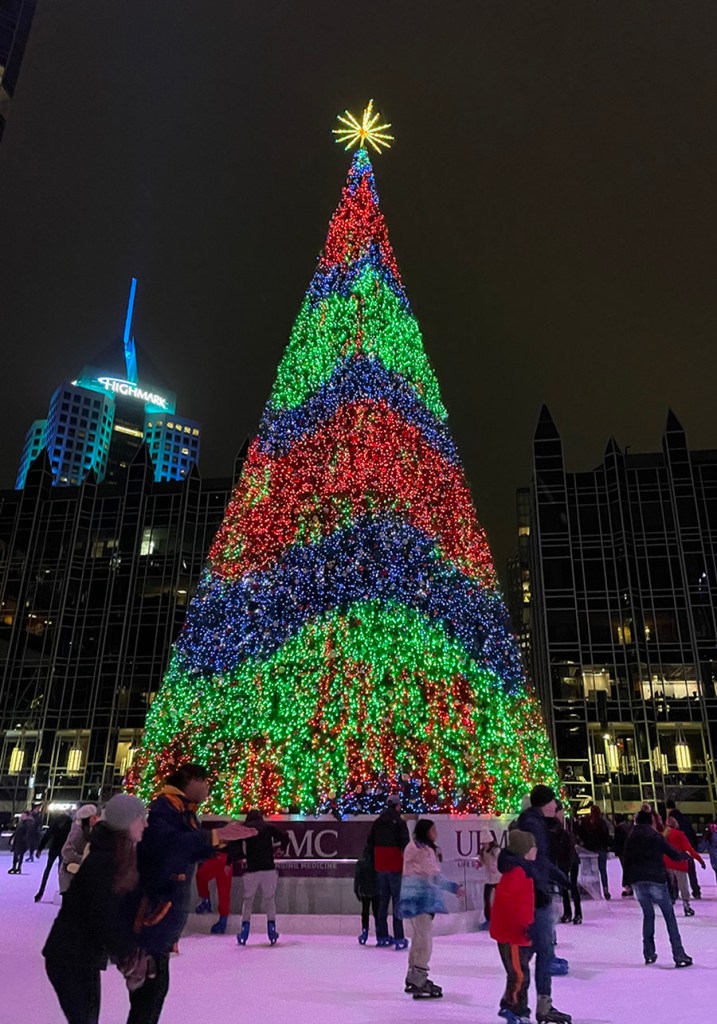
People skating around the tree at PPG Place. Photo by Brianna Campagna.

The UPMC Rink at PPG Place is located in Pittsburgh. Ordering tickets online guarantees a day and timeslot to skate. Skate rentals can be purchased alongside the ticket but are not necessary. An adult ticket starts at $12.

Sophomore Anna Spigarelli skates for the Greensburg Figure Skating Team. She returns annually to the UPMC Rink to relive the experience.

“It’s a really fun experience,” Spigarelli said. “You can go with friends and there are shops nearby. It’s outside and there’s a huge tree.”

Carnegie Trees are displayed in the Hall of Architecture at the Carnegie Museum of Art. The Women’s Committee organizes this event yearly and decorates the trees with handmade ornaments. Each tree has their own theme, and they are on display from now until January 8th.

A gorgeous display of holiday flowers at Phipps Conservatory and Botanical Gardens. Photo by Brianna Campagna.

Dazzling Nights takes place at the Pittsburgh Botanic Garden. Interactive lights, a 65-foot-long tunnel and a 30-foot-tall tree are at the Dazzling Lights. Until January 1st, tickets are available for purchase on their website. Ticket prices range from $12-$25 per person.

Many opportunities are available to enjoy the holidays within the community and surrounding communities.

“[The community] has increased the events amazingly over the past couple of years,” Physics teacher Mrs. Cheryl Harper said.

Local Holiday Charities This Season

By Emily Frazier

The Giving Tree

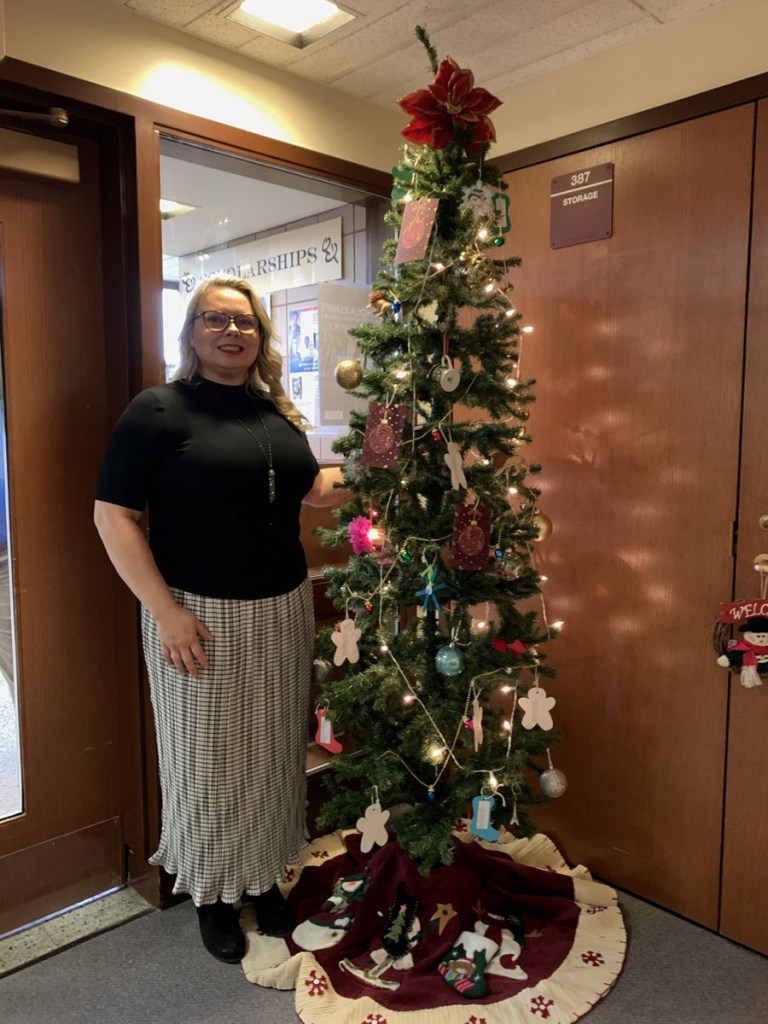
Mrs. Klipa posing beside a Christmas tree. Photo by Emily Frazier.

The GS community has come together to check off the Christmas lists of some who are less fortunate. While some have asked for a new phone or a pair of designer shoes, these students were in need of simple necessities that are often forgotten luxuries.

When guidance counselor Mrs. Laura Klipa started working for the high school, she realized there was no participation in the Giving Tree. She heard about it going on in the middle school and wanted to bring it up to the high school.

“I was thinking to myself at that point, if families were counting on that help every year and then all of a sudden you get to [the] high school, there’s nobody helping [to] give these students Christmas gifts,” Mrs. Klipa said.

This year, there were 31 students on the list to receive gifts. The guidance office contacted their families and collected the information for their requests.

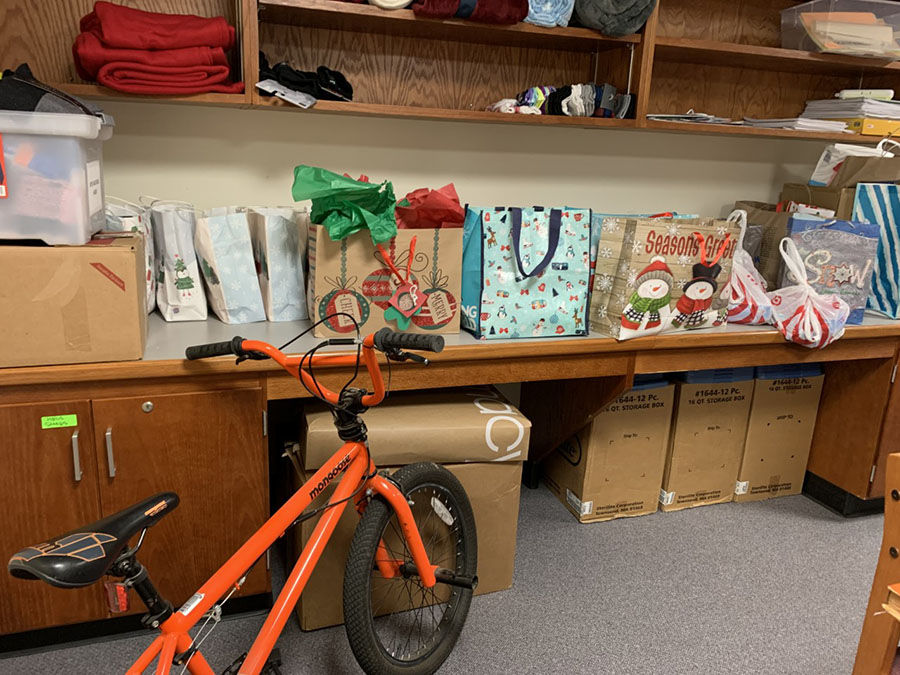
The gifts accumulating for the Giving Tree. Photo by Emily Frazier.

“I’ll reach out to families, and we will ask them what their needs are and then clothing specifics,” Klipa said. “A lot of the families just need basic things. Sometimes we do canned or boxed foods. Specifically, we get requests for winter coats, clothing, scarves, hats, shoes, socks and clothing like tops and bottoms.”

Other requests include toiletries like shampoo, conditioner, body wash, toothpaste and more.

“Sometimes there’s special requests,” Klipa said. “Somebody will have an interest like journaling or coloring, and they want something like that.”

More gifts ready to be delivered. Photo by Emily Frazier.

Aside from gift giving, GS has other ways to help.

“The biggest help that we’ve had in terms of student groups is the National Art Honor Society,” Klipa said. “They make the chocolate covered pretzels and that has been an ongoing donation all year long.”

By having opportunities like this to donate through the school, students are motivated to give back in the community as well. Not only during the holidays, but year-round, families are struggling, so this charity gives students a safe place to ask for help.

“Throughout the year – not just at Christmas and the holidays – we do have students that will not have food or clothing and so that gives us the opportunity to go out and buy them their needs,” Mrs. Klipa said.

Toys for Tots

Toys for Tots is a charity with the goal to collect new toys and deliver them to less fortunate children for Christmas. In Westmoreland County in 2021, 29,326 toys were distributed, and in Pittsburgh, 100,536 toys were distributed.

November 14 was the last day for parents to request toys and December 14 was the last day to donate toys. For a family to be eligible to receive, they had to meet certain requirements such as having children up to the age of 12 and the parents being on a form of public assistance.

Stuff-A-Bus

A local radio station, 96.1 KISS, hosted a week-long event that helps support the Marines Toys for Tots program.

From November 28 to December 2, people were asked to bring new and unwrapped toys to the collection site in Robinson Town Centre. The toys donated were put into school buses, hence the charity name, Stuff-A-Bus. This year, 66 buses were stuffed.

To raise excitement and attract donors to the event, themed nights were planned. Some of these nights included Black and Gold Night and Touch a Truck Night. Businesses such as Burgatory and 3 River Chrysler Jeep Dodge Ram supported the cause by donating the money made from purchasing snicker doodle milk shakes and giving $100 worth of toys after each test drive. People are still able to donate online.

A New Year

By Luke Dinkel

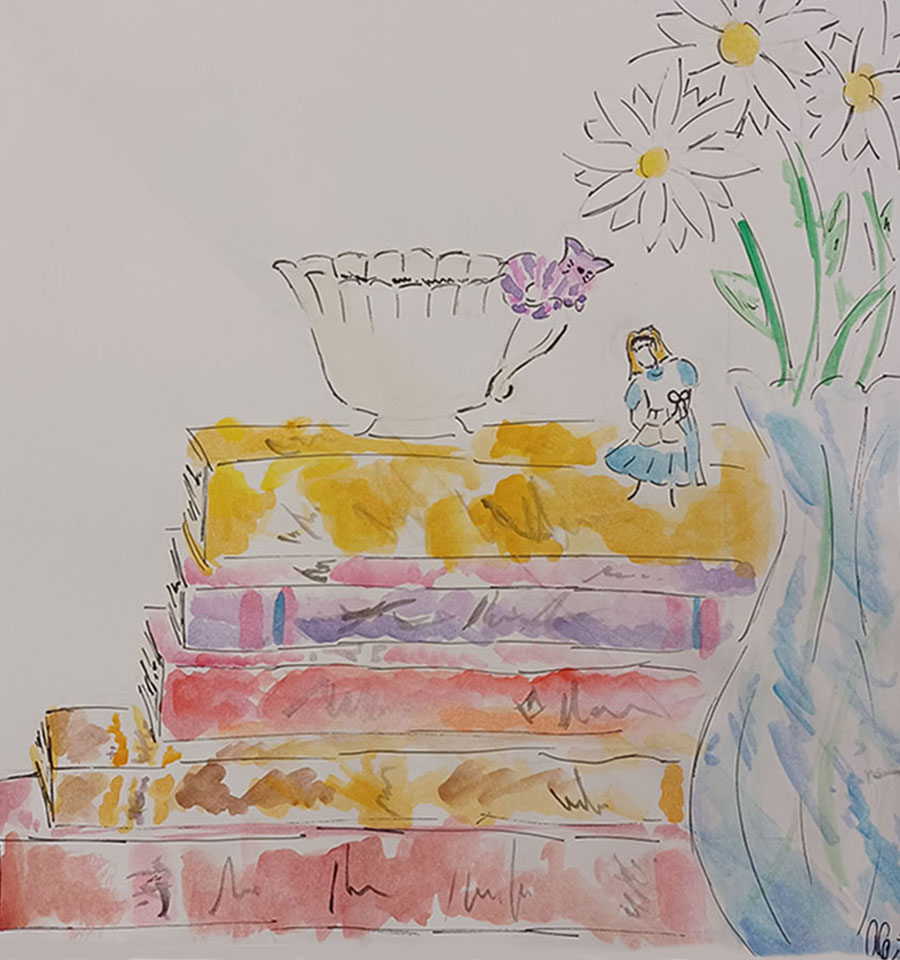
Drawing by Emily Frazier.

According to Britannica, the celebration of New Year’s dates back to 2000 BC in Babylonia, which is located in modern day Iraq. The first new moon following the vernal equinox which occurs in late March with an equal amount of sunlight and darkness indicated the start of a new year.

Travelling over New Year’s break is a common tradition for families across the country.

“We’re never home for New Year’s,” junior Kason Tai said. “We’ve gone all across the world to places like Boston, Malaysia and Kansas. When we were in Malaysia, we celebrated New Year’s a day earlier than we would have back in Greensburg since the time zone is a day ahead.”

Other cultures celebrate their own holiday, such as Lunar New Year, which is better known as Chinese New Year.

“Malaysia celebrates Chinese New Year’s too,” Tai said. “I don’t remember it very well, but my dad said they have a huge celebration in the town center. They also have a giant dragon, which apparently symbolizes power, strength and good luck.”

The Times Square Ball Drop is a common thing for most Americans to watch on tv the night of New Year’s Eve.

“Usually, our family gets together with several family friends on New Year’s Eve,” science teacher Mrs. Tammy Elliot said. “Sometimes we go bowling in the afternoon and then we get together at our house or sometimes another family’s house. We like to talk, eat and play games until midnight when we watch the ball drop on tv.”

Sporting events such as the Peach Bowl occur every year on New Year’s Eve.

“I’ll go out with a couple of friends and after we’ll get together at someone’s house, either mine or theirs,” junior Noah DeMary said. “We’ll turn on whatever college team is playing and order a bunch of food.”

Today, the New Year is celebrated in different ways all around the world, but here in the small town of Greensburg, celebrations range from drinking champagne to setting off fireworks.

“I usually spend New Year’s with my family and friends,” junior Leah Kaylor said. “It’s a tradition in my family to watch the ball drop at midnight, but honestly, I’m lucky if I’m able to stay up to see it. When I spend New Year’s with my friends, it makes it easier to stay up.”

Many view New Year’s as a fresh start, which is where the tradition to make a New Year’s resolution came from.

“Every year my friends and I each make New Year’s resolution,” Kaylor said. “If I’m being honest, I usually forget about mine after the first month. I get upset whenever I remember and realize I haven’t done anything to commit to my resolution. This year I’m definitely going to try to commit, because whenever you accomplish your goal, it is one of the greatest feelings.”

Holiday Traditions

By Ari Case

A beautiful light tree in Spain. Photo courtesy: Señora Aragon.

For many in America, December means buying presents and trees, watching cozy movies, sipping warm cocoa and hanging stockings on the mantle. Even in other countries, these traditions are observed. For many more, though, other traditions or different holidays entirely are the focus of the season.

At GS, some students and teachers celebrate other traditions.

Senior Gabriel Prikoszovich is here for an exchange program and shared some of his holiday traditions.

“In Austria, we have pretty big Christmas markets,” Prikoszovich said. “Normally there’s some [place] to ice skate, [and] you buy souvenirs there. And then [there are] some dishes like caramelized almonds and some cookies. There [are] some stands [of] people who live there.”

One difference he noted was that in Austria, they open presents on the 24th rather than Christmas Day. The food is different as well, with fish being the main course.  

“My family has a tradition where we eat a piece of garlic, a piece of apple, an almond and combine it with honey because it symbolizes wealth, health and family,” he explained.

Though there are a few differences for Christmas, Prikoszovich explained that New Year’s celebrations are nearly identical. The only thing he could think of is that the drinking age is lower in Austria.

Another transfer student, senior Aleksander Savic, shared his holiday experiences from Serbia.

The most obvious difference is the reversal of Christmas and New Year’s traditions.

“We get presents on New Year’s and then our Christmas is on the seventh of January,” Savic explained. “And Christmas is [to] be with your family [and] have a big dinner. [It’s] usually a big family time.”

Similar to several other traditions, he shared that on Christmas families eat a round cake with a coin hidden inside. Whoever finds the coin in their slice is said to be lucky for the next year.

A holiday market in Spain, similar to those in Austria and France. Photo courtesy: Señora Aragon.

Many might assume that the holiday season in South Africa is vastly different from American customs, but that’s not always the case.

“It’s the same as here, except we don’t celebrate Thanksgiving,” sophomore Kutlo Makgale said.

Makgale is from Botswana, a country in Southern Africa, and she moved to America a few months ago. For Christmas, the only difference is that they have a longer break from school.

“We got together, the whole family from the oldest to the youngest—all of us—because we rarely saw each other all year long,” she said. “We’d get there on the holidays and just cook and have fun.”

For New Year’s, she talked about similar celebrations to those in America, with dancing at the end of the day.

“Some people from the community would get together and perform traditional songs and [do] some dances,” she said.

Most of the traditions this time of year are very similar in Botswana, but Makgale said some of the American customs seem peculiar.

“I don’t [understand] sitting on Santa’s lap,” she said. “I mean, you don’t know him. [Just] deciding ‘Oh my God! I want to see Santa,’ [is] weird.”

Of all the Christmas traditions, mall Santas are certainly one of the most American.

Some students will be celebrating for the eight nights of Hanukkah, lighting candles of a menorah, receiving gelt and playing dreidel. Hanukkah is a traditional Jewish holiday commemorating the recovery of Jerusalem and the miracle of the holy light. The blessed oil of the candelabra that burned for eight days—only expected to last for one night—is a well-known legend that many still celebrate today. Each day, scripture is read and hymns are sung.

In addition to religious traditions, there are several others. Some traditional foods like latkes and sufganiyot—potato pancakes and doughnuts—are eaten. Gelt—money, chocolate coins and small gifts—are given to children each night. All of the time, though, is spent with family.

Any student who wishes to learn about other cultures can take a French or Spanish class, which typically cover bits of holiday tradition from their respective countries.

In French classes, students can learn plenty about traditions like placing shoes under the chimney. Most children in France do this the night before the sixth of December—Saint Nicolas Day.

While they sleep, Saint Nicolas will put candy into the shoes of the good children, and then Père Fouettard—Father Whip—will drop coal in those of the bad children. Sometimes, he even whips naughty kids with his bag of sticks.

This tradition stems from an old legend about one of Saint Nicolas’ miracles that can still be found in French children’s books today.

A French children’s book depicting the legend of Saint Nicolas. Photo courtesy: Madame Grace.

“It really opens up the holiday season in France,” French teacher Madame Stephanie Grace said.

Throughout the holiday season, there are many large holiday markets there. The cultural importance of markets in France leads to them being everywhere, all the time. There are many stands with sweet treats, delicious food and small gifts to buy for friends and family. Markets are not only a place to shop, but also a social gathering place.

Some things that could be bought at a market are les santons and holiday cards.

Les Santons are small figurines of traditional characters and professions that are crafted by hand in the Provence region of France. They are used in household nativity scenes around the holidays and can be found in Provençal homes year-round.

Rather than sending cards out in December, in France they are typically sent out any time before the end of January. Instead of specific Christmas cards, they are cards to wish luck and prosperity for the new year.

“It’s more to wish them a prosperous and healthy new year,” Madame Grace said.

Other than timing, they’re fairly similar in sentiment to American cards.

The night before Christmas, French families have a big dinner together. It’s a traditional meal that sometimes includes delicacies like oysters.

“It’s a late dinner because they eat [and] then head to midnight mass together,” Grace said. “So, it’s a good way to bring in the season.”

After Christmas and New Year’s celebrations, French families celebrate Three Kings Day on January 6. This is a time to feast with family and enjoy a King Cake. Inside the cake, there will be a small ceramic toy. Whoever gets it in their slice is granted luck for the year and is responsible for bringing the cake next year.

In Spain, they also celebrate Three Kings Day, also known as the Epiphany, with a cake, but the tradition is split apart. The cake is called a Roscón de Rayes cake, and it has dried fruit. There is both a bean and a small figurine of a baby inside. Whichever unlucky person finds the bean must bring the cake next year, and the luck is bestowed upon whoever finds the baby. Also on that day, children leave out shoes for treats like the French do on December 6.

For New Year’s in Spain, they eat 12 grapes before the clock strikes midnight for prosperity in each month of the upcoming year. There are fireworks and parties, too.

In Peru, families create dolls or scarecrows called muñecos that resemble a person and place them outside their homes. They are often modeled after political figures or family members. At midnight, on New Year’s Eve, with fireworks or just fire, each muñeco is burned away.

A depiction of Santa Claus burns on New Year’s. Photo courtesy: Señora Aragon.

“It represents, sort of, out with the old and in with the new,” Spanish teacher Señora Emily Aragon explained.

For many countries, the Christmas season isn’t during a cold snowy winter. In Peru, though it’s warm, they still drink hot chocolate. In some areas, there are sorts of holiday soup kitchens—called chocolotadas—where hot cocoa and warm food are given out to the community.

“Basically, they give hot chocolate and food to [less] fortunate families and they give a little gift,” Señora Aragon said. “So, when you hear chocolatada, in Peru that’s a big tradition around Christmas time.”

A street in Spain decorated for the holidays. Photo courtesy: Señora Aragon.

Another tradition of Spanish-speaking countries is that of Las Posadas, which is most prominent in Mexico. For nine nights before Christmas, there is a small procession of community members acting as Mary and Joseph with the baby Jesus followed by many children in angel or demon costumes. They parade through the town asking for shelter until they reach the designated house, where everyone enters and feasts.

“It’s a theatrical reenactment of Mary and Joseph looking for a place to sleep in Bethlehem,” Aragon said.

Speaking of the nights before Christmas, in Iceland children are visited by the 13 Yule Lads. Each night, a different one of the brothers visits each child and either gives them a gift or—if they were naughty—a rotten potato. Traditionally, these are given within shoes placed on the windowsill the night before.

Icelandic children also contend with the Christmas Cat, Jólakötturinn. He prowls around on Christmas Eve and allegedly steals gifts from, or in some stories devours, anyone who isn’t wearing at least one piece of new clothing. No one can quite trace the origins of this particular holiday creature, but it still convinces many children to wear the socks they begrudgingly got the night before.

One tradition that may be more familiar to people in Greensburg is that of the Christmas pickle. This ritual of hiding a pickle ornament in the tree for someone to find the next morning allegedly comes from Germany. Researchers have found, however, that it most likely started right here in the US at Woolworth’s in the 1880s. Almost no one in Germany has even heard of the tradition. Historians suspect that they created the tale as a way to sell more glass ornaments of fruits and vegetables imported from Germany at the time.

There are two main legends behind the commercial myth. The first tells of a soldier who had been captured and was near death. He pleaded with a guard asking for just a pickle, which saved him and gave him the strength to continue living by the grace of God.

The other tale tells of two boys who were captured and killed by an innkeeper. The innkeeper then stuffed their bodies in pickle barrels. Later, St. Nicholas was passing through and found the bodies. He used his magic to create a miracle, bringing them back to life. This has parallels to the French tale of Saint Nicolas, meaning it likely took inspiration from the classic tale.

French cookies decorated like Saint Nicolas. Photo courtesy: Madame Grace.

Despite alleged German origins, many in Pittsburgh and the surrounding area continue this tradition, partially due to the city’s ties to Heinz pickles. Ornaments with Heinz pickles are sold around the city, and a large balloon was made as well.

Wholly unrelated to pickles, another food-centric tradition is the Feast of the Seven Fishes. Many years ago, Italian American families solidified the tradition in the US. At the time, seafood was the most available resource for many people in Italy, and immigrant families brought this cooking with them.

On Christmas Eve, a seven-course meal of seafood is served family-style around the table. At least one of the courses will involve a whole cooked fish, which symbolizes abundance—and is also very delicious. The tradition itself is not religious, but there are seven courses because of the number’s importance in the Bible.

Though not centered on fish, another seaworthy tradition is the decoration of Christmas boats in Greece. The climate in Greece rarely had trees, mostly brush, and many families had sea-faring roots. Families join and decorate a boat, often a model for those who don’t own a real one, rather than a tree. Some legends say that the lights on the models would bring light to the men who were out at sea, although it isn’t very clear what the direct origins were.

A holiday ice rink in Spain. Photo courtesy: Señora Aragon.

Even if your holiday season is just a few extra days off school, enjoy the time with friends and family by making memories and having fun.