Vending Machines: the truth behind the controversy

Ari Case
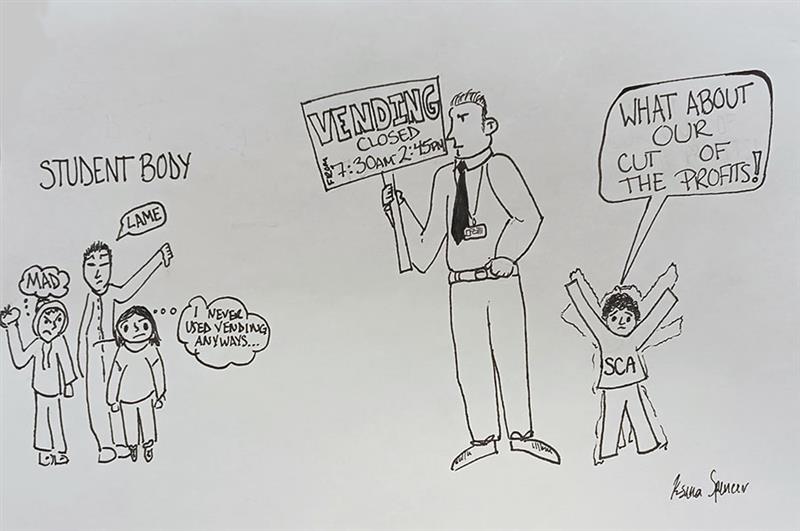
Upon returning to GS for the 2022-2023 school year, students and teachers alike were shocked to learn that the controversial vending machines were to be closed during school hours from 7:30 in the morning to 2:45 in the afternoon.

In years past, the student lounge area outside of the cafeteria—home to the most often used vending machines in the building—has been a congregation spot for many students. Even now, students gather there before classes start every morning.

The most common time students used the vending machines in years past was advisory, and teachers on the first floor experienced the change more so than others.

“It does affect this advisory,” social studies teacher Mr. Robert Lehman said. “As far as people being late, because they [would] be hanging around the vending machines.”

The change was a shock not only for students, though. Most teachers did not find out until the in-service day before school, according to Mr. Lehman.

Reactions amongst the student body vary, but staff members expected students to be upset.

“It wasn’t what I thought it was going to be,” Lehman said. “There were not as many complaints as I thought. I was surprised by that because I thought for sure people would [be outraged].”

While the students in Mr. Lehman’s advisory may not have been upset, other students were.

“I was quite disappointed,” senior Paytan Henry said. “It was truly devastating, and I think they should be [brought] back.”

Henry said that she used them nearly every day during advisory last year, common for many students.

“Advisory is the best time to go,” sophomore Alice Wilkinson said. “That’s when everyone eats.”

Wilkinson said she was surprised to hear about the change and has missed using the machines during the day. Students were not given an explanation, though many have made their own assumptions.

“I think [it was] because people were just kind of roaming the halls,” Wilkinson explained. “And saying they were going to the vending machines.”

For those who participated in activities over the summer, the machines were working all day. In extracurriculars, using the vending machines was commonplace.

“If it wasn’t every day, it was every other day,” freshman Ian Smith said.

Smith plays in the marching band and was at the school throughout summer for rehearsals. He said the change was disappointing for him and other kids in his position.

“With middle school, you don’t have much freedom and choices,” he said. “I felt that even just adding something as small as a vending machine was the difference between being an eighth grader and a ninth grader. It was having that sort of choice.”

Now, Smith buys snacks and drinks in the cafeteria line during lunch like many other students. A misconception within the school is that the cafeteria is responsible for the change, based on this information. It would make sense if they wished to increase their sales.

“We sell the same,” Director of Food and Nutrition Mr. Scott Hudak said.

Mr. Hudak is the Regional Chef for GS through the Nutrition Group, contracted with the district for the last nine years.

The cafeteria’s sales have not increased, according to Hudak. The decision was also not his to make.

“We don’t put the rules out there,” he stated.

He went on to explain the rules and regulations behind vending machines in schools in detail.

According to a Food and Drug Administration (FDA) memorandum sent to Child Nutrition Program (CNP) operators, “items sold to students on campus throughout the school day, including those sold in vending machines, must comply with Smart Snacks in School requirements,” even if they are not meal replacement items.

The FDA memorandum cited several dozen regulations and limitations on food and drinks allowed in school vending machines, almost none of which are met by the machines at GS.

Hudak said that an inspection is approaching that would decide funding for the school food programs.

“Your school district gets reimbursed from the government a certain amount of money,” he said. “To make up the difference in what [students] pay for lunch and what the government will fund the school to pay the other half.”

At GS, breakfast, lunch and dinner are free—meaning the reimbursements are crucial for the district.

Previously, the FDA regulations still applied. The companies that fill vending machines do not follow the guidelines because it would cost them significant profit. There has not been an inspection in several years, as they are usually every three-to-five. This and COVID-19 complications led to the vending machines being left as they were.

“They just kind of let it slide,” Hudak said. “But now everything’s back to the strictest [requirements].”

Now, with the renewed restrictions, things needed to change.

“I don’t really have a decision as to whether or not I can choose to break the rules,” High School Principal Mr. David Zilli said. “It wasn’t like we made a conscious decision to break the rules. The interpretation in the past was that they could not be on during lunches.”

Mr. Zilli said he became aware of it shortly before the school year and that it was a district decision. He acknowledged that the vending machines provided benefits, but they needed to be turned off nonetheless.

Unfortunately, there are more problems than hungry students during advisory. The Student Council Association (SCA) gets an important part of their funding from the vending machines.

“My initial reaction was ‘Oh, we’re gonna lose money,’” Senior Class Treasurer Sam Spigarelli said.

Spigarelli explained that each month, SCA makes a commission from the machines. He said the company that supplies them cuts SCA checks for a decent part of their total profit.

He also noted that it was a surprise to SCA that they would be losing that area of funding.

“From my understanding, we found out they were going to be shut off during the school day the week before school started,” he said. “It was very last minute.”

Though that could be seen as a lack of communication, the decision was short notice for everyone, including administration.

Zilli said he “got an email on August 23rd” only a week before the first day.

Now, SCA is looking at other ways to make up for that loss. The loss of funding, if not balanced through other means, will likely raise the price of dance tickets for the year.

“That’s not really an option that we have, whether we lose money or not,” Zilli said. “We have to abide by the rules set for us.”

Spigarelli explained that one method of funding SCA was looking at was sponsorship opportunities. He urged students to reach out if they could help.

“If you know somebody who has a company or has a business and they want to sponsor SCA events for the whole year, then they should reach out to an SCA representative or Mr. Gazze,” he said.

While it was a shock to students and teachers—and not a good one for most—there are alternatives that will hopefully work out for everyone.

“I can understand how it would be a disappointment for students who were used to it, since it was a surprise,” social studies teacher Mrs. Beth Simone said. “But I think everyone should be able to adapt.”
Difficulty With Lunch Scheduling

by Luke Dinkel

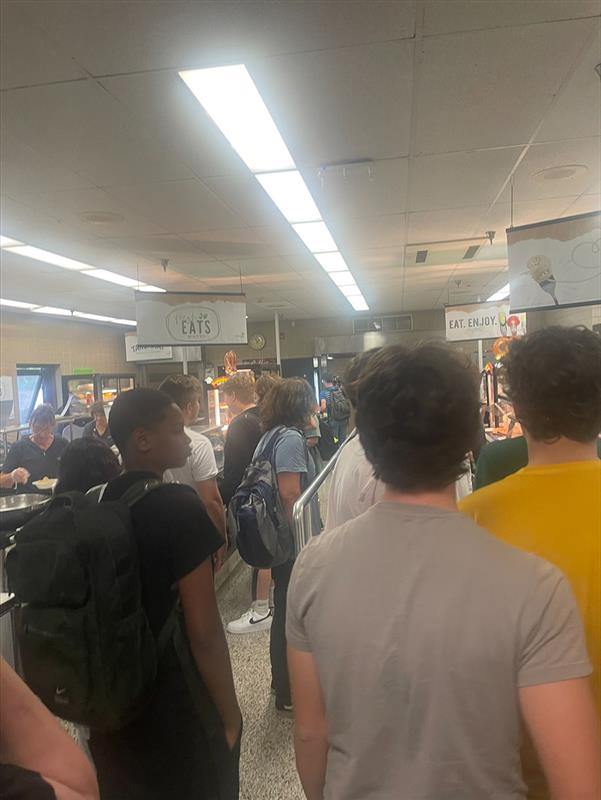
Some students have been searching and struggling to find a place to sit during their lunch, while others cannot find a single friend to sit with. 1st and 2nd lunch seem to be overflowing with students, while 3rd and 4th lunch are quite the opposite.

Why are two of the lunches packed? What are the students feelings about their lunches?

Lunches from the 2021-2022 school year seemed to be different when it came to seating.

“Do you mean the number of students in a given lunch,” Dean of Students Mr. Jeff Kronenwetter said. “If so, probably so comparably to other years. Lunches are designed to be as equal with students as possible, within reason. 1st lunch traditionally is larger because we have our afternoon CWCTC students in that lunch before they leave the building for their afternoon classes. Child Development is also 1st lunch because of when the pre-school kids come for the Cub’s Den and our Freshman Seminar and most sciences in either 1st or 4th lunch, so those classes aren’t interrupted in the middle of a presentation or a lab.”

Students in 1st lunch wait in line to get their food. Photo by Luke Dinkel.

The first two lunches are packed, while the last two don’t have many students.

“Child Development is also 1st lunch because of when the pre-school kids come for the Cub’s Den and our Freshman Seminar and most sciences in either 1st or 4th lunch,” Mr. Kronenwetter said. “We do this so those classes aren’t interrupted in the middle of a presentation or a lab. We have over 800 students in the building and they are spread out throughout 4 lunches. We try to get it as close to even as possible, all while balancing when certain classes can be run and where all students need to be.”

Students seem to have different opinions than Mr. Kronenwetter.

“Compared to last year, my lunch definitely seems way smaller,” sophomore Natalia Backos said. “I had fourth lunch for all my freshman year, and I have to say it was completely packed for both semesters. Some of the tables were practically overflowing. Now, I can easily see at least four completely empty tables at a once packed fourth lunch.”

With that many empty tables, some might believe that it is a waste of space. Some students are wondering why their lunch is so quiet and empty while their friend’s lunch is loud and full of students.

With CTC students in first lunch, it is hard for them to buy their lunch and make the bus in time.

“It is very hard, I have to rush down to the cafeteria from the third floor to try and get my lunch in time so that I can eat before I have to leave,” junior Gabrielle Hult said.

When it comes to waiting in line for lunch, first seems to be the longest.

“It takes usually about 10 to 15 minutes,” Hult added.

Lunch is supposed to be a break for students when they can eat and interact with friends, but with smaller lunches students have a lesser chance of being with friends.

“I feel like it’s bland, there are almost no people in it,” junior Ryan Ebersole said. “The first two lunches are much busier than my lunch, and I think that they should spread it out better.”

Out With the Old and in With the New: GS and its Staff Changes

by Mia Saraceni

While all the previous teachers at GS were loved, the time for change has come and newcomers have filled in and taken their place.

          There are changes in almost every department, with the exception of the science department. New teachers have appeared in the Foreign Language, Math and Business departments, which certainly warrants an introduction.

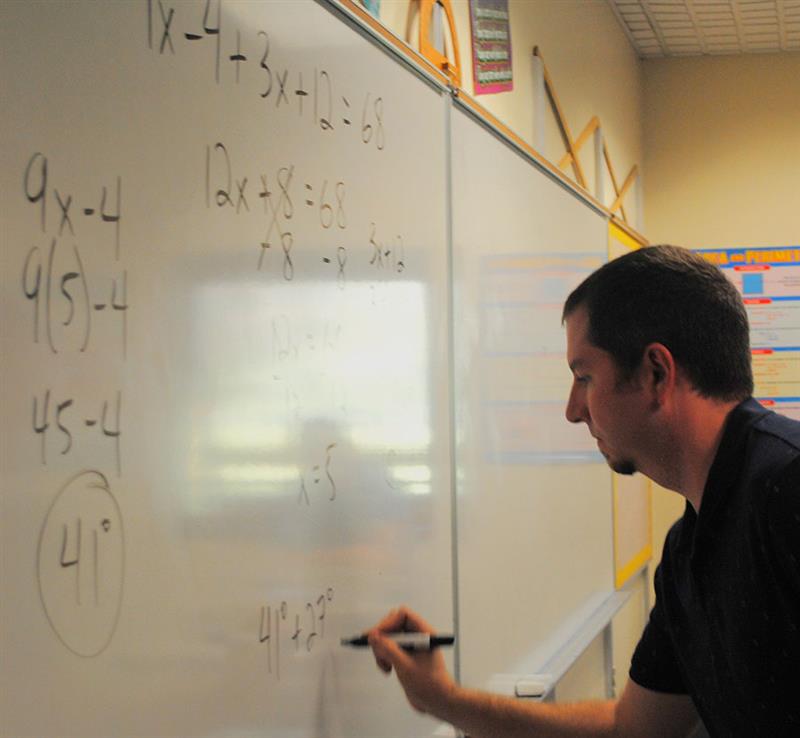
          Starting with the math department, there are two new faces: Mr. Scott Shirey and Mr. Luke Ewing. Mr. Shirey teaches both geometry and math for the trades. While originally from Hempfield Area, he worked at a middle school in Manassas, Virginia for eight years before returning to this area.

Mr. Shirey works on an equation on his white board. Photo by Ari Case.

          “It feels great to be home again, not just visiting,” Mr. Shirey said.

          Besides being excited to come back home, Shirey was finished working with middle school students and was ready to start teaching more mature students.

          “Middle school was fun, but I’ve been ready to move on to more mature students for a while now,” he said. “I really enjoy the students I’ve met so far. I’m really excited to work with them this year.”

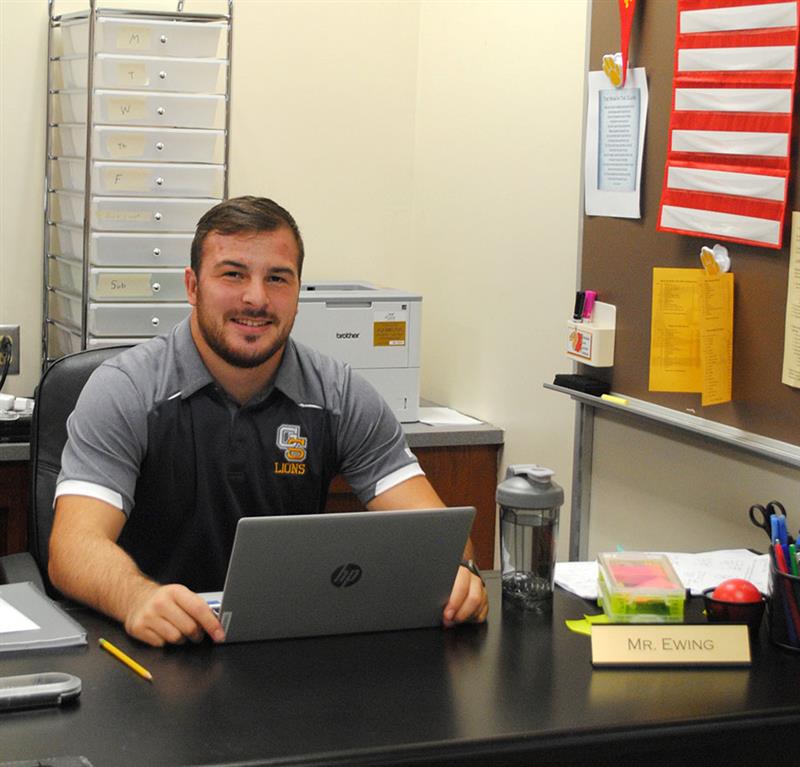
          The other newcomer, Mr. Ewing, is technically in the learning support department but helps out mainly with math. He teaches two math classes but focuses on floating around to different rooms and helping students. He is a proud GS Lion and attended Seton Hill University for education. Teaching isn’t his only passion, though, as he wrestled both in high school and at the collegiate level.

Mr. Ewing poses for a quick pic at his desk. Photo by Ari Case.

          Ewing views his new position as a career opportunity and is very excited for all future prospects.

          “This is where I want to be, Greensburg is home,” he said. “I just want to continue to grow as a colleague, be the best teacher and the best mentor that I can be.”

          Although he wants to be an academic mentor, he hopes to also be a mentor to all of the wrestlers at GS and work on getting into coaching.

          “I do want to get involved in coaching as well,” Ewing said. “Whether that’s taking baby steps and starting as a volunteer, but I do love wrestling.”

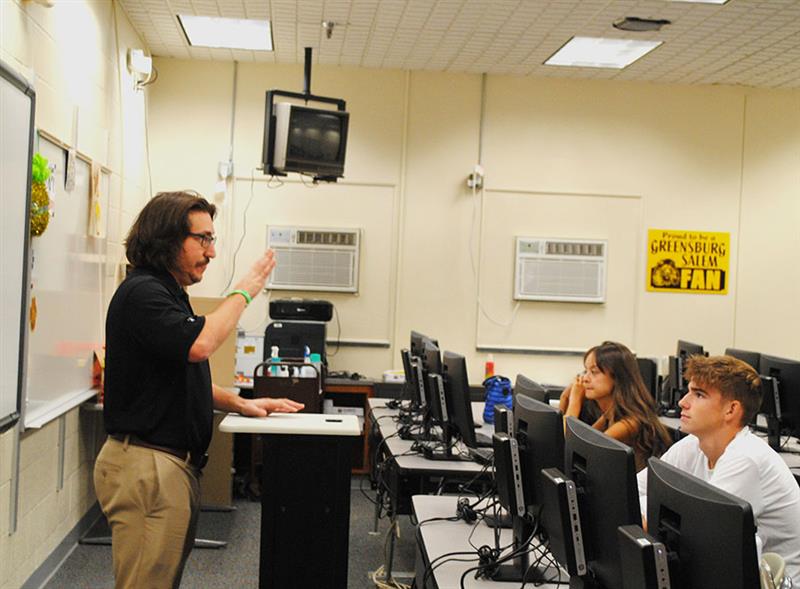
          The business department has also seen a shift, welcoming Mr. Tyler Brinton and Mr. Lou Downey. Mr. Brinton is also a graduate of GS and went to Saint Vincent College. He teaches digital and financial literacy as well as advertising and business/personal finance.

Mr. Brinton talks to his advisory class about future plans. Photo by Ari Case.

“I always saw myself coming back here after I graduated, it just took a couple of years,” Brinton said.

He previously taught at the Valley School of Ligonier, a private K-8 school, but always wanted to teach higher grades in the public sector. When it comes to what he hopes to achieve as a teacher, he has a few goals.

“Hopefully, I just want to shake things up, you know?” Brinton said. “Bring some more offerings to students and hopefully bring some fresh blood to the computer science department. Just see what I can do.”

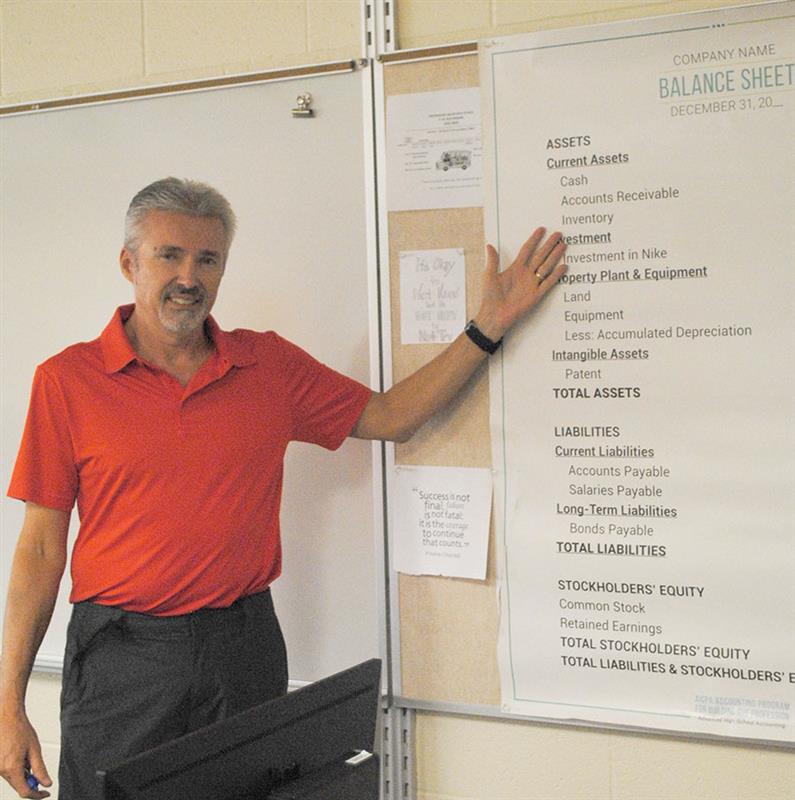
Mr. Downey teaches a few of the same classes as well as freshman seminar, but his specialty is with accounting. He attended Saint Vincent College before going on to work in the business world for 20+ years. He later returned to his alma mater to receive a teaching certificate and education degree.

Mr. Downey poses with his balance sheet. Photo by Ari Case.

“I’m really excited to be here, I really enjoyed the people a lot,” Downey said.

          He was a long-term sub at GS, Metzgar, Nicely and Latrobe for years before getting a permanent position in the business wing. He knows the people well and feels at home at GS. His business degree and experience give him a major leg-up.

          “I really hope to bring my experience in business and help students see what it takes to become successful,” Downey said. “I don’t want them to be afraid to ask me questions; I want to help them any way I can.”

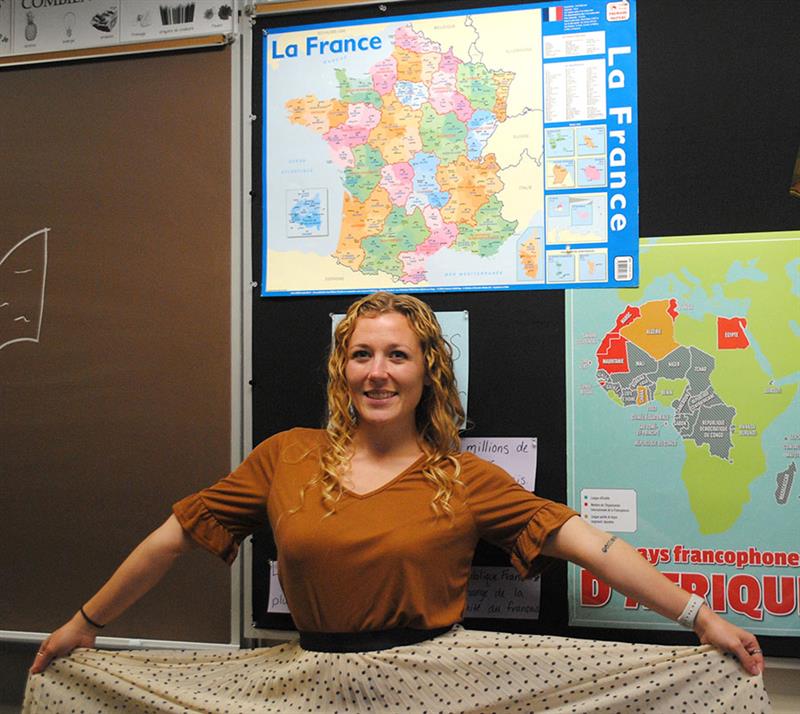
          The fifth and final new teacher, for now, is Ms. Laura Hoffer, a French teacher at both the middle and high school. She, like some of her other new colleagues, graduated from GS. She attended Duquesne University and received a bachelor’s degree in foreign language, but she didn’t stop there. She went on to Pitt and earned her master’s degree in foreign language education. She taught for two years at Jeanette High School before coming to GS.

Ms. Hoffer shows off her skirt. Photo by Ari Case.

          She fits right in with the other language teachers, as her passion for French is astronomical.

          “I want to help regrow student interest in the French program and help create a new generation of bilingual adults in our town,” Ms. Hoffer said. “The world is coming to Greensburg sooner or later.”

          While the departure of the old teachers may be upsetting, the new staff has great goals to make GS a better school.

          “Everybody has just been great and welcoming with open arms,” Ewing said. “It’s just great to be back.”

Calling All Artists! The Return of the Artist Market to the Library

By: Sarah Danley

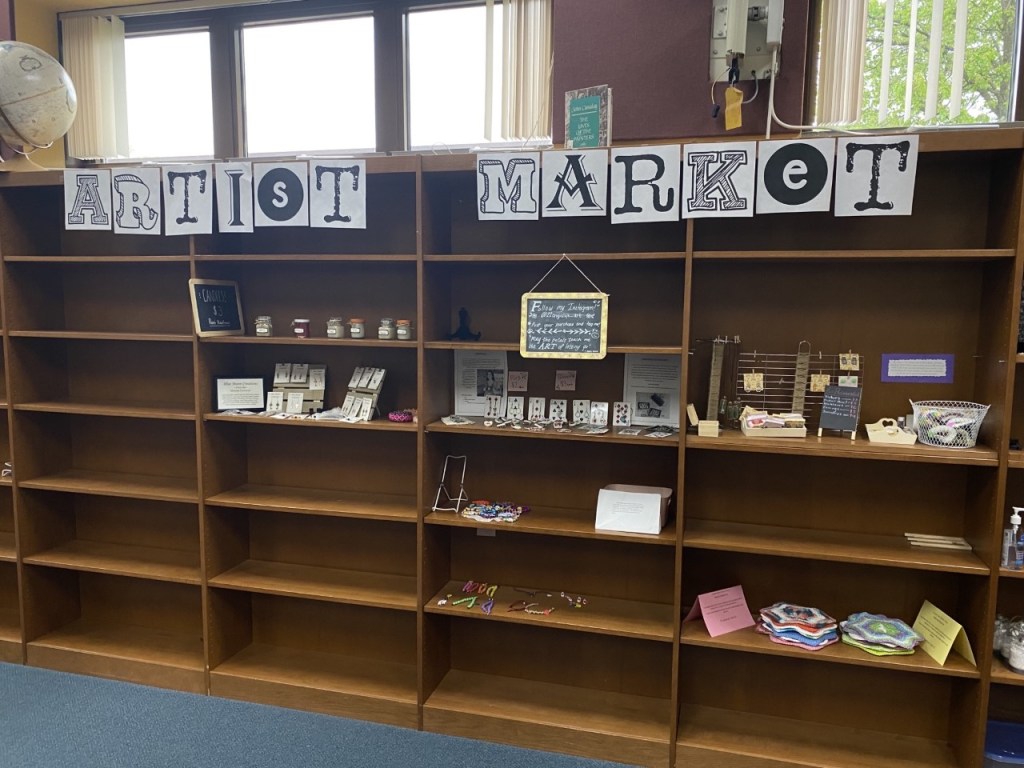
Transforming a school project into reality, the Artist Market returned to the library to showcase student art for the third consecutive year, keeping the spirit of 2020 alum Mia Parise’s senior project alive.  

“I remembered an art market from a few years ago and I wanted to do something like that,” junior Tori Jones said. “It was for an International Studies project about doing something good for the school.”  

In collaboration with junior Lorelei Damico, Jones set out to make their project a reality by including other student artists through the Art Club’s team page, created by art teacher Mrs. Kelley Audia.  

Student-made artwork stands on display in the library for others to purchase, in the hopes of inspiring artists to continue their work (Photo by: Sarah Danley).

“They wanted to do it and I told [Jones] I would support her however she needed me to,” Mrs. Audia said.  

Audia was not the only one excited about the revival of the market. Student artists who participated in markets in the past were excited that it was back for the second semester.  

“I was excited to make more money and have an opportunity to sell more artwork,” senior Alyssa Angiolieri said. 

Often, student artists struggle finding opportunities to sell their artwork. Angiolieri claimed that she has “been meaning” to start an Etsy shop, but finds navigating shipping her artwork to be a stressful task.  

“It’s hard to find somewhere to make profits on their art and this gives them that chance,” Jones said.  

With these difficulties in mind, help from the art teachers and other students made selling artwork more manageable. As a teacher, seeing students take on a leadership role for their passions is what they are here to inspire. 

“It’s what we’re here to do as teachers,” Audia said. “[Jones] is such a strong leader and really got the ball rolling. I give her complete credit for doing this. I don’t know what I’ll do without them.”  

The Artist Market did not only benefit the independent student artists who made their products outside of school, but also the GS art program as a whole. A small portion of the market’s proceeds went back into providing supplies for students in art classes and Art Club. 

“I am taking five dollars on their first $20 made, which goes directly back to Art Club,” Audia said. “With that money, I buy materials for the market or class materials that come full circle for the artists using them.” 

By providing materials for students in past classes, Audia helped students find what materials they prefer working with, as well as what kind of projects interest them. Once they found what they loved, artists created something they were proud of, making it more rewarding for them when their art was purchased.  

“It’s pretty exciting when someone buys my pieces,” Jones said. “You don’t think anyone wants your art until they buy it.” 

Since artists do not see much, if any, profit from their artwork normally, a new sensation came about when others saw value in their art by purchasing it.  

“It feels good to know people enjoy your artwork and use it as a way to express themselves,” Angiolieri said. “I love seeing my pins on people’s backpacks as I walk around school. It makes my artwork feel official.” 

As students saw real worth in their artwork through the market, Audia saw more motivation in them as they took more pride in their work. 

“The other artists were so excited and motivated,” Audia said. “A lot of them were really successful.”   

From the success the art program saw this year, many are hopeful the market will continue, including both teachers and students.  

“Next year I will be a senior, but I will try to get it running again,” Jones said. “I hope to hand it off to someone younger when I leave, though.” 

Motivation and student leadership are the keys to the success that will keep the Artist Market running for years to come.  

“I hope we do it every semester and that the artists will be highly motivated and excited and willing to put themselves out there,” Audia said. “This wouldn’t have happened without Tori Jones, but I hope it continues.”  

GS Dominates at Annual APPLES Festival

By: Ryan Burkart

The APPLES festival has finally made its reappearance after a two-year absence.

There are multiple competitions within APPLES.

“They have many different kinds of events within the APPLES festival,” junior Isaiah Payne said.

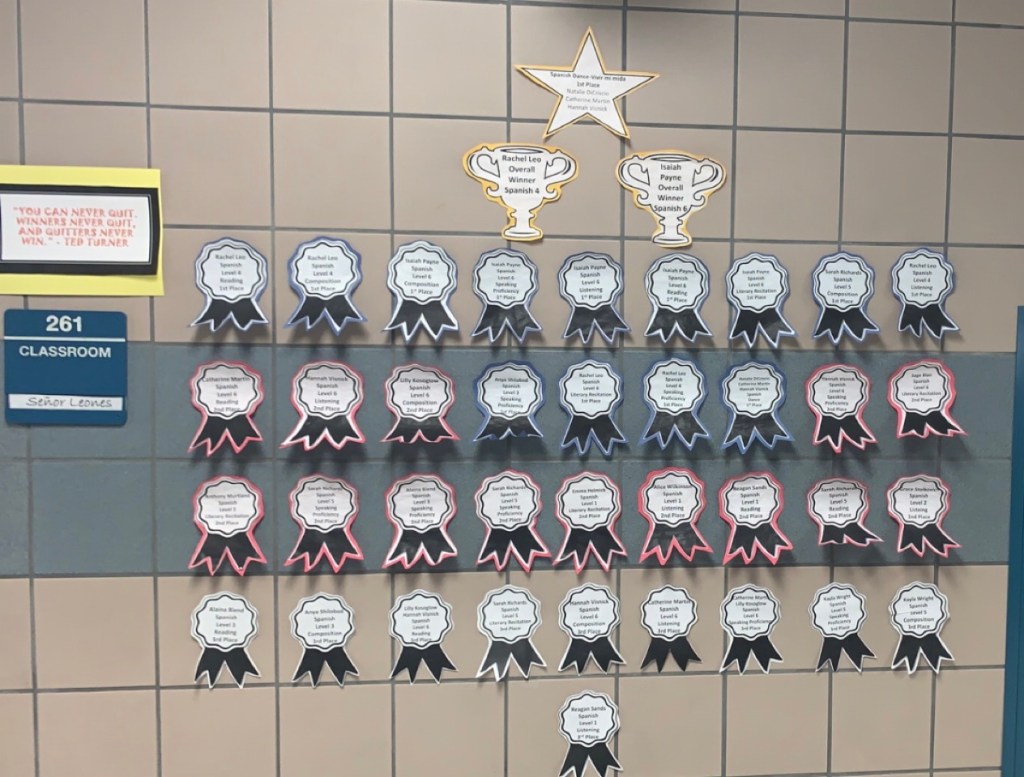
Paper medals hang outside of the French and Spanish classrooms, showcasing the event winners for all to see (Photo by: Ryan Burkart).

Payne is a student in Spanish 6 and the winner of the overall Spanish 6 competition in APPLES, which are classified into two categories.

“They have academic and non-academic competitions such as reading, writing and speaking,” French teacher Mrs. Stephanie Grace said.

Mrs. Grace teaches all French classes past French Two.

Junior Tori Jones won first in the level four composition event for French.

“There’s four academic events and 10 to 15 art events,” Jones said

Besides the art events such as dancing, plays and music, there isn’t much preparation.

“It’s just like classwork and it’s voluntary,” Grace said.

However, there is practice for the dancing, plays and music but it is practiced outside of the class on the student’s own time.

“There are art recreations, songs, dances and home readings,” Jones said.   `

Spanish teacher Mrs. Tammy Lyons, who is the Chairman of the World Language Department, teaches her students by having the students speak only Spanish.

“We use simulated immersion to teach our students,” Mrs. Lyons said.

Simulated immersion is the practice of learning a language by only having conversations in that language.

Both languages use simulated immersion at all levels of French and Spanish.

In early levels of French, they take tests but in higher levels, she assigns out more projects.

“In levels three through six I like giving larger projects that combine reading, writing, speaking and listening such as song analysis projects or music-based cultural items,” Mrs. Grace said.

Spanish class is not the same and the students are graded on different things.

“Most grades are based on class participation, but there are various assessments graded like vocabulary and writing compositions,” Payne said.” They are graded for grammar correctness or just completion.”

Lyons believes that this year’s festival was very successful and had a wonderful turnout.

“I feel like we won more awards than we ever have before,” Lyons said. “I also feel like the participation for all the levels of languages was very strong, so we were able to win awards in all of the levels. Overall, I think the festival was amazing and we can’t wait to present the acts at Culture Day on May 11th.”

Let’s Get Engaged! Different Ways Students Get Involved with School Events

By: Sarah Danley

Whether it be from following favorite artists or friends, everyone has felt the effects of social media. While many people focus on the negative effects social media has had on society today, many benefits come from its use, especially in the school setting.  

“Social media has a bad reputation,” senior Mini-THON leader Kylee Dahm said. “I think the way we use it for Mini-THON is one of the positive things that comes out of social media, because we get to share all the things we accomplish.” 

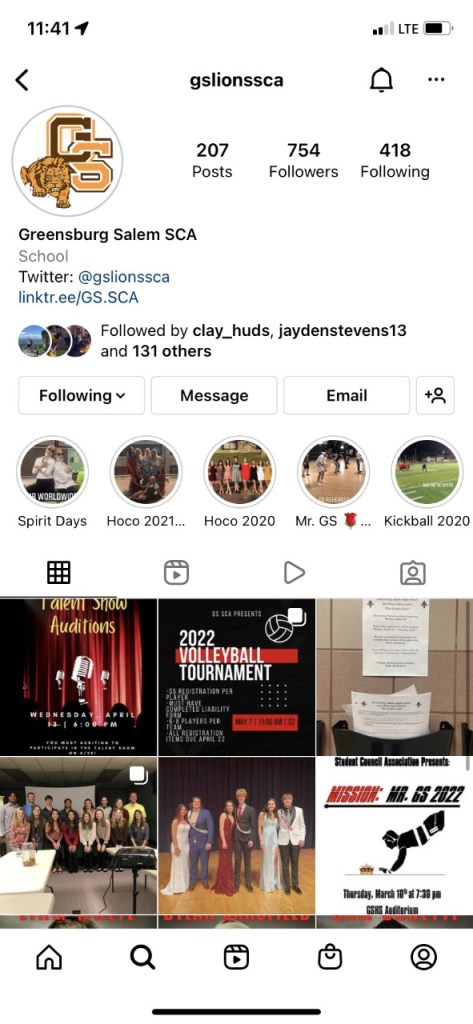
SCA’s Instagram account advertises upcoming and past student events, including Mr. GS and the Talent Show (Photo by Sarah Danley).

SCA Community Chairperson senior Hannah Visnick agreed that there are negative aspects to everything, but the use of social media for GS organizations is one way it is put to good use.  

“I’ve found that by forming a good relationship with the student body and taking fun photos of them has helped to increase engagement,” Visnick said. “[Students] are always looking to see if they were posted.” 

Student social media directors also attempt to use current trends to get more of the student body engaged. Visnick noted that a TikTok including Drake’s song “Knife Talk” was one of SCA’s most popular posts. Despite these efforts, some people do not believe social media is the main factor driving students to get engaged in school activities.  

“I personally believe word of mouth is still the best method,” SCA advisor Mr. Christopher Gazze said. “Friends encouraging each other to participate is really what drives involvement, in my opinion.” 

While for some students this may be the case, student leaders continue to enlist the help of social media to advertise events in a more relatable manner.  

“We get students more engaged by using more interactive things like polls, questions, stories or TikToks with students,” Dahm said. “Also, our ‘Why We THON,’ where we got students to share why they THON – that really helped get more student involvement with social media.” 

Using platforms that are popular among teenagers allows student leaders to connect better with the student body online.   

“TikToks do very well since it’s extremely popular with high school students,” Dahm said. 

Though the goal of advertising with social media is to increase student engagement, using different platforms allows student leaders to engage many different audiences, spanning from adults to teenagers.   

“Facebook has been our most successful platform surprisingly,” Visnick said. “I think that has a lot to do with moms, grandmas, etc. A lot of our events were geared toward families, not just high schoolers, so we focused our efforts on Facebook.” 

Showcasing kid friendly events, not only through Instagram to high schoolers, but also on Facebook allowed SCA to engage their target audience for select events.  

“There seems to be a growing presence on Facebook and that is occasionally used to publicize the positive events going on at the school,” Mr. Gazze said. 

The Mini-THON Facebook account has seen the same trend, while still finding the most engagement through Instagram.  

“Instagram has the most outreach, but I would say it’s also most effective for reaching students, and Facebook is more for adults,” Dahm said.  

Growing up around social media themselves, Dahm and Visnick understand what media platforms students are most likely to interact with in order to encourage them to get involved in school sponsored events. 

“I think I have a better understanding of what grabs people’s attention better than others do,” Visnick said. “I know which subjects should have posts, stories and videos. I think making my strategy unique is what has helped our account.” 

While growing up in the age of social media often has its flaws, many advantages come from it as well, especially in getting teenagers engaged in events. 

“Growing up with social media has definitely given me an advantage,” Dahm said. “The only thing that was different was the advertising aspect.” 

The use of social media had the same goals of advertising school events, just like posters or announcements that were primarily used before social media, although still in use today. 

“The goal was to communicate information and publicize events and activities sponsored by SCA to the student body,” Gazze said. “This included advertising for upcoming events as well as sharing pictures from events. Twitter and Instagram posts were the methods used initially.” 

Social media, while often the cause of many problems, is a useful tool to get students and the GS community involved in school sponsored events 

“I think [social media]’s a great tool,” Dahm said. “Students and the community will always be able to find information on our social media, and it allows us to connect with more people we might not be able to reach without it.” 

Mini-THON Passes its Goal of $40,000

By: Ryan Burkart and Sarah Danley

Each year in the United States, there are an estimated 15,780 children under the age of 19 who are diagnosed with cancer according to US-childhood-cancer-statistics. As a part of the Four Diamonds organization, run by Penn State Health Children’s Hospital, the Mini-THON organization at GS raises awareness and money for pediatric cancer. 

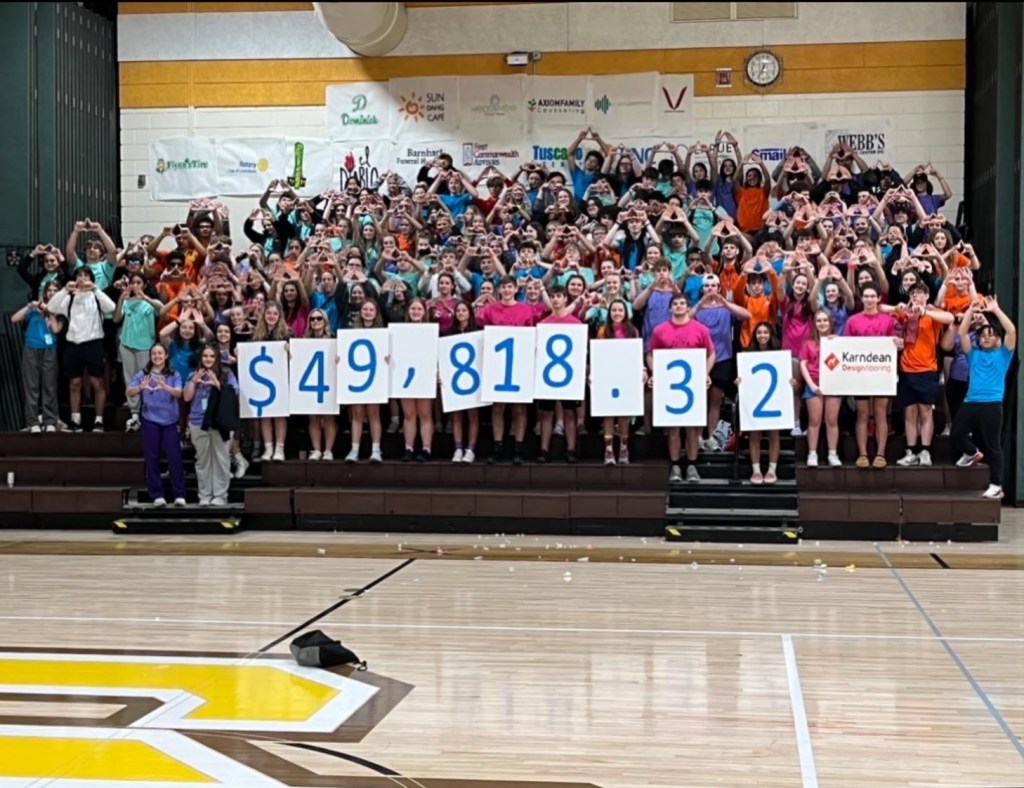
GS students stand proudly behind the total amount of money they raised for the fight against pediatric cancer after standing and dancing the night away (Photo courtesy: Kylee Dahm).

“Mini-THON is a year-long project that is coordinated by five seniors and raises awareness and money for pediatric cancer,” Mr. Mathew Boe said. 

This annual event at GS encouraged students to stand united against pediatric cancer while participating in various activities throughout the night, planned by senior leaders Mazzy Baxter, Taylor Carpellotti, Kylee Dahm, Emma Grimm and Hannah Visnick.  

“We had community hours from seven to ten,” Mr. Boe said. 

The rest of the night was only for high schoolers where the leaders planned color wars, glow wars, Zumba and the final reveal. 

“Color Wars games include 9 Square in the Air, dodgeball, human foosball, Pictionary, Hungry Hungry Hippo and an obstacle course,” Boe said. 

GS students who participated in Mini-THON received a t-shirt and were provided meals throughout the night of March 26. 

“We also provide dinner and breakfast,” Mini-THON social media director senior Kylee Dahm said. “Dinner is pizza that we had donated, and breakfast is pancakes or cereal.” 

Although Mini-THON was coordinated by five seniors for their senior project, all students could participate by helping to raise money. 

“We will take any volunteers,” Dahm said. “Anyone in the GS community can join.” 

The Mini-THON team garnered student support through monthly meetings held during the school day.  

“Monthly meetings provided opportunities to get all students involved,” Boe said. 

For many high schoolers, underclassmen especially, being involved in Mini-THON gave them an opportunity to become more active in many school activities.  

“I was able to volunteer during events and get involved early in the year,” freshman Taylor Dale said. “It was a fun club to be a part of.” 

Along with being involved with many events, many students joined this group to help raise money for the cause of helping children with cancer.  

“I help with Mini-THON to help the kids,” Dale said.  

Junior Cody Rubrecht began raising money for Mini-THON for the same reason.  

“I wanted to help the kids and stand by them through everything,” Rubrecht said. 

He met his goal and raised $250 for Mini-THON. 

“I raised money by texting and emailing people about Mini-THON and politely asking them to pass on my name so other people could contact me asking to help raise money,” he said.  

Although most of the support for Mini-THON came through student efforts, teachers and staff at the high school also worked to provide support for the cause.  

“There is the support from the teachers, the entire staff really,” Boe said. 

Outside of GS, the community also played an important role in the fundraising and sponsorship for the entire event.  

“We raise money through our events, corporate sponsorships, and donor drive where students can get online donations from friends and family,” Dahm said. 

Through all their efforts this year, GS Mini-THON raised $49,818.32 to go toward pediatric cancer research in the hopes of ending pediatric cancer one day.  

“I’m very proud of all the hard work the team has put in this year, and it wouldn’t have been possible without the support of students, staff, administrators, our friends, families, and especially the community,” Dahm said. 

Black History Month Announcements Seek to Inform Students About Notable Figures

By: Ryan Burkart

Celebrating Black History Month through daily announcements, one motivated GS student used her voice to bring awareness to the struggles people of color have endured in America. 

Junior Geneva Brookins spoke on the announcements about Black History and the progress that America has made and how it got here. Figures like Dr. Martin Luther King, Jr. and Rosa Parks protested and fought for America to get where it is today. 

“I talk about the African Americans who made changes in America,” Brookins said.

Geneva Brookins stands proudly after inspiring students with announcements during Black History Month (Photo by: Ryan Burkart).

 She spread awareness of things the Black community has gone through daily, and what they’re still going through. She also spread knowledge of things that happened in the past. 

“There are so many uneducated people out there,” she said. 

Brookins believes people should be educated on this topic. 

Principal Mr. David Zilli supported Brookins’ beliefs and the way she celebrated Black History Month. 

“I applaud Geneva’s passion and leadership in planning for and presenting the information for the announcement,” Mr. Zilli said. 

Administrators talked about ways to celebrate Black History Month, but a student came to them with the idea. 

“We discussed as an administrative team, ways to celebrate Black History Month, but Geneva also approached Mrs. Kapusta with her own idea,” Zilli said. “Leadership driven by students is always the best.” 

Zilli feels strongly about Black history. 

“It’s an opportunity to celebrate history, but also an opportunity to take leadership in our school and community,” he said. “It is important that we celebrate the accomplishments of African Americans during this month. Although February is Black History Month, it would be wonderful to showcase the accomplishments of individuals all year round.” 

Kyrel Vuletich, a sophomore at GS, is interested in Black History and likes to spread awareness. He liked the announcements that were going on and felt it was the right way to let people know. 

 “I believe Black History Month is to educate people on Black History,” Vuletich said. “It is a good way to celebrate the accomplishments of African Americans.” 

Arguing their Way to Regionals

By: Sarah Danley

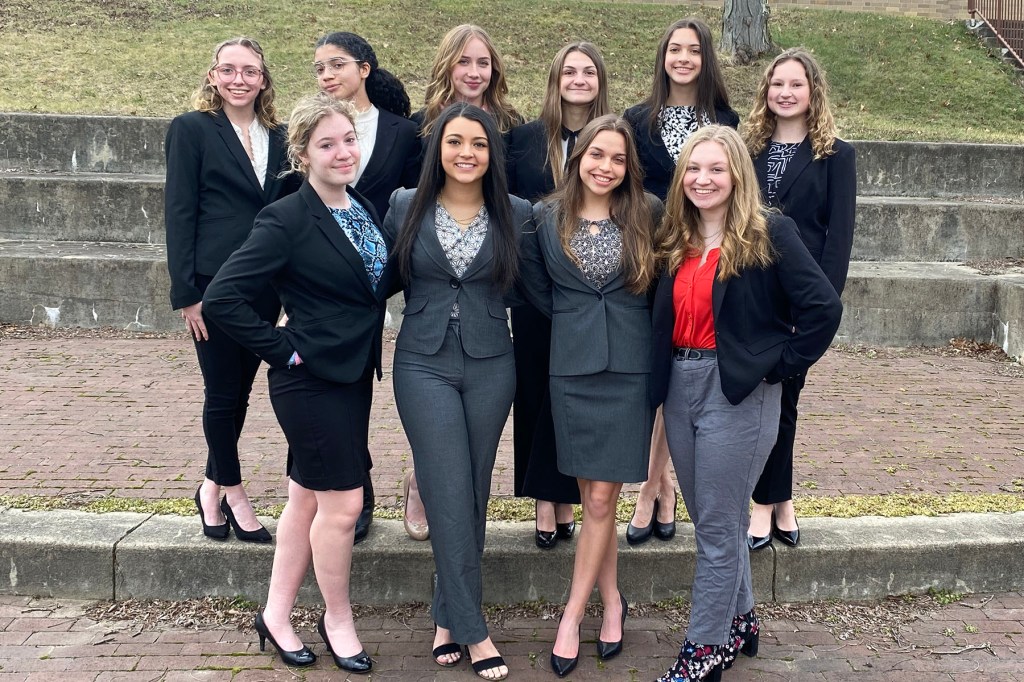
Whittling down the competition one trial at a time, GS’ Mock Trial team argued its way to the Mock Trial Regional Competition. After making it to the Mock Trial States Competition last year, returning team members were excited to have another opportunity to make it there again.  

“The most exciting thing about making it to County Regionals is having an opportunity to go to States two years in a row,” senior Nevaeh Cobaugh said. “And taking the trophy from Penn Trafford.” 

After defeating their rivals in the race to Regionals, members were thankful all their hard work paid off, despite falling short of making it back to the State Competition this year.  

“The best part is seeing all the effort pay off,” junior Rachel Leo said. “It’s really just the fruits of all our efforts.”  

After winning their trial to get them to County Regionals, GS’ Mock Trial team stands proud that they have another opportunity to head back to the State Competition (Photo Courtesy: Mrs. Kristen Solomon).

In front of a panel of professional attorneys from Westmoreland County, mock trial teams must do their best to set themselves apart from their opponents. Factors such as dedication, determination and a wide variety of personalities allow GS to stand out from the competition. 

“Our team is very dynamic,” head coach Mrs. Kristen Solomon said. “We have a lot of different personalities and skills that set us apart from other mock trial teams.” 

Student attorneys also viewed their determination as a reason for their success throughout the mock trial events. 

“As a team, we are really determined and work hard,” Cobaugh said. “We are able to take feedback and make improvements from that.” 

Along with their fierce determination, one of the largest factors that contributed to GS’ success was the dedication Mrs. Solomon saw from each of the ten members.  

“Our team works nonstop,” Solomon said. “Each one of them puts in a lot of hours. We even practice on Saturday mornings.” 

With all the time dedicated to perfecting their trial cases, even student attorneys were able to watch as all their hard work paid off during their mock trial season. 

“Hard work actually does pay off,” Cobaugh said. “8 a.m. practices on Saturdays really put me to work.” 

Having a dedicated Mock Trial class that students can schedule beginning in sophomore year is another large factor that sets GS apart from opponents. 

“If we didn’t have [Mock Trial] as a class, we wouldn’t be as good as we are,” Cobaugh noted. 

Student attorneys attributed most of their success to the coaching and extra time Solomon has contributed to make the team as successful as possible.  

“I don’t know exactly what other schools are like, but Mrs. Solomon is a really big part of what sets us apart,” Leo said. “She does everything she can to make us better and puts in a lot of work outside of school for us.” 

As the student attorneys saw the commitment Solomon displayed each and every day, she expected the same dedication and determination from each member. 

“They have to be committed to the team and dependable, natural leaders that take initiative,” Solomon said. “We also need people with character and personality, who like to act for character witnesses. Our team also must memorize and know everything and be strategic and analytical when using the information.” 

Throughout the class and practices outside of school, Solomon watched the student attorneys as their friendships grew with one another, strengthening the bond of their team. Leo attributed this as another reason GS’ team was successful in their cases as well.  

“Any time you spend so much time with people, you get a lot closer,” Leo said. 

Being a member of the team also brought students together who would not normally hang out together without the class and organization.  

“I was able to get close to people in other grades that I don’t typically talk to,” Cobaugh said. “We all got really close.” 

Along with growing as friends and growing as a coherent team, student attorneys watched as they grew into themselves and developed more confidence throughout this experience. Leo expressed that she developed new skills like public speaking and working with a team from being a member of Mock Trial.  

“I am very happy for them,” Solomon said. “They’ve become a little family and definitely deserve to be making Regionals.”  

GS’ Musical Returns In-Person with Broadway Hit Les Misérables 

By: Sarah Danley

Following the story of poor Jean Valjean, Les Misérables, as the name provokes, tells a story about unfortunate souls living in France around the 19th Century, but the Greensburg Salem cast was ecstatic to showcase it to the community.  

Last year, the musical cast was not able to perform in front of a live audience, settling to film You’re a Good Man, Charlie Brown for people to watch online. With the success of Phantom of the Opera days before the COVID-19 lockdown in March 2020, the cast hoped that this live performance was just as memorable.  

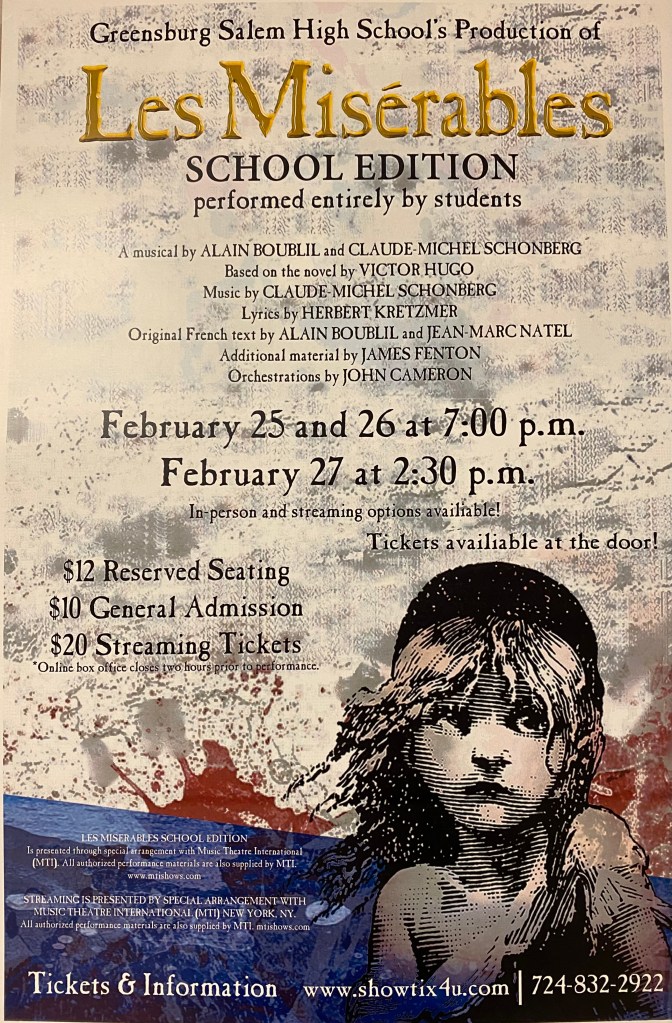
Posters advertising for the school musical Les Misérables hang around the high school, promoting students to support their classmates in the production (Photo by: Sarah Danley).

Students and faculty involved with this production were excited to unsheathe Les Misérables to the GS community.  

“This is probably my favorite show to put on,” junior Chloe Ecklund said.  

 After the 2020 hit Phantom of the Opera, everyone anticipated stunning the community with another serious musical.  

“The past few years, the musicals have taken more of a serious route,” Dr. James Baker remarked. “Within the next few years, we are looking to liven things up.” 

For many members of the cast, performing Les Misérables was a once-in-a-lifetime opportunity. This musical allowed underclassmen to experience their first lead roles at the high school. 

“I play Éponine and playing her is really my dream role,” Ecklund said. “She’s poor and quiet. She’s basically in love with her best friend, but he doesn’t realize it. At the end, she gets shot protecting him.” 

As one of the lead roles, Éponine is an important character in the musical, as is her father, played by senior Aiden Lauer.  

“I play [Chloe’s] dad,” Lauer said. “I steal from people, I steal people. We have a love/hate relationship in the musical.” 

Unlike Ecklund, not everyone played their dream role in this production.  

“I’m a lot like a roach,” he said. “You can step on me, but I keep coming back.” 

Although some came up short of their dream parts, Dr. Baker and Mrs. Sue Glowa considered many factors before casting each role. 

“The biggest challenge we have is choosing the right voices for the roles,” Dr. Baker said. “We have to look at who we think will be able to pull the roles off, especially with new students joining the cast. New students turn everything on their heads.” 

 Similarly, challenges arose for the student actors, as well. Members of the cast relied on one another when performing, but oftentimes this was where the difficulties began.  

“A lot of people rely on each other, so everyone has to put their all into each performance,” Ecklund said. 

With the excitement of the musical came the other difficulty of balancing schoolwork with rehearsals. Ecklund and Lauer, along with seniors Alyssa Angiolieri and Lauren Kasmer, agreed that balancing all these activities became stressful.  

Coordinators of the musical recognize this as a struggle among students and scheduled rehearsals to provide flexibility to cast members.  

“Another big problem we face is probably coordinating schedules,” Baker said. “Students are involved in so many things and we want to make sure that they can still stay involved in those activities.” 

Along with this large challenge of managing time for students, more challenges arose when attempting to remain healthy during musical season.  

“Another difficulty is staying vocally healthy,” Ecklund continued. “I have to drink lots of water and avoid screaming during musical.” 

Because of the demanding nature of Les Misérables, comprised entirely of songs with minimal dialogue, staying vocally healthy was a concern for both students and faculty.  

“We have to keep everyone vocally healthy and in their best health for musical,” Baker said. “It’s a very demanding show, for sure.” 

Keeping the cast healthy was very important for the outcome of this year’s musical. Because last year’s musical was online, cast and faculty expected a grand turnout to the show.  

“I expect to have a pretty full house, similar to when we put on Phantom of the Opera,” Baker said.   

Going to see Les Misérables in-person was not the only option for this year. The musical was also live streamed for those looking to see the show without the risk of exposure to any illness.  

Despite live streaming as an option, cast and faculty expected big crowds to come out and support the musical.  

“We are the first high school to have a public show with a live audience in Westen Pennsylvania,” Lauer claimed.  

Although this may have been a leading reason drawing community members toward watching, the timelessness of this musical was another important factor drawing people out to see Les Misérables. 

“As depressing as it may be, it’s something you will remember forever,” Ecklund said.