Book Column

By Mia Saraceni and Ari Case

Mrs. Vottero poses with one of her favorite signs in the library. Photo credit Ari Case.

The GS library holds hundreds of books that span a variety of genres, but it can be nothing short of daunting trying to figure out which one to pick. This column is here to offer some help in the form of recommendations and opinions so that maybe a new favorite is found.

Mrs. Carrie Vottero, the GS librarian, always has a plethora of ideas on what one should read.

When it comes to non-fiction, Mrs. Vottero strongly recommends the memoir Let My People Go Surfing by Yvon Chouinard, the owner of the major clothing company Patagonia. The story is about his view on running a business and while that might seem boring, it’s a refreshing glance into the mind of a giving and unique man.

“He’s giving away his company to save the world, and I think that’s pretty awesome,” Vottero said. “The story is just really cool. He has a whole different kind of mindset on how to run a business.”

If non-fiction isn’t your cup of tea, another one of her favorites is The One-Hundred Years of Lenni and Margot by Marianne Cronin. This story features 17-year-old Lenni and 83-year-old Margot who form a beautiful friendship. These two are terminally ill and decide, after having an art class together, to paint 100 portraits of events from the century they lived.

“It’s a beautiful story about how they build this friendship and how they help each other live,” Vottero said. “It’s just really great.”

Mrs. Vottero’s final recommendation is a book of poetry named And We Rise by Erica Martin. This collection of poems follows the events of the Civil Rights movement and how black communities are still facing some of those same struggles today.

“It’s a really cool book about civil rights issues that are in the world today,” she said.

Mrs. Vottero shows off two of her book recommendations. Photo by Ari Case.

Mrs. Vottero’s GoodReads Page  has even more books, along with her reviews and ratings. While she is able to offer a million different book choices, there are a few she didn’t mention. The Lions’ Den staff has some recommendations for you as well.

You may know American Psycho, the popular novel by Bret Easton Ellis, but have you heard of Ellis’ follow-up novel Less Than Zero? Less Than Zero is about societal impacts and the truth about how it can mold people. This novel features an 18-year-old Clay Easton, who comes home to Los Angeles from college on the east coast. The book explores Clay’s relationships, family life and mindset while being swept up in a culture full of drugs and nihilism.

The Hazel  Wood by Melissa Albert is another thrilling book with an adventure that never stops surprising you. Just when you think you understand, the rug is pulled out from under you and the story is flipped on its head. This novel has just the right amount of spookiness to unsettle you but not enough to cause nightmares. Albert weaves a wonderous story, and it’s definitely something worth checking out.

The final novel recommendation is a phenomenal story of a young boy, called Extremely Loud and Incredibly Close. Author Jonathan Safran Foer paints the picture of a young boy named Oscar and his adventures through New York City to find the sixth borough. This sixth borough adventure is nothing short of a metaphor for Oscar finding himself and coping with a terrible loss. While it may sound simple, this book is incredibly intricate and provides a mass of symbolism, side-stories and even drawings. Everything in this book means something, and if you think something is one-dimensional, you’re wrong. If you’re looking for something to completely engross yourself in, this book is for you.

There are tons of books waiting in the GS library, so don’t forget to stop by and check them out.

And if you’re a reader, consider joining the GS Westmoreland Interscholastic Reading Competition (WIRC) team. The team has casual meets starting in October to discuss what they’re reading off of the curated 2023 WIRC book list. There is one competition day in the spring when each team from each school has several rounds of questions on the books on the list.

“The point of the day is to celebrate the fact that reading is glorious, and that we love to do it,” Vottero said. “And that here’s a roomful of 500 people all who love reading, [and] that’s a cool thing. But it’s fun to win too. [That’s] WIRC and so anybody that’s willing to put some time in just reading some great books can be on the team.”

Chihuahua Passes Banned, Students Outraged

By Ari Case

Students are encouraged to read in the library by this sign made with chihuahua passes. Photo by Ari Case.

For years, students have been flashing their beloved chihuahua passes at Mrs. Vottero during advisory, gaining entry to a research center and sanctuary for all students.

On Friday, September 6, though, things changed.

A flood of freshmen clogged the hall waiting to gain entry to the library, something that they couldn’t do at the middle school.

“There were probably 150 kids in the hall trying to get in here,” librarian Mrs. Carrie Vottero said. “That’s not the point of advisory, and [it’s] not what I want for the library in advisory to be.”

Students wait in line for the library in advisory. Photo by Ari Case.

Mrs. Vottero said that “it happens every year at the beginning of the year.”

As new students discover the opportunities at the high school, like the Java & Script café counter in the library, traffic in those areas increases.

“It’s nuts because they know that it’s here, and then it kind of tapers off, loses its novelty and newness,” Vottero explained. “And I do think that’s eventually what would have happened with advisory. It’s just it was so many kids this time that it was just too much.”

She also said that this year there were far more students than usual.

“Those kids couldn’t have come into the library,” she said.

Even though it wasn’t a first occurrence, she was surprised by the mass of kids. She didn’t keep track of the number of passes she wrote and hadn’t expected that many students at once.

High School Principal Mr. David Zilli happened to be walking through the second-floor hallway at the time. There were so many students outside the library that he couldn’t get through the hall.

“There was a huge influx of students over the past several days prior to that case on that day who were attempting to go into the library,” Mr. Zilli said. “Due to the sign in process, the line took over 15 minutes. That’s a safety concern. So anytime there’s a safety concern, I need to stop and say, ‘Whoa, what’s happening and what can we do differently?’ That’s a safety and learning concern.”

Immediately, Zilli decided that something had to be changed.

“To think about the purpose and the vision of advisory, it is to increase students’ success,” he said. “Whether it’s using time flexibly to get help, to use some time to do homework [or] to collaborate [and] have club meetings. So, when we have 15 minutes—50% of advisory—where a large number of students are standing in the hall, we had to do something different.”

At the time, he decided that from that moment on the library was limited to silent research. Initially, he had even prohibited reading in the library because students could simply do it in their advisories.

“My point was just because you can’t get in the library doesn’t mean you can’t do those other things,” he explained.

Freshman Veta Scherff said she used the library almost every day during advisory. Most days she studied with a few friends for her most difficult classes, and occasionally had a few minutes to read.

“I have friends who say that they’re struggling in certain classes, and they want help studying,” Scherff said. “I want to offer help, but I can’t offer it after school [and] we can’t do it in classes. So advisory would be the best time to do it. And we don’t have the same advisory, so the library was our best option.”

Many students use the library as a place to study with peers for classes that require it. For a lot of students, their advisories aren’t productive places for studying alone or with other people.

Freshmen Nico Bortz and Ray Whitacre read and study respectively during advisory. Photo by Ari Case.

“Advisory can be really loud sometimes for some people,” Scherff said. “Or certain people aren’t in your advisory and you need them to be [there] to help.”

Even though it isn’t the intention, advisory commonly turns into a social time for a lot of students. What this can mean is that students who need to study can’t focus on their advisory.

Following the incident, Zilli and Vottero found a balance. It was important to Mrs. Vottero that students be allowed to work together and use the space however they needed as long as they were engaged.

“I think libraries are a sanctuary and a place to find a little calm and comfort,” she said. “And that sanctuary can be a place for you to work, a place for you to sit quietly, a place to meet with a friend, a place to have a little drink and relax [to] get ready for your next class, a place to prepare for a test or an assignment, find a book [or] look around. That’s what the library is for.”

It was crucial to Zilli that they found a way to maximize the benefits of the time.

“I knew that that was not maximizing learning time and that’s something that I feel very strongly about,” he said. “If we’re going to have that time, it has to be in order to benefit learning. I mean, that’s our goal for being here.”

Now, there is a limit on the number of students allowed in the library—40—and a new pass is required every day. Any activities a student wants to do in the library, be it reading for enjoyment or studying for an exam, is allowed. Importantly, talking is allowed as long as it is library appropriate.

“I’m here to increase learning,” Zilli said. “And part of that can be a social emotional piece. But I think we have to do that with a focus on our mission as a district. When we think about academics being one of our major problems, the social emotional pieces—you know, kindness [and] respect—[are] valued as well.”

The main goal for Zilli and Vottero is that students are engaged during the time.

“It’s not for kids to just hang out at the table and be loud and laugh and giggle and make all kinds of noise,” Vottero stated. “We don’t do that. It’s not a silent place, but it’s not a loud [and] crazy place, either.”

She explained that the 40-student maximum hasn’t even been reached yet, partially because the new rules aren’t completely clear. But it’s largely because those students who really want to be in the library were a minority among the previous masses.

The students who continue to return “were never the problem,” she said.

Some of those who loved using the space the right way are still upset about the changes to their safe space, but the students who caused the problem haven’t shown much aggravation.

“The kids that don’t care are the ones that we probably shouldn’t have down here to begin with,” Vottero said. “And they said nothing, absolutely nothing.”

Some dedicated library students did make a statement, though.

A group of students who used the library most days as a meeting place were upset with the changes.

The next day of school after the event, small signs of protest were put up around the school. A picture of the beloved chihuahua pass stamp was captioned “Bring Back the Library for Advisory!”

One of the signs at the lunch line still remains. Photo by Ari Case.

Many of them have been taken down, but some still remain.

“My initial reaction was a smile because I think it’s sweet that kids love the library and coming here that much,” Vottero said.

Both Zilli and Vottero said they respect the students who put them up and have no problem with the way it was handled.

“I certainly believe in civil disobedience,” Vottero said. “[And] I think it was done in a respectful way. I don’t think it was in any way inappropriate.”

The small acts of rebellion taken by those students were driven by the loss of something they cared about.

“It’s that sort of freedom of expression type of thing and I can understand that something was taken away that maybe students have had and maybe they even had that last year,” Zilli said. “It seems like it’s faded somewhat. And I would think that some of those people who maybe felt like they couldn’t go in there still can go in there.”

Since the initial change, though, a more reasonable restriction has been placed: as long as students are engaged, there can be up to 40 students in the library per day, but students must get a new pass every morning before advisory.

“Now I think it’s pretty much back to what we’ve always loved about the library,” Vottero said. “And that’s just a place where kids come who really love the library and it’s where they choose to spend that free time that they might have. Long live the library.”

Homecoming season is just around the corner

by Emily Frazier

With a bonfire, spirit week and pep rally approaching, GS is in for some fun.

In honor of Homecoming, many activities will be taking place, welcoming back alumni and bringing the community together at the same time.

It’s a time when “students can get away” and “socialize and have fun” GS alumna and last year’s Homecoming Queen Angela Kobuck said.

Every year, high schools across the country nominate a Homecoming Court and eventually vote for a Queen.

“The senior class does an outstanding job of nominating the Court,” SCA Sponsor Mr. Christopher Gazze said.

The 2022 Homecoming Court posing together. From left to right: Paige Storkel, Sejah Franklin, Liz Houston, Gabby Sheffler, Ellie Miller, Rachel O’Bryan, and Lily Gatons. Photo Courtesy: Mr. Gazze.

Each girl who is nominated is a “good representative of what a Greensburg Salem student should be,” Gazze said.

Girls on the Court are usually heavily involved in the school and are all-around inviting people.

“Most, if not all, the girls were extremely kind to me at one point,” Kobuck said. “Whether that was helping me with sports or classes, or simply saying ‘hello’ in the hallways at school.”

Having a senior Homecoming Queen sets an example for the underclassmen.

“It encourages students [and shows] who has made an impact,” 2022 Homecoming nominee Sejah Franklin said.

Every girl on the Court this year has been involved in some way.

“You want people to be involved,” Mr. Gazze said. “I think it’s a good opportunity for the underclassmen to look up to them.”

To celebrate this tradition, the week of September 19-23 holds SCA-run activities leading up to the big football game.

“Homecoming brings a lot of people together,” Franklin said.

The first activity is Spirit Week, when students can dress up based on the theme for each day. Past themes include pajama day and decades day. Winners are chosen at the end of each day.

“We look based on participation, like who went all out that day,” SCA Senior Class President Keegan Murtha said.

Wednesday, September 21, there will be a bonfire in the high school’s gravel parking lot. Food, drinks, yard games, contests, music, club booths, an inflatable obstacle course, a meet and greet with varsity athletes and an appearance by the marching band and cheerleaders will be at the bonfire according to SCA’s monthly newsletter, which can be found on their Linktree.

On the day of the game, there will be a pep rally during school.

Murtha said that not only will there be performances by the marching band and cheerleaders, but there will also be “something that the crowd can get involved in.”

In the past, class competitions, relay races and an obstacle course took place for the students.

“The band and the cheerleaders knew how to fill the student body with energy and excitement,” Kobuck said. “After each pep rally, I couldn’t wait for Friday night lights.”

At the game, there will be a parade down Main Street featuring the Homecoming Court and alumni alongside the current marching band and cheerleaders.

Homecoming Court set for a photo in the courtyard. From left to right: Ellie Miller, Rachel O’Bryan, Paige Storkel, Lily Gatons, Sejah Franklin, Liz Houston, and Gabby Sheffler. Photo Courtesy: Mr. Gazze.

“The crowd’s always a lot bigger for homecoming week,” Gazze said. “Everyone wants to go down and see the convertibles.”

Alumni will flood the stands, catching up with family and friends.

“Having the opportunity to go back is cool especially when you can see people that you knew from school,” he said.

At halftime, there will be a ceremony where the Homecoming Queen is announced.

“I cannot wait and I am so excited for all of the girls on the Court,” Kobuck said.

One thing that isn’t making a return again this year is the Homecoming Dance. For the past two years, there has not been a dance due to Covid-19 restrictions, but this year is different.

“[The] SCA executive committee collectively decided [not to have a dance this year],” Gazze said.

He claimed there had not been enough attendance or excitement for the dance recently, and the students believe the Winter Dance is more worthwhile.

On the contrary, Franklin said the Homecoming Dance was a fun way to “bring the whole school together.”

Because of the festivities traditionally held for Homecoming, this time of year is one of the best times for the students and community.

“Fall’s just getting started,” Gazze said. “I think it’s just really that time of year when people like to get together and do outdoor activities.”

The Impact GS Threads is Making

by Ksena Spencer

Donated items of clothing flood the racks of GS Threads as the school advertises free clothing for all students.

GS Threads is a program run by the National Honor Society to help students have the opportunity to get clothing donated mainly by families from GS for free.

“New clothes can be very expensive and impact the environment using water and electricity, so the reuse of clothing makes so much sense,” NHS sponsor Mrs. Cheryl Harper said.

Providing students with free clothing that will be reused benefits the environment as well as the kids who take items from GS Threads. According to Sustainability (galaxy.live) making one pair of jeans produces the same amount of greenhouse gases as driving a car more than 69 miles. Recycling clothing by donating them to programs like GS Threads contributes to the earth’s environment in a helpful way.

“Last week, in four days, over 90 items were taken,” Mrs. Harper said. “I’d say typically it is at least 10 items per day.”

GS Threads maintains clothing racks full of donated items such as pants, jackets, short sleeves, tank tops, dresses and sweats. Along with clothing, GS Threads offers hats, belts, shoes and other accessories, that are available for any and all students to stop by and take.

“It’s also just fun for people who enjoy thrifting or might need a certain piece of clothing for a theme,” senior Kayla Wright said.

Members of the GS community donate articles of clothing or items that could be reused to help GS Threads succeed.

Harper explained that every reused item that is donated makes quite the impact.

Thousands of kids struggle with coming to school due to the lack of clothing accessible to them or the quality of their clothes. Having poor quality clothing may be why some students don’t come into school if they only have a few good shirts and pants to wear.

“I think that GS Threads does make a difference,” senior Elizabeth Houston said. “It’s a way to help our school community by providing free clothing when people need it.”

Students who struggle with these kinds of disadvantages may not want to admit that they need help. GS Threads is a great way to help all students. This program is also useful for when a student has some type of accident regarding their clothing, whether that is a rip or stain. Students can easily grab something to change into without being embarrassed or worried about their clothing.

“I love seeing people smile when they find an item that they love,” Harper said.

Freshman Fighters

by Emma Helmick

For the first time in two years the cubs were placed with the lions because there are no longer Freshman only advisories.

The Class of 2025 was the last that had a Freshman only advisory. The students as well as some of the staff thought that putting everyone together would benefit the Freshmen more.

“The 9th graders get to see some job shadowing, some career exploration and also get to see some of the senior projects and really learn from the older students,” High School Principal Mr. David Zilli said.

After only two years of experimenting with a class that had only 9th graders, the school has returned to normal. Upperclassmen felt strongly about having mixed advisories. The Freshmen had a chance to see what they work on and know what to expect in the upcoming years. There is more mentoring done this way and a better opportunity to adjust and get used to the school and the environment.

“I think it can probably help them in the initial phase because there are really all Freshmen together, but at some point we have to transition them into being high school students where they are exposed to the entire student body,” Mr. Zilli said.

Introducing the Freshmen to the upperclassmen through advisory is a way to get them more comfortable with their learning environment early on.

“I wish there were more Freshmen, maybe not all Freshmen but at least some,” freshman Tanner Schmidt said. “I only know around two or three people in my class.”

Being in a classroom with people they do not know will allow the new kids to recognize some friendly faces from around the building and get them more aware of the older students around them.

“I recall that there were some people that definitely did not like having all Freshmen,” science teacher Mrs. Rachel Sassani said. “I think I was fortunate because my group in particular was a really nice group. There were no problems, but sometimes when you have the Freshmen with the upperclassmen at least at first, they are less likely to be silly goofy Freshmen so yeah, I do hear from some teachers that they did not like having Freshman advisory.”

Mrs. Sassani also said that last year it was a “little boring” because she did not have a lot of different things to talk about with her class. Both students and staff did not care for this plan.  

Student Advice: How to best prepare for the SATs

by Brianna Campagna

Although many colleges have become test optional when applying, students still feel the need to do well on the SATs.

“For college, I have more options with the schools that I can go to,” senior Rachel Leo said. “Although most schools are test optional, it really matters to show your academic level.”

The SAT, or Scholastic Aptitude Test, is a measurement of a student’s preparedness for college through a timed test. It tests a student’s abilities in sections such as reading, language and math.

“If you’re trying to get into competitive programs, or you want an academic scholarship, it’s used as a benchmark,” Guidance Counselor Mrs. Laura Klipa said.

In 2021, Katlyn Swierczynski graduated from GS. She currently attends North Carolina State University, and the SATs helped her get to where she is now.

“From my SAT score in consideration with other aspects of my application, I was able to receive a half ride for tuition at NC State, my dream school,” Swierczynski said. “If not for this scholarship I would not be in North Carolina today.”

 Connor Herrington graduated from GS in 2022. He is currently attending Georgia Tech to study Biomolecular Engineering. His drive for SAT success was to prove himself to competitive schools.

“I had some reach schools that I really wanted to get into, so that drove me to improve my score,” Herrington said. “I wanted the best chance possible to get in.”

Herrington retook the SATs twice. He said that the free materials that Khan Academy provides are a “lifesaver.”

The College Board and Khan Academy are directly linked to each other, providing authentic studying materials that are free for anyone to use.

“The practice tests and questions that are on Khan Academy closely resemble what you will see on the actual SAT in terms of format, difficulty and different types of questions,” Leo said.

Many students use Khan Academy as their main source of studying materials.

“The first two times I took the test I only used the College Board exercises and practice exams, which really helped a lot with learning the style of questions and time layout of the test,” Swierczynski said. “I was able to simulate as many tests as I wanted to before my exam day, and if I did not understand a problem, a step-by-step explanation was included. They also provided quick daily exercises to practice SAT style questions every day leading up to the test.”

After taking the PSATs in eleventh grade, students receive an access code where College Board personalizes practice for each individual based off of their strengths and weaknesses.

“Your access code will give you free SAT prep, so it will help personalize the areas that you need to focus on and take some time to kind of get used to the format,” Klipa said.

Other than Khan Academy, students hire tutors to improve on certain subjects.

“If you can find an affordable tutor for a certain subject, they can be very beneficial to improving your score in that section,” Herrington said.

When registering for the SATs, the College Board offers students the opportunity to purchase The Official SAT Study Guide, as well as the SAT question-and-answer service.

“I purchased something for $16 where College Board returns your test results with a breakdown of each question to show what your strengths and weaknesses are,” Leo said. “That was helpful because it links directly back to Khan Academy.”

Rachel Leo studies for the SATs using The Official SAT Guide. Photo by Brianna Campagna.

The SATs cost $55 per test. Upcoming SAT dates for 2022 include October 1, November 5 and December 3. Registration is live at the SAT Suite of Assessments on the College Board website.

“The more you practice, the more your strengths will show,” Klipa said.

Vending Machines: the truth behind the controversy

Ari Case

Upon returning to GS for the 2022-2023 school year, students and teachers alike were shocked to learn that the controversial vending machines were to be closed during school hours from 7:30 in the morning to 2:45 in the afternoon.

In years past, the student lounge area outside of the cafeteria—home to the most often used vending machines in the building—has been a congregation spot for many students. Even now, students gather there before classes start every morning.

The most common time students used the vending machines in years past was advisory, and teachers on the first floor experienced the change more so than others.

“It does affect this advisory,” social studies teacher Mr. Robert Lehman said. “As far as people being late, because they [would] be hanging around the vending machines.”

The change was a shock not only for students, though. Most teachers did not find out until the in-service day before school, according to Mr. Lehman.

Reactions amongst the student body vary, but staff members expected students to be upset.

“It wasn’t what I thought it was going to be,” Lehman said. “There were not as many complaints as I thought. I was surprised by that because I thought for sure people would [be outraged].”

While the students in Mr. Lehman’s advisory may not have been upset, other students were.

“I was quite disappointed,” senior Paytan Henry said. “It was truly devastating, and I think they should be [brought] back.”

Henry said that she used them nearly every day during advisory last year, common for many students.

“Advisory is the best time to go,” sophomore Alice Wilkinson said. “That’s when everyone eats.”

Wilkinson said she was surprised to hear about the change and has missed using the machines during the day. Students were not given an explanation, though many have made their own assumptions.

“I think [it was] because people were just kind of roaming the halls,” Wilkinson explained. “And saying they were going to the vending machines.”

For those who participated in activities over the summer, the machines were working all day. In extracurriculars, using the vending machines was commonplace.

“If it wasn’t every day, it was every other day,” freshman Ian Smith said.

Smith plays in the marching band and was at the school throughout summer for rehearsals. He said the change was disappointing for him and other kids in his position.

“With middle school, you don’t have much freedom and choices,” he said. “I felt that even just adding something as small as a vending machine was the difference between being an eighth grader and a ninth grader. It was having that sort of choice.”

Now, Smith buys snacks and drinks in the cafeteria line during lunch like many other students. A misconception within the school is that the cafeteria is responsible for the change, based on this information. It would make sense if they wished to increase their sales.

“We sell the same,” Director of Food and Nutrition Mr. Scott Hudak said.

Mr. Hudak is the Regional Chef for GS through the Nutrition Group, contracted with the district for the last nine years.

The cafeteria’s sales have not increased, according to Hudak. The decision was also not his to make.

“We don’t put the rules out there,” he stated.

He went on to explain the rules and regulations behind vending machines in schools in detail.

According to a Food and Drug Administration (FDA) memorandum sent to Child Nutrition Program (CNP) operators, “items sold to students on campus throughout the school day, including those sold in vending machines, must comply with Smart Snacks in School requirements,” even if they are not meal replacement items.

The FDA memorandum cited several dozen regulations and limitations on food and drinks allowed in school vending machines, almost none of which are met by the machines at GS.

Hudak said that an inspection is approaching that would decide funding for the school food programs.

“Your school district gets reimbursed from the government a certain amount of money,” he said. “To make up the difference in what [students] pay for lunch and what the government will fund the school to pay the other half.”

At GS, breakfast, lunch and dinner are free—meaning the reimbursements are crucial for the district.

Previously, the FDA regulations still applied. The companies that fill vending machines do not follow the guidelines because it would cost them significant profit. There has not been an inspection in several years, as they are usually every three-to-five. This and COVID-19 complications led to the vending machines being left as they were.

“They just kind of let it slide,” Hudak said. “But now everything’s back to the strictest [requirements].”

Now, with the renewed restrictions, things needed to change.

“I don’t really have a decision as to whether or not I can choose to break the rules,” High School Principal Mr. David Zilli said. “It wasn’t like we made a conscious decision to break the rules. The interpretation in the past was that they could not be on during lunches.”

Mr. Zilli said he became aware of it shortly before the school year and that it was a district decision. He acknowledged that the vending machines provided benefits, but they needed to be turned off nonetheless.

Unfortunately, there are more problems than hungry students during advisory. The Student Council Association (SCA) gets an important part of their funding from the vending machines.

“My initial reaction was ‘Oh, we’re gonna lose money,’” Senior Class Treasurer Sam Spigarelli said.

Spigarelli explained that each month, SCA makes a commission from the machines. He said the company that supplies them cuts SCA checks for a decent part of their total profit.

He also noted that it was a surprise to SCA that they would be losing that area of funding.

“From my understanding, we found out they were going to be shut off during the school day the week before school started,” he said. “It was very last minute.”

Though that could be seen as a lack of communication, the decision was short notice for everyone, including administration.

Zilli said he “got an email on August 23rd” only a week before the first day.

Now, SCA is looking at other ways to make up for that loss. The loss of funding, if not balanced through other means, will likely raise the price of dance tickets for the year.

“That’s not really an option that we have, whether we lose money or not,” Zilli said. “We have to abide by the rules set for us.”

Spigarelli explained that one method of funding SCA was looking at was sponsorship opportunities. He urged students to reach out if they could help.

“If you know somebody who has a company or has a business and they want to sponsor SCA events for the whole year, then they should reach out to an SCA representative or Mr. Gazze,” he said.

While it was a shock to students and teachers—and not a good one for most—there are alternatives that will hopefully work out for everyone.

“I can understand how it would be a disappointment for students who were used to it, since it was a surprise,” social studies teacher Mrs. Beth Simone said. “But I think everyone should be able to adapt.”

Difficulty With Lunch Scheduling

by Luke Dinkel

Some students have been searching and struggling to find a place to sit during their lunch, while others cannot find a single friend to sit with. 1st and 2nd lunch seem to be overflowing with students, while 3rd and 4th lunch are quite the opposite.

Why are two of the lunches packed? What are the students feelings about their lunches?

Lunches from the 2021-2022 school year seemed to be different when it came to seating.

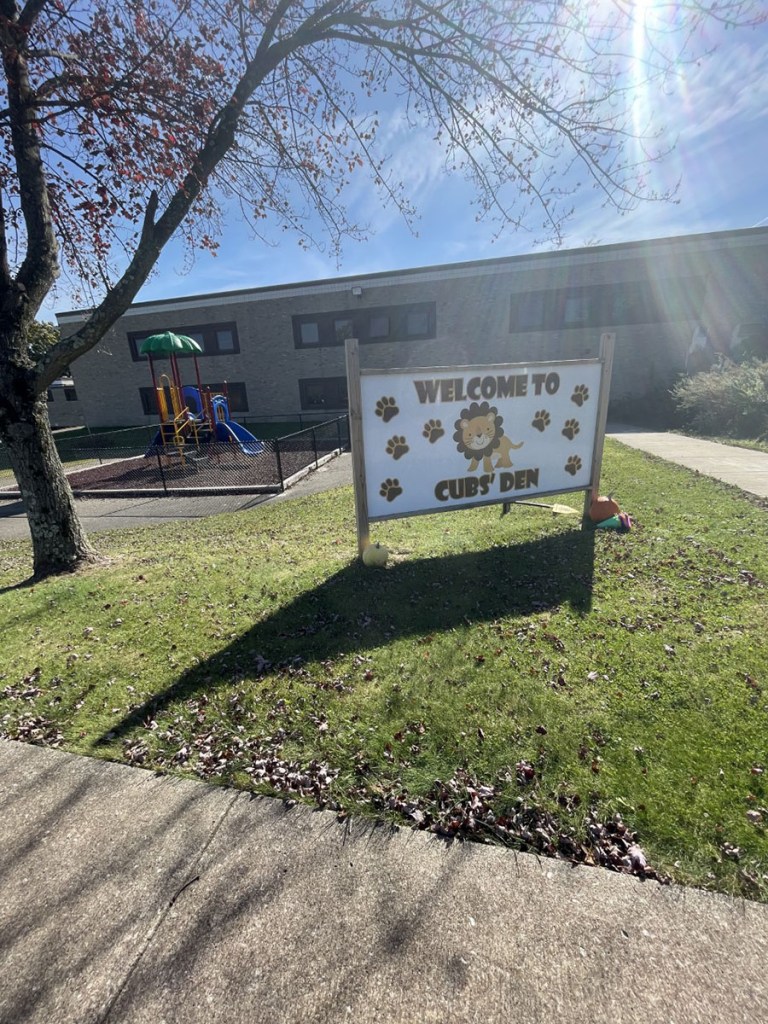
“Do you mean the number of students in a given lunch,” Dean of Students Mr. Jeff Kronenwetter said. “If so, probably so comparably to other years. Lunches are designed to be as equal with students as possible, within reason. 1st lunch traditionally is larger because we have our afternoon CWCTC students in that lunch before they leave the building for their afternoon classes. Child Development is also 1st lunch because of when the pre-school kids come for the Cub’s Den and our Freshman Seminar and most sciences in either 1st or 4th lunch, so those classes aren’t interrupted in the middle of a presentation or a lab.”

Students in 1st lunch wait in line to get their food. Photo by Luke Dinkel.

The first two lunches are packed, while the last two don’t have many students.

“Child Development is also 1st lunch because of when the pre-school kids come for the Cub’s Den and our Freshman Seminar and most sciences in either 1st or 4th lunch,” Mr. Kronenwetter said. “We do this so those classes aren’t interrupted in the middle of a presentation or a lab. We have over 800 students in the building and they are spread out throughout 4 lunches. We try to get it as close to even as possible, all while balancing when certain classes can be run and where all students need to be.”

Students seem to have different opinions than Mr. Kronenwetter.

“Compared to last year, my lunch definitely seems way smaller,” sophomore Natalia Backos said. “I had fourth lunch for all my freshman year, and I have to say it was completely packed for both semesters. Some of the tables were practically overflowing. Now, I can easily see at least four completely empty tables at a once packed fourth lunch.”

With that many empty tables, some might believe that it is a waste of space. Some students are wondering why their lunch is so quiet and empty while their friend’s lunch is loud and full of students.

With CTC students in first lunch, it is hard for them to buy their lunch and make the bus in time.

“It is very hard, I have to rush down to the cafeteria from the third floor to try and get my lunch in time so that I can eat before I have to leave,” junior Gabrielle Hult said.

When it comes to waiting in line for lunch, first seems to be the longest.

“It takes usually about 10 to 15 minutes,” Hult added.

Lunch is supposed to be a break for students when they can eat and interact with friends, but with smaller lunches students have a lesser chance of being with friends.

“I feel like it’s bland, there are almost no people in it,” junior Ryan Ebersole said. “The first two lunches are much busier than my lunch, and I think that they should spread it out better.”

Out With the Old and in With the New: GS and its Staff Changes

by Mia Saraceni

While all the previous teachers at GS were loved, the time for change has come and newcomers have filled in and taken their place.

          There are changes in almost every department, with the exception of the science department. New teachers have appeared in the Foreign Language, Math and Business departments, which certainly warrants an introduction.

          Starting with the math department, there are two new faces: Mr. Scott Shirey and Mr. Luke Ewing. Mr. Shirey teaches both geometry and math for the trades. While originally from Hempfield Area, he worked at a middle school in Manassas, Virginia for eight years before returning to this area.

Mr. Shirey works on an equation on his white board. Photo by Ari Case.

          “It feels great to be home again, not just visiting,” Mr. Shirey said.

          Besides being excited to come back home, Shirey was finished working with middle school students and was ready to start teaching more mature students.

          “Middle school was fun, but I’ve been ready to move on to more mature students for a while now,” he said. “I really enjoy the students I’ve met so far. I’m really excited to work with them this year.”

          The other newcomer, Mr. Ewing, is technically in the learning support department but helps out mainly with math. He teaches two math classes but focuses on floating around to different rooms and helping students. He is a proud GS Lion and attended Seton Hill University for education. Teaching isn’t his only passion, though, as he wrestled both in high school and at the collegiate level.

Mr. Ewing poses for a quick pic at his desk. Photo by Ari Case.

          Ewing views his new position as a career opportunity and is very excited for all future prospects.

          “This is where I want to be, Greensburg is home,” he said. “I just want to continue to grow as a colleague, be the best teacher and the best mentor that I can be.”

          Although he wants to be an academic mentor, he hopes to also be a mentor to all of the wrestlers at GS and work on getting into coaching.

          “I do want to get involved in coaching as well,” Ewing said. “Whether that’s taking baby steps and starting as a volunteer, but I do love wrestling.”

          The business department has also seen a shift, welcoming Mr. Tyler Brinton and Mr. Lou Downey. Mr. Brinton is also a graduate of GS and went to Saint Vincent College. He teaches digital and financial literacy as well as advertising and business/personal finance.

Mr. Brinton talks to his advisory class about future plans. Photo by Ari Case.

“I always saw myself coming back here after I graduated, it just took a couple of years,” Brinton said.

He previously taught at the Valley School of Ligonier, a private K-8 school, but always wanted to teach higher grades in the public sector. When it comes to what he hopes to achieve as a teacher, he has a few goals.

“Hopefully, I just want to shake things up, you know?” Brinton said. “Bring some more offerings to students and hopefully bring some fresh blood to the computer science department. Just see what I can do.”

Mr. Downey teaches a few of the same classes as well as freshman seminar, but his specialty is with accounting. He attended Saint Vincent College before going on to work in the business world for 20+ years. He later returned to his alma mater to receive a teaching certificate and education degree.

Mr. Downey poses with his balance sheet. Photo by Ari Case.

“I’m really excited to be here, I really enjoyed the people a lot,” Downey said.

          He was a long-term sub at GS, Metzgar, Nicely and Latrobe for years before getting a permanent position in the business wing. He knows the people well and feels at home at GS. His business degree and experience give him a major leg-up.

          “I really hope to bring my experience in business and help students see what it takes to become successful,” Downey said. “I don’t want them to be afraid to ask me questions; I want to help them any way I can.”

          The fifth and final new teacher, for now, is Ms. Laura Hoffer, a French teacher at both the middle and high school. She, like some of her other new colleagues, graduated from GS. She attended Duquesne University and received a bachelor’s degree in foreign language, but she didn’t stop there. She went on to Pitt and earned her master’s degree in foreign language education. She taught for two years at Jeanette High School before coming to GS.

Ms. Hoffer shows off her skirt. Photo by Ari Case.

          She fits right in with the other language teachers, as her passion for French is astronomical.

          “I want to help regrow student interest in the French program and help create a new generation of bilingual adults in our town,” Ms. Hoffer said. “The world is coming to Greensburg sooner or later.”

          While the departure of the old teachers may be upsetting, the new staff has great goals to make GS a better school.

          “Everybody has just been great and welcoming with open arms,” Ewing said. “It’s just great to be back.”

Calling All Artists! The Return of the Artist Market to the Library

By: Sarah Danley

Transforming a school project into reality, the Artist Market returned to the library to showcase student art for the third consecutive year, keeping the spirit of 2020 alum Mia Parise’s senior project alive.  

“I remembered an art market from a few years ago and I wanted to do something like that,” junior Tori Jones said. “It was for an International Studies project about doing something good for the school.”  

In collaboration with junior Lorelei Damico, Jones set out to make their project a reality by including other student artists through the Art Club’s team page, created by art teacher Mrs. Kelley Audia.  

Student-made artwork stands on display in the library for others to purchase, in the hopes of inspiring artists to continue their work (Photo by: Sarah Danley).

“They wanted to do it and I told [Jones] I would support her however she needed me to,” Mrs. Audia said.  

Audia was not the only one excited about the revival of the market. Student artists who participated in markets in the past were excited that it was back for the second semester.  

“I was excited to make more money and have an opportunity to sell more artwork,” senior Alyssa Angiolieri said. 

Often, student artists struggle finding opportunities to sell their artwork. Angiolieri claimed that she has “been meaning” to start an Etsy shop, but finds navigating shipping her artwork to be a stressful task.  

“It’s hard to find somewhere to make profits on their art and this gives them that chance,” Jones said.  

With these difficulties in mind, help from the art teachers and other students made selling artwork more manageable. As a teacher, seeing students take on a leadership role for their passions is what they are here to inspire. 

“It’s what we’re here to do as teachers,” Audia said. “[Jones] is such a strong leader and really got the ball rolling. I give her complete credit for doing this. I don’t know what I’ll do without them.”  

The Artist Market did not only benefit the independent student artists who made their products outside of school, but also the GS art program as a whole. A small portion of the market’s proceeds went back into providing supplies for students in art classes and Art Club. 

“I am taking five dollars on their first $20 made, which goes directly back to Art Club,” Audia said. “With that money, I buy materials for the market or class materials that come full circle for the artists using them.” 

By providing materials for students in past classes, Audia helped students find what materials they prefer working with, as well as what kind of projects interest them. Once they found what they loved, artists created something they were proud of, making it more rewarding for them when their art was purchased.  

“It’s pretty exciting when someone buys my pieces,” Jones said. “You don’t think anyone wants your art until they buy it.” 

Since artists do not see much, if any, profit from their artwork normally, a new sensation came about when others saw value in their art by purchasing it.  

“It feels good to know people enjoy your artwork and use it as a way to express themselves,” Angiolieri said. “I love seeing my pins on people’s backpacks as I walk around school. It makes my artwork feel official.” 

As students saw real worth in their artwork through the market, Audia saw more motivation in them as they took more pride in their work. 

“The other artists were so excited and motivated,” Audia said. “A lot of them were really successful.”   

From the success the art program saw this year, many are hopeful the market will continue, including both teachers and students.  

“Next year I will be a senior, but I will try to get it running again,” Jones said. “I hope to hand it off to someone younger when I leave, though.” 

Motivation and student leadership are the keys to the success that will keep the Artist Market running for years to come.  

“I hope we do it every semester and that the artists will be highly motivated and excited and willing to put themselves out there,” Audia said. “This wouldn’t have happened without Tori Jones, but I hope it continues.”